Carousel

Sponsored Links

Looking for House and Lot Within Tagaytay Area? CONTACT US!

Name

Email *

Message *

Showing posts with label Asia. Show all posts

Thursday, February 28, 2019

Early Humans Discovered To Exist In The Philippines About 700,000 Years Ago— New Discovery

Early humans roaming east Asia more than half-a-million years ago may be appear to be clever enough to build a vessel and curiously cross an open sea to be able to reach the Philippines.

It may seem evident from the discovery in the Philippines of a rhinoceros skeleton and the stone tools probably used to carve away its meat, according researchers.
Early humans roaming east Asia more than half-a-million years ago may be appear to be clever enough to build a vessel and curiously cross an open sea to be able to reach the Philippines.   It may seem evident from the discovery in the Philippines of a rhinoceros skeleton and the stone tools probably used to carve away its meat, according researchers.    Ads    The discovery pushes back the arrival of the first homo species on the island chain ten-fold to 700,000 years ago,as reported in the journal Nature.  Earlier archaeological clues from Luzon island -- tools at one site, prehistoric animals remains at another --suggestive of the presence of primitive human species, indicating Homo-erectus and Homo floresiensis probably populated the Indonesian archipelago during the same period.  But to date, the earliest confirmed evidence of hominins -- the scientific term used to group modern and early humans -- in the Philippines came from a, 67,000-year old foot bone unearthed in the Sierra Madre Mountains.  "We had the extraordinary luck to find a nearly complete, disarticulated rhinoceros," said Thomas Ingicco, a paleoanthropologist at France's National Museum of Natural History and lead author of the study.  Analysis of the bones from the extinct species -- Rhinoceros Philippinensis -- left no doubt "that it showed ridges left by tools," Ingicco added.  Some of the cut marks were made while removing flesh, while others came from specialized tools designed to remove bone marrow.  Ingicco and his colleagues also uncovered the skeletal remains of other potentially tasty critters, including brown deer, monitor lizards, freshwater turtles and stegodons, extinct mammals combining elephant and mammoth features.  Rhino carpaccio "We know that some species of human ate this rhino," said Ingicco. "But we don't know if they killed if first, or found the carcass."  All told, the Kalinga site in northern Luzon's Cagayan Valley yielded more than 400 bones and several dozen of ancient tools, including 49 knife-like flakes and two hammers.  "This evidence pushes back the proven period of colonialization of the Philippines by hundreds of thousands of years," the authors concluded.  Several dating techniques applies to the rhino remains determined its age at between 631,000 and 777,000 years, putting it in a period known as the Pleistocene.  With no direct trace of the humans who butchered the animals, researchers could only speculate on who they were and how they got there.  It is also possible that the butchers of Kalinga had already evolved into a distinct sub-species, as likely happened to the "hobbit" of Flores, diminutive humans named for the Indonesian island where they were first found.  As for how "Kalinga Man" made it across what is today 1,000 kilometers (620 miles) of open ocean between Luzon and mainland Asia, the authors doubt they fashioned a raft or other sea-worthy vessel.   "The colonialization could have happened 'accidentally' after a tsunami ripped up the coastline and created a temporary land bridge, a rare but documented phenomenon," said Ingicco.
Ads


The discovery pushes back the arrival of the first homo species on the island chain ten-fold to 700,000 years ago,as reported in the journal Nature.

Earlier archaeological clues from Luzon island -- tools at one site, prehistoric animals remains at another --suggestive of the presence of primitive human species, indicating Homo-erectus and Homo floresiensis probably populated the Indonesian archipelago during the same period.

But to date, the earliest confirmed evidence of hominins -- the scientific term used to group modern and early humans -- in the Philippines came from a, 67,000-year old foot bone unearthed in the Sierra Madre Mountains.

"We had the extraordinary luck to find a nearly complete, disarticulated rhinoceros," said Thomas Ingicco, a paleoanthropologist at France's National Museum of Natural History and lead author of the study.

Analysis of the bones from the extinct species -- Rhinoceros Philippinensis -- left no doubt "that it showed ridges left by tools," Ingicco added.

Some of the cut marks were made while removing flesh, while others came from specialized tools designed to remove bone marrow.

Ingicco and his colleagues also uncovered the skeletal remains of other potentially tasty critters, including brown deer, monitor lizards, freshwater turtles and stegodons, extinct mammals combining elephant and mammoth features.

Rhino carpaccio
"We know that some species of human ate this rhino," said Ingicco. "But we don't know if they killed if first, or found the carcass."

All told, the Kalinga site in northern Luzon's Cagayan Valley yielded more than 400 bones and several dozen of ancient tools, including 49 knife-like flakes and two hammers.

"This evidence pushes back the proven period of colonialization of the Philippines by hundreds of thousands of years," the authors concluded.

Several dating techniques applies to the rhino remains determined its age at between 631,000 and 777,000 years, putting it in a period known as the Pleistocene.

With no direct trace of the humans who butchered the animals, researchers could only speculate on who they were and how they got there.

It is also possible that the butchers of Kalinga had already evolved into a distinct sub-species, as likely happened to the "hobbit" of Flores, diminutive humans named for the Indonesian island where they were first found.

As for how "Kalinga Man" made it across what is today 1,000 kilometers (620 miles) of open ocean between Luzon and mainland Asia, the authors doubt they fashioned a raft or other sea-worthy vessel.

"The colonialization could have happened 'accidentally' after a tsunami ripped up the coastline and created a temporary land bridge, a rare but documented phenomenon," said Ingicco.

Ads


Sponsored Links


READ MORE:
In the real world, availing loans is sometimes inevitable. Financial problems often come unannounced and if you do not have enough savings, you most probably end up getting a loan from a friend, a loan company or a bank. Many overseas Filipino workers (OFW), for example, avail loans specifically designed for people working abroad and seafarers.   https://www.jbsolis.com/2019/02/move-to-these-places-and-get-paid-if.html    Ads    In the society we live in, applying for a loan correlates to debt. In reality, loans actually help people build and establish a credit history to which banking and finance companies refer.   In applying for a loan, whether from a loan company or from a bank, having a good credit history helps you to be approved quickly.    However, there are many types of loans designed for specific needs. Terms and conditions in each type are also different.  In this article, we will break down for you the types of loans and help you decide which ones do you need.   OFW loan – OFW loans work similarly as personal loans but are specifically offered to overseas Filipino workers with valid contracts. A co-borrower or immediate relative based in the Philippines is required. It usually has flexible payment terms to accommodate the specific needs of OFWs and their families.   Personal loan – Personal loans are usually unsecured loans, which means it’s based purely on an individual’s credit score and does not require any collateral, unlike secured loans. The interest rates may range from 1.2 percent to 8 percent, depending on the financial institution. Payment terms are typically shorter, from six to 60 months.  Car loan – Car loans are for people who don’t have enough cash to shoulder the full purchase of a vehicle. It has flexible payment terms of three to five years. To apply for a car loan, simply submit valid IDs and proof of income to get pre-approved. It may be required to have the down payment for the car to get approved.  Business loan – Business loans can be used for a new business or the expansion of an existing one. Examples are line credit, equipment loan, and conventional business loan. Terms depend on the nature of the business and the agreement between the borrower and the lender.  Home loan – Housing loan interest rates are decided between the borrower and the financial institution, with payment terms ranging from five to 30 years. The lender maintains property rights as collateral, and an appraisal fee typically applies.  Credit cards or cash advances – Cash advances are short-term loans with higher interest rates and are typically paid for the following month. Some credit card companies offer longer terms, from three to 12 months. The amount a person can borrow depends on their credit limit.

©2019 THOUGHTSKOTO

Friday, July 20, 2018

Find Out Which Country Has The Fastest Internet Speed Using This Interactive Map

In this millennial age where everyone put more importance on human interactions through social media rather than hanging out with real people doing actual conversations, good internet connection is very important. 
Did you ever wonder which country has the fastest internet speed?
In some countries, a pretty decent internet speed comes with a cost. In some parts of Asia, internet service providers charge too much for a slow internet connection and if you want it to be at an acceptable speed, you have to pay more.
So, if you are into an online business such as online selling or stock market trading, you need to invest on good internet connection if you want your business to succeed.
In this article, we will be informed about which country has the best internet speed. Our information will be based on the results gathered by Fastmetrics, one of the leading internet service providers in the U.S.
Advertisement


In this millennial age where everyone put more importance on human interactions through social media rather than hanging out with real people doing actual conversations, good internet connection is very important.   Did you ever wonder which country has the fastest internet speed?  In some countries, a pretty decent internet speed comes with a cost. In some parts of Asia, internet service providers charge too much for a slow internet connection and if you want it to be at an acceptable speed, you have to pay more.  So, if you are into an online business such as online selling or stock market trading, you need to invest on good internet connection if you want your business to succeed.  In this article, we will be informed about which country has the best internet speed. Our information will be based on the results gathered by Fastmetrics, one of the leading internet service providers in the U.S.  Advertisement         Sponsored Links   To know the internet speed of any country, just hover your mouse over this interactive map.      Based on Akamai data and another external speed testing South Korea is the country with the fastest internet speed. With an average internet speed of 21.1Mbps above the global average, in the latter part of 2015.   In the first quarter of 2017, South Korean internet speeds are again significantly faster than the rest of the world. This is despite a small YoY speed decrease of -1.7%.   Average South Korean internet speeds of 28.6Mbps, exceed that of 2nd place Norway by 5.1Mbps.  An incredible 62.6% of internet connections in this country connect at speeds above 15Mbps.  80.5% of connections have an average speed faster than 10Mbps (or almost double the global average internet speed).   South Korea was the first country to complete the upgrade from dial-up internet to broadband, doing so in 2005. South Korea is also home to the most internet users per capita and the heaviest data usage worldwide.   Better government planning in South Korea has improved internet connection speeds across the country dramatically. Additionally, a competitive Korean ISP market has led to exceptional service levels for end users. In the city of Cheongju, average internet speeds to citizens of 124.5Mbps are standard. Further, 1Gbps internet plans are available in South Korea for just $20 USD.    Where is the fastest internet in the world?   In terms of the fastest internet connection speeds, (that are not scientific tests and available for consumer or business use), South Korea is also a world leader. Other Asian countries also have some of the fastest internets in the world. Japan and Hong Kong residents on average, connected at internet speeds above 16Mbps in Q4 of 2015.   The other worldwide region which is leading the way in the faster internet is Scandinavia. For a region with a much smaller population when compared to Asian, European and North American countries, Scandinavian countries have internet that connects at fast speeds and at scale.  Sweden, Norway, Finland, and Denmark ALL have average internet speeds above 16Mbps.  Denmark: 94% of internet connection speeds faster than 4Mbps in Q4 of 2015.  Norway: 44.7% of internet connection speeds above 15Mbps.  Sweden: 93% of internet speeds faster than 4Mbps.  Finland: 91% of internet connections faster than 4Mbps.   Apart from the concentrated Scandinavian region, The Netherlands, Switzerland, and Latvia provide some of the fastest internets in the world. These countries actually rank above Finland and Denmark for internet speed.      READ MORE:    Find Out Which Is The Best Broadband Connection In The Philippines   Best Free Video Calling/Messaging Apps Of 2018    Modern Immigration Electronic Gates Now At NAIA    ASEAN Promotes People Mobility Across The Region    You Too Can Earn As Much As P131K From SSS Flexi Fund Investment    Survey: 8 Out of 10 OFWS Are Not Saving Their Money For Retirement    Dubai OFW Lost His Dreams To A Scammer    Support And Protection Of The OFWs, Still PRRD's Priority

Sponsored Links

To know the internet speed of any country, just hover your mouse over this interactive map.

Based on Akamai data and another external speed testing South Korea is the country with the fastest internet speed. With an average internet speed of 21.1Mbps above the global average, in the latter part of 2015.

In the first quarter of 2017, South Korean internet speeds are again significantly faster than the rest of the world. This is despite a small year-over-year(YoY) speed decrease of -1.7%.

Average South Korean internet speeds of 28.6Mbps, exceed that of 2nd place Norway by 5.1Mbps.
An incredible 62.6% of internet connections in this country connect at speeds above 15Mbps.
80.5% of connections have an average speed faster than 10Mbps (or almost double the global average internet speed).

South Korea was the first country to complete the upgrade from dial-up internet to broadband done in 2005. South Korea is also home to the most internet users per capita and the heaviest data usage worldwide.

Better government planning in South Korea has improved internet connection speeds across the country dramatically. Additionally, a competitive Korean ISP market has led to exceptional service levels for end users. In the city of Cheongju, average internet speeds to citizens of 124.5Mbps are standard. Further, 1Gbps internet plans are available in South Korea for just $20 USD.

Where is the fastest internet in the world?

In terms of the fastest internet connection speeds, (that are not scientific tests and available for consumer or business use), South Korea is also a world leader. Other Asian countries also have some of the fastest internets in the world. Japan and Hong Kong residents on average, connected at internet speeds above 16Mbps in the last quarter of 2015.

The other worldwide region which is leading the way in the faster internet is Scandinavia. For a region with a much smaller population when compared to Asian, European and North American countries, Scandinavian countries have internet that connects at fast speeds and at scale.
Sweden, Norway, Finland, and Denmark ALL have average internet speeds above 16Mbps.
Denmark: 94% of internet connection speeds faster than 4Mbps in Q4 of 2015.
Norway: 44.7% of internet connection speeds above 15Mbps.
Sweden: 93% of internet speeds faster than 4Mbps.
Finland: 91% of internet connections faster than 4Mbps.

Apart from the concentrated Scandinavian region, The Netherlands, Switzerland, and Latvia provide some of the fastest internets in the world. These countries actually rank above Finland and Denmark for internet speed.
In this millennial age where everyone put more importance on human interactions through social media rather than hanging out with real people doing actual conversations, good internet connection is very important.   Did you ever wonder which country has the fastest internet speed?  In some countries, a pretty decent internet speed comes with a cost. In some parts of Asia, internet service providers charge too much for a slow internet connection and if you want it to be at an acceptable speed, you have to pay more.  So, if you are into an online business such as online selling or stock market trading, you need to invest on good internet connection if you want your business to succeed.  In this article, we will be informed about which country has the best internet speed. Our information will be based on the results gathered by Fastmetrics, one of the leading internet service providers in the U.S.  Advertisement         Sponsored Links   To know the internet speed of any country, just hover your mouse over this interactive map.      Based on Akamai data and another external speed testing South Korea is the country with the fastest internet speed. With an average internet speed of 21.1Mbps above the global average, in the latter part of 2015.   In the first quarter of 2017, South Korean internet speeds are again significantly faster than the rest of the world. This is despite a small YoY speed decrease of -1.7%.   Average South Korean internet speeds of 28.6Mbps, exceed that of 2nd place Norway by 5.1Mbps.  An incredible 62.6% of internet connections in this country connect at speeds above 15Mbps.  80.5% of connections have an average speed faster than 10Mbps (or almost double the global average internet speed).   South Korea was the first country to complete the upgrade from dial-up internet to broadband, doing so in 2005. South Korea is also home to the most internet users per capita and the heaviest data usage worldwide.   Better government planning in South Korea has improved internet connection speeds across the country dramatically. Additionally, a competitive Korean ISP market has led to exceptional service levels for end users. In the city of Cheongju, average internet speeds to citizens of 124.5Mbps are standard. Further, 1Gbps internet plans are available in South Korea for just $20 USD.    Where is the fastest internet in the world?   In terms of the fastest internet connection speeds, (that are not scientific tests and available for consumer or business use), South Korea is also a world leader. Other Asian countries also have some of the fastest internets in the world. Japan and Hong Kong residents on average, connected at internet speeds above 16Mbps in Q4 of 2015.   The other worldwide region which is leading the way in the faster internet is Scandinavia. For a region with a much smaller population when compared to Asian, European and North American countries, Scandinavian countries have internet that connects at fast speeds and at scale.  Sweden, Norway, Finland, and Denmark ALL have average internet speeds above 16Mbps.  Denmark: 94% of internet connection speeds faster than 4Mbps in Q4 of 2015.  Norway: 44.7% of internet connection speeds above 15Mbps.  Sweden: 93% of internet speeds faster than 4Mbps.  Finland: 91% of internet connections faster than 4Mbps.   Apart from the concentrated Scandinavian region, The Netherlands, Switzerland, and Latvia provide some of the fastest internets in the world. These countries actually rank above Finland and Denmark for internet speed.      READ MORE:    Find Out Which Is The Best Broadband Connection In The Philippines   Best Free Video Calling/Messaging Apps Of 2018    Modern Immigration Electronic Gates Now At NAIA    ASEAN Promotes People Mobility Across The Region    You Too Can Earn As Much As P131K From SSS Flexi Fund Investment    Survey: 8 Out of 10 OFWS Are Not Saving Their Money For Retirement    Dubai OFW Lost His Dreams To A Scammer    Support And Protection Of The OFWs, Still PRRD's Priority
 When we talk about internet speed here, it is the actual average speed at any given time and not the maximum speed the ISPs provide. 


©2018 THOUGHTSKOTO

Monday, November 20, 2017

Almost 90% Of Poorest in South East Asia Are In Indonesia And The Philippines— ASEAN Report


Advertisements

About 90% of people living below the international poverty level in Southeast Asia are  living in Indonesia and the Philippines, according to a recent report from Association of Southeast Asian Nations (ASEAN).


The report was launched on November 17 in Jakarta, Indonesia by  The ASEAN in cooperation with United Nations Development Program (UNDP) and China, and is titled "ASEAN-China-UNDP Report on Financing the Sustainable Development Goals (SDGs) in ASEAN: Strengthening Integrated National Financing Frameworks to Deliver the 2030 Agenda," launched the said report in Jakarta, Indonesia last November 17.

According to the ASEAN report, extreme poverty has fallen across the region from 17% in 2005 to 7% in 2013,most of the working poor remain vulnerable to falling back in to poverty.


Sponsored Links
 Vongthep Arthakaivalvatee, deputy secretary-general for ASEAN Socio-Cultural Community, said on his reaction that "ASEAN's greatest asset is its people and proper financing will enable (them) to reach their potential."

Indonesia is committed to providing UHC and has set a target for achieving UHC by 2019.


"Financing SDGs is everyone's business. All actors - public, private, domestic and international - have a role to play," said assistant secretary-general Haoliang Xu of the UNDP.

Indonesia has 
over 257 million people making it the most populous country in ASEAN, followed by the Philippines with around 100 million, combined together, they have the half of the 639 million  total population of Southeast Asia.
Source: Khaleej Times
Almost 90 per cent of people living below the international poverty line are in Indonesia and the Philippines, states a recent report released by Association of Southeast Asian Nations (ASEAN).  The report was launched on November 17 in Jakarta, Indonesia by ASEAN in cooperation with United Nations Development Program (UNDP) and China, and is titled "ASEAN-China-UNDP Report on Financing the Sustainable Development Goals (SDGs) in ASEAN: Strengthening Integrated National Financing Frameworks to Deliver the 2030 Agenda."  According to the ASEAN report quoted in The Philippine Star, extreme poverty has fallen across the region from 17% in 2005 to 7% in 2013, many of the working poor remain vulnerable to falling back in to poverty. It is important for ASEAN as a region, and Member States to identify how to finance poverty eradication programs in order to realize the Sustainable Development Goals (SDGs) and ASEAN Vision 2025. Sponsored Links In his remarks during the report launch, Vongthep Arthakaivalvatee, deputy secretary-general for ASEAN Socio-Cultural Community, said "ASEAN's greatest asset is its people and proper financing will enable (them) to reach their potential."  While ASEAN has made progress in addressing infectious diseases, challenges still prevail and ASEAN is now facing rising rates of non-communicable diseases. Providing universal health coverage (UHC) is important to improve the lives of the people in ASEAN.  The report states Brunei Darussalam, Malaysia and Thailand provide UHC through a tax-funded system while Singapore provides UHC through a contribution-based system that includes a social assistance component.  Indonesia is committed to providing UHC and has set a target for achieving UHC by 2019. "The design and configuration of the financing model used affects how successfully the policy reaches the poorest people, expands the range of services on offer and reduces the costs they face," the report is quoted stating.  "Financing SDGs is everyone's business. All actors - public, private, domestic and international - have a role to play," said assistant secretary-general Haoliang Xu of the UNDP.  Indonesia is the most populous country in ASEAN with over 257 million people, followed by the Philippines with 100 million, comprising more than half of the 639 million population of the region. Source: Khaleej Times   Advertisement Read More:        ©2017 THOUGHTSKOTO
Advertisement

Read More:


©2017 THOUGHTSKOTO

SEARCH JBSOLIS, TYPE KEYWORDS and TITLE OF ARTICLE at the box below

Thursday, July 06, 2017

Philippines is NOT Listed in the Top 5 Most Corrupt Countries in Asia


The result of a year-and-a-half long survey conducted by Transparency International with over 20,000 participants from different countries in the Asia Pacific region revealed the top five most corrupt countries in Asia and the Philippines is nowhere in the list. The survey was conducted based on bribery rates happening in 16 countries in Asia. The survey result shows that corruption and bribery is alarmingly prevalent and deeply rooted in these countries.  The largest percentage of the age bracket being hit by bribery are younger people below 35 years old at 34 per cent. They are the most vulnerable to paying bribe just to access government services. Followed by over 35 to 54 years old at 29 per cent and those who are 55 above comprises 19 percent of those who pay bribe for public services. Another alarming fact is that ins some countries, poor people are more likely to pay bribes compared to the rich people.   However, in some countries, the trend seems to reverse. Rich people are most likely to pay bribes maybe because they have the resources to give it when asked.  Let's take a look on the List of the Top 5 Most Corrupt Countries in Asia  2017 :  Myanmar sits at #5 with bribery rate of 40 percent.   Pakistan follows with the same bribery rate.  With 41 percent , Thailand is at #3.   Vietnam follows with a high 65 percent bribery rate.  Leading the list is India with bribery rate of 69 percent.  Prime Minister Narendra Modi's move in fighting corruption is a wise one, otherwise, India's reputation of being corrupt will mark his administration if he cannot do anything about it or at least prevent the country from leading the most corrupt list.  Sources: Forbes, Transparency International  Read More:     ©2017 THOUGHTSKOTO www.jbsolis.com SEARCH JBSOLIS, TYPE KEYWORDS and TITLE OF ARTICLE at the box below


The result of a year-and-a-half long survey conducted by Transparency International with over 20,000 participants from different countries in the Asia Pacific region revealed the top five most corrupt countries in Asia and the Philippines is nowhere in the list.
The survey was conducted based on bribery rates happening in 16 countries in Asia.
The survey result shows that corruption and bribery is alarmingly prevalent and deeply rooted in these countries.
The result of a year-and-a-half long survey conducted by Transparency International with over 20,000 participants from different countries in the Asia Pacific region revealed the top five most corrupt countries in Asia and the Philippines is nowhere in the list. The survey was conducted based on bribery rates happening in 16 countries in Asia. The survey result shows that corruption and bribery is alarmingly prevalent and deeply rooted in these countries.  The largest percentage of the age bracket being hit by bribery are younger people below 35 years old at 34 per cent. They are the most vulnerable to paying bribe just to access government services. Followed by over 35 to 54 years old at 29 per cent and those who are 55 above comprises 19 percent of those who pay bribe for public services. Another alarming fact is that ins some countries, poor people are more likely to pay bribes compared to the rich people.   However, in some countries, the trend seems to reverse. Rich people are most likely to pay bribes maybe because they have the resources to give it when asked.  Let's take a look on the List of the Top 5 Most Corrupt Countries in Asia  2017 :  Myanmar sits at #5 with bribery rate of 40 percent.   Pakistan follows with the same bribery rate.  With 41 percent , Thailand is at #3.   Vietnam follows with a high 65 percent bribery rate.  Leading the list is India with bribery rate of 69 percent.  Prime Minister Narendra Modi's move in fighting corruption is a wise one, otherwise, India's reputation of being corrupt will mark his administration if he cannot do anything about it or at least prevent the country from leading the most corrupt list.  Sources: Forbes, Transparency International  Read More:     ©2017 THOUGHTSKOTO www.jbsolis.com SEARCH JBSOLIS, TYPE KEYWORDS and TITLE OF ARTICLE at the box below
The largest percentage of the age bracket being hit by bribery are younger people below 35 years old at 34 per cent. They are the most vulnerable to paying bribe just to access government services. Followed by over 35 to 54 years old at 29 per cent and those who are 55 above comprises 19 percent of those who pay bribe for public services.
Another alarming fact is that ins some countries, poor people are more likely to pay bribes compared to the rich people.

The result of a year-and-a-half long survey conducted by Transparency International with over 20,000 participants from different countries in the Asia Pacific region revealed the top five most corrupt countries in Asia and the Philippines is nowhere in the list. The survey was conducted based on bribery rates happening in 16 countries in Asia. The survey result shows that corruption and bribery is alarmingly prevalent and deeply rooted in these countries.  The largest percentage of the age bracket being hit by bribery are younger people below 35 years old at 34 per cent. They are the most vulnerable to paying bribe just to access government services. Followed by over 35 to 54 years old at 29 per cent and those who are 55 above comprises 19 percent of those who pay bribe for public services. Another alarming fact is that ins some countries, poor people are more likely to pay bribes compared to the rich people.   However, in some countries, the trend seems to reverse. Rich people are most likely to pay bribes maybe because they have the resources to give it when asked.  Let's take a look on the List of the Top 5 Most Corrupt Countries in Asia  2017 :  Myanmar sits at #5 with bribery rate of 40 percent.   Pakistan follows with the same bribery rate.  With 41 percent , Thailand is at #3.   Vietnam follows with a high 65 percent bribery rate.  Leading the list is India with bribery rate of 69 percent.  Prime Minister Narendra Modi's move in fighting corruption is a wise one, otherwise, India's reputation of being corrupt will mark his administration if he cannot do anything about it or at least prevent the country from leading the most corrupt list.  Sources: Forbes, Transparency International  Read More:     ©2017 THOUGHTSKOTO www.jbsolis.com SEARCH JBSOLIS, TYPE KEYWORDS and TITLE OF ARTICLE at the box below
However, in some countries, the trend seems to reverse. Rich people are most likely to pay bribes maybe because they have the resources to give it when asked.


Let's take a look on the List of the Top 5 Most Corrupt Countries in Asia  2017 :

Myanmar sits at #5 with bribery rate of 40 percent.
The result of a year-and-a-half long survey conducted by Transparency International with over 20,000 participants from different countries in the Asia Pacific region revealed the top five most corrupt countries in Asia and the Philippines is nowhere in the list. The survey was conducted based on bribery rates happening in 16 countries in Asia. The survey result shows that corruption and bribery is alarmingly prevalent and deeply rooted in these countries.  The largest percentage of the age bracket being hit by bribery are younger people below 35 years old at 34 per cent. They are the most vulnerable to paying bribe just to access government services. Followed by over 35 to 54 years old at 29 per cent and those who are 55 above comprises 19 percent of those who pay bribe for public services. Another alarming fact is that ins some countries, poor people are more likely to pay bribes compared to the rich people.   However, in some countries, the trend seems to reverse. Rich people are most likely to pay bribes maybe because they have the resources to give it when asked.  Let's take a look on the List of the Top 5 Most Corrupt Countries in Asia  2017 :  Myanmar sits at #5 with bribery rate of 40 percent.   Pakistan follows with the same bribery rate.  With 41 percent , Thailand is at #3.   Vietnam follows with a high 65 percent bribery rate.  Leading the list is India with bribery rate of 69 percent.  Prime Minister Narendra Modi's move in fighting corruption is a wise one, otherwise, India's reputation of being corrupt will mark his administration if he cannot do anything about it or at least prevent the country from leading the most corrupt list.  Sources: Forbes, Transparency International  Read More:     ©2017 THOUGHTSKOTO www.jbsolis.com SEARCH JBSOLIS, TYPE KEYWORDS and TITLE OF ARTICLE at the box below
 Pakistan follows with the same bribery rate.
The result of a year-and-a-half long survey conducted by Transparency International with over 20,000 participants from different countries in the Asia Pacific region revealed the top five most corrupt countries in Asia and the Philippines is nowhere in the list. The survey was conducted based on bribery rates happening in 16 countries in Asia. The survey result shows that corruption and bribery is alarmingly prevalent and deeply rooted in these countries.  The largest percentage of the age bracket being hit by bribery are younger people below 35 years old at 34 per cent. They are the most vulnerable to paying bribe just to access government services. Followed by over 35 to 54 years old at 29 per cent and those who are 55 above comprises 19 percent of those who pay bribe for public services. Another alarming fact is that ins some countries, poor people are more likely to pay bribes compared to the rich people.   However, in some countries, the trend seems to reverse. Rich people are most likely to pay bribes maybe because they have the resources to give it when asked.  Let's take a look on the List of the Top 5 Most Corrupt Countries in Asia  2017 :  Myanmar sits at #5 with bribery rate of 40 percent.   Pakistan follows with the same bribery rate.  With 41 percent , Thailand is at #3.   Vietnam follows with a high 65 percent bribery rate.  Leading the list is India with bribery rate of 69 percent.  Prime Minister Narendra Modi's move in fighting corruption is a wise one, otherwise, India's reputation of being corrupt will mark his administration if he cannot do anything about it or at least prevent the country from leading the most corrupt list.  Sources: Forbes, Transparency International  Read More:     ©2017 THOUGHTSKOTO www.jbsolis.com SEARCH JBSOLIS, TYPE KEYWORDS and TITLE OF ARTICLE at the box below
With 41 percent , Thailand is at #3. 
The result of a year-and-a-half long survey conducted by Transparency International with over 20,000 participants from different countries in the Asia Pacific region revealed the top five most corrupt countries in Asia and the Philippines is nowhere in the list. The survey was conducted based on bribery rates happening in 16 countries in Asia. The survey result shows that corruption and bribery is alarmingly prevalent and deeply rooted in these countries.  The largest percentage of the age bracket being hit by bribery are younger people below 35 years old at 34 per cent. They are the most vulnerable to paying bribe just to access government services. Followed by over 35 to 54 years old at 29 per cent and those who are 55 above comprises 19 percent of those who pay bribe for public services. Another alarming fact is that ins some countries, poor people are more likely to pay bribes compared to the rich people.   However, in some countries, the trend seems to reverse. Rich people are most likely to pay bribes maybe because they have the resources to give it when asked.  Let's take a look on the List of the Top 5 Most Corrupt Countries in Asia  2017 :  Myanmar sits at #5 with bribery rate of 40 percent.   Pakistan follows with the same bribery rate.  With 41 percent , Thailand is at #3.   Vietnam follows with a high 65 percent bribery rate.  Leading the list is India with bribery rate of 69 percent.  Prime Minister Narendra Modi's move in fighting corruption is a wise one, otherwise, India's reputation of being corrupt will mark his administration if he cannot do anything about it or at least prevent the country from leading the most corrupt list.  Sources: Forbes, Transparency International  Read More:     ©2017 THOUGHTSKOTO www.jbsolis.com SEARCH JBSOLIS, TYPE KEYWORDS and TITLE OF ARTICLE at the box below
Vietnam follows with a high 65 percent bribery rate.
The result of a year-and-a-half long survey conducted by Transparency International with over 20,000 participants from different countries in the Asia Pacific region revealed the top five most corrupt countries in Asia and the Philippines is nowhere in the list. The survey was conducted based on bribery rates happening in 16 countries in Asia. The survey result shows that corruption and bribery is alarmingly prevalent and deeply rooted in these countries.  The largest percentage of the age bracket being hit by bribery are younger people below 35 years old at 34 per cent. They are the most vulnerable to paying bribe just to access government services. Followed by over 35 to 54 years old at 29 per cent and those who are 55 above comprises 19 percent of those who pay bribe for public services. Another alarming fact is that ins some countries, poor people are more likely to pay bribes compared to the rich people.   However, in some countries, the trend seems to reverse. Rich people are most likely to pay bribes maybe because they have the resources to give it when asked.  Let's take a look on the List of the Top 5 Most Corrupt Countries in Asia  2017 :  Myanmar sits at #5 with bribery rate of 40 percent.   Pakistan follows with the same bribery rate.  With 41 percent , Thailand is at #3.   Vietnam follows with a high 65 percent bribery rate.  Leading the list is India with bribery rate of 69 percent.  Prime Minister Narendra Modi's move in fighting corruption is a wise one, otherwise, India's reputation of being corrupt will mark his administration if he cannot do anything about it or at least prevent the country from leading the most corrupt list.  Sources: Forbes, Transparency International  Read More:     ©2017 THOUGHTSKOTO www.jbsolis.com SEARCH JBSOLIS, TYPE KEYWORDS and TITLE OF ARTICLE at the box below
Leading the list is India with bribery rate of 69 percent.
The result of a year-and-a-half long survey conducted by Transparency International with over 20,000 participants from different countries in the Asia Pacific region revealed the top five most corrupt countries in Asia and the Philippines is nowhere in the list. The survey was conducted based on bribery rates happening in 16 countries in Asia. The survey result shows that corruption and bribery is alarmingly prevalent and deeply rooted in these countries.  The largest percentage of the age bracket being hit by bribery are younger people below 35 years old at 34 per cent. They are the most vulnerable to paying bribe just to access government services. Followed by over 35 to 54 years old at 29 per cent and those who are 55 above comprises 19 percent of those who pay bribe for public services. Another alarming fact is that ins some countries, poor people are more likely to pay bribes compared to the rich people.   However, in some countries, the trend seems to reverse. Rich people are most likely to pay bribes maybe because they have the resources to give it when asked.  Let's take a look on the List of the Top 5 Most Corrupt Countries in Asia  2017 :  Myanmar sits at #5 with bribery rate of 40 percent.   Pakistan follows with the same bribery rate.  With 41 percent , Thailand is at #3.   Vietnam follows with a high 65 percent bribery rate.  Leading the list is India with bribery rate of 69 percent.  Prime Minister Narendra Modi's move in fighting corruption is a wise one, otherwise, India's reputation of being corrupt will mark his administration if he cannot do anything about it or at least prevent the country from leading the most corrupt list.  Sources: Forbes, Transparency International  Read More:     ©2017 THOUGHTSKOTO www.jbsolis.com SEARCH JBSOLIS, TYPE KEYWORDS and TITLE OF ARTICLE at the box below
Prime Minister Narendra Modi's move in fighting corruption is a wise one, otherwise, India's reputation of being corrupt will mark his administration if he cannot do anything about it or at least prevent the country from leading the most corrupt list.
The result of a year-and-a-half long survey conducted by Transparency International with over 20,000 participants from different countries in the Asia Pacific region revealed the top five most corrupt countries in Asia and the Philippines is nowhere in the list. The survey was conducted based on bribery rates happening in 16 countries in Asia. The survey result shows that corruption and bribery is alarmingly prevalent and deeply rooted in these countries.  The largest percentage of the age bracket being hit by bribery are younger people below 35 years old at 34 per cent. They are the most vulnerable to paying bribe just to access government services. Followed by over 35 to 54 years old at 29 per cent and those who are 55 above comprises 19 percent of those who pay bribe for public services. Another alarming fact is that ins some countries, poor people are more likely to pay bribes compared to the rich people.   However, in some countries, the trend seems to reverse. Rich people are most likely to pay bribes maybe because they have the resources to give it when asked.  Let's take a look on the List of the Top 5 Most Corrupt Countries in Asia  2017 :  Myanmar sits at #5 with bribery rate of 40 percent.   Pakistan follows with the same bribery rate.  With 41 percent , Thailand is at #3.   Vietnam follows with a high 65 percent bribery rate.  Leading the list is India with bribery rate of 69 percent.  Prime Minister Narendra Modi's move in fighting corruption is a wise one, otherwise, India's reputation of being corrupt will mark his administration if he cannot do anything about it or at least prevent the country from leading the most corrupt list.  Sources: Forbes, Transparency International  Read More:     ©2017 THOUGHTSKOTO www.jbsolis.com SEARCH JBSOLIS, TYPE KEYWORDS and TITLE OF ARTICLE at the box below


Read More:


©2017 THOUGHTSKOTO
SEARCH JBSOLIS, TYPE KEYWORDS and TITLE OF ARTICLE at the box below

Sunday, November 27, 2016

PHILIPPINES, FASTEST GROWING ECONOMY IN ASIA UNDER DUTERTE ADMINISTRATION


The Philippines is now the fastest growing economy in Asia after it surpassed China and other neighboring Asian countries in economic growth. It is under the administration of President rodrigo Duterte that the Philippine economy has gained an economic growth of 7.1 % on the third quarter of  the year 2016 surpassing China, wit only 6.7% economic growth in the same period.


Communications Secretary Martin Andanar,government spending on  the infrastructure projects spearheaded by the Duterte administration caused the sudden activity on the economy. Because of this, the country's economy is expected to continue soaring  in the coming year.

Source:DZRH News
Read More:


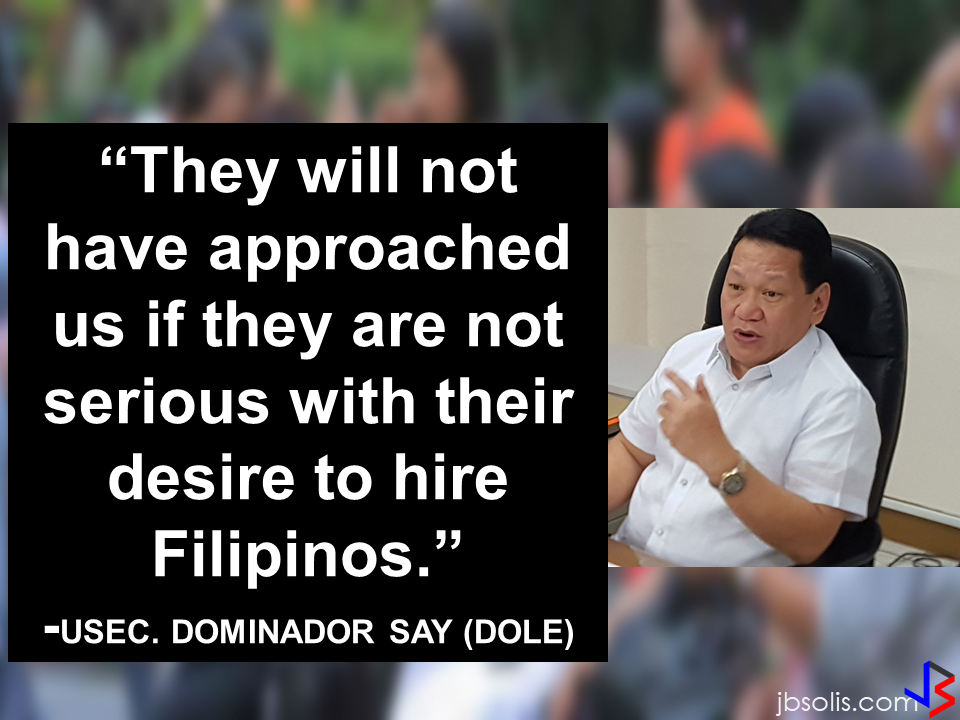
China's plans to hire Filipino household workers to their five major cities including Beijing and Shanghai, was reported at a local newspaper Philippine Star. it could be a big break for the household workers who are trying their luck in finding greener pastures by working overseas  China is offering up to P100,000  a month, or about HK$15,000. The existing minimum allowable wage for a foreign domestic helper in Hong Kong is  around HK$4,310 per month.  Dominador Say, undersecretary of the Department of Labor and Employment (DOLE), said that talks are underway with Chinese embassy officials on this possibility. China’s five major cities, including Beijing, Shanghai and Xiamen will soon be the haven for Filipino domestic workers who are seeking higher income.  DOLE is expected to have further negotiations on the launch date with a delegation from China in September.   according to Usec Say, Chinese employers favor Filipino domestic workers for their English proficiency, which allows them to teach their employers’ children.    Chinese embassy officials also mentioned that improving ties with the leadership of President Rodrigo Duterte has paved the way for the new policy to materialize.  There is presently a strict work visa system for foreign workers who want to enter mainland China. But according Usec. Say, China is serious about the proposal.   Philippine Labor Secretary Silvestre Bello said an estimated 200,000 Filipino domestic helpers are  presently working illegally in China. With a great demand for skilled domestic workers, Filipino OFWs would have an option to apply using legal processes on their desired higher salary for their sector. Source: ejinsight.com, PhilStar Read More:  The effectivity of the Nationwide Smoking Ban or  E.O. 26 (Providing for the Establishment of Smoke-free Environment in Public and Enclosed Places) started today, July 23, but only a few seems to be aware of it.  President Rodrigo Duterte signed the Executive Order 26 with the citizens health in mind. Presidential Spokesperson Ernesto Abella said the executive order is a milestone where the government prioritize public health protection.    The smoking ban includes smoking in places such as  schools, universities and colleges, playgrounds, restaurants and food preparation areas, basketball courts, stairwells, health centers, clinics, public and private hospitals, hotels, malls, elevators, taxis, buses, public utility jeepneys, ships, tricycles, trains, airplanes, and  gas stations which are prone to combustion. The Department of Health  urges all the establishments to post "no smoking" signs in compliance with the new executive order. They also appeal to the public to report any violation against the nationwide ban on smoking in public places.   Read More:          ©2017 THOUGHTSKOTO www.jbsolis.com SEARCH JBSOLIS, TYPE KEYWORDS and TITLE OF ARTICLE at the box below Smoking is only allowed in designated smoking areas to be provided by the owner of the establishment. Smoking in private vehicles parked in public areas is also prohibited. What Do You Need To know About The Nationwide Smoking Ban Violators will be fined P500 to P10,000, depending on their number of offenses, while owners of establishments caught violating the EO will face a fine of P5,000 or imprisonment of not more than 30 days. The Department of Health  urges all the establishments to post "no smoking" signs in compliance with the new executive order. They also appeal to the public to report any violation against the nationwide ban on smoking in public places.          ©2017 THOUGHTSKOTO

Dominador Say, undersecretary of the Department of Labor and Employment (DOLE), said that talks are underway with Chinese embassy officials on this possibility. China’s five major cities, including Beijing, Shanghai and Xiamen will soon be the destination for Filipino domestic workers who are seeking higher income.
FILIPINOS HAS VERY HIGH OPTIMISM UNDER DUTERTE LEADERSHIP


OWWA ASSISTANCE FOR OFW FAMILIES AFFECTED BY TYPHOON LAWIN

OFWS WHO DOESN'T WANT TO WORK ABROAD ANYMORE, "PUT UP A BUSINESS HERE" -DTI

OFWS TO BENEFIT FROM OWWA REBATE PROGRAM

BANK FOR THE OFWS

WHY EVERY OFWS SHOULD HAVE AN EXIT PLAN ?

FREE INSURANCE FOR OFWS JUST BY SENDING REMITTANCES TO THE PHILIPPINES

TWO-YEAR-OLD SON OF AN OFW IN BAHRAIN, WHIPPED TO DEATH BY HIS GUARDIAN

STEP BY STEP ON HOW TO CLAIM THE P550 TERMINAL FEE

OFWs NEEDED IN SINGAPORE THIS NOVEMBER

LOUD MUFFLERS BAN

CRAZY YELLOW CAR IN ROCKWELL, MAKATI

CHECK THESE RIFLES FROM RUSSIA, COULD BE THE NEXT ASSAULT RIFLES FOR THE PNP

US SUPPLIES DEFECTIVE ASSAULT RIFLES TO THE PHILIPPINES 

A HERO FIREMAN RISK HIS OWN LIFE TO SAVE A 1-YR OLD KID.

DUTERTE MONORAIL PROJECT POSSIBLE TO RISE TO EASE TRAFFIC

TOMB OF JESUS, UNCOVERED

MINIMUM WAGE HIKE IN SOUTH KOREA TO BENEFIT OFWS  

KUWAIT AIRWAYS NOW HIRING MORE THAN 200 OFWS  

HONGKONG SALARY INCREASE

YOU NEED TO EARN P120K PER MONTH TO LIVE COMFORTABLY IN THE PHILIPPINES--NEDA

 SALARY INCREASE IN ASIAN COUNTRIES THIS 2017 

SC ALLOWED MARCOS ' BURIAL TO THE LIBINGAN NG MGA BAYANI

©2016 THOUGHTSKOTO