Carousel

Sponsored Links

Looking for House and Lot Within Tagaytay Area? CONTACT US!

Name

Email *

Message *

Showing posts with label gulf countries. Show all posts

Thursday, July 05, 2018

Another 12 Job Categories in Saudi Arabia, to be Off-Limits to OFWs, Expats

No doubt, Saudi Arabia is still one of the top destinations for Overseas Filipino Workers (OFWs). But with the implementation of Saudization, the "world" of OFWs and other expatriates in Saudi Arabia is getting smaller. The push to nationalize several job sectors started in 2011 and in ongoing up to now. The oil-rich kingdom is slowly limiting jobs to foreign workers, giving priorities to locals to boost employment of Saudis. These include jobs that used to be available for OFWs and other expats.
Advertisement
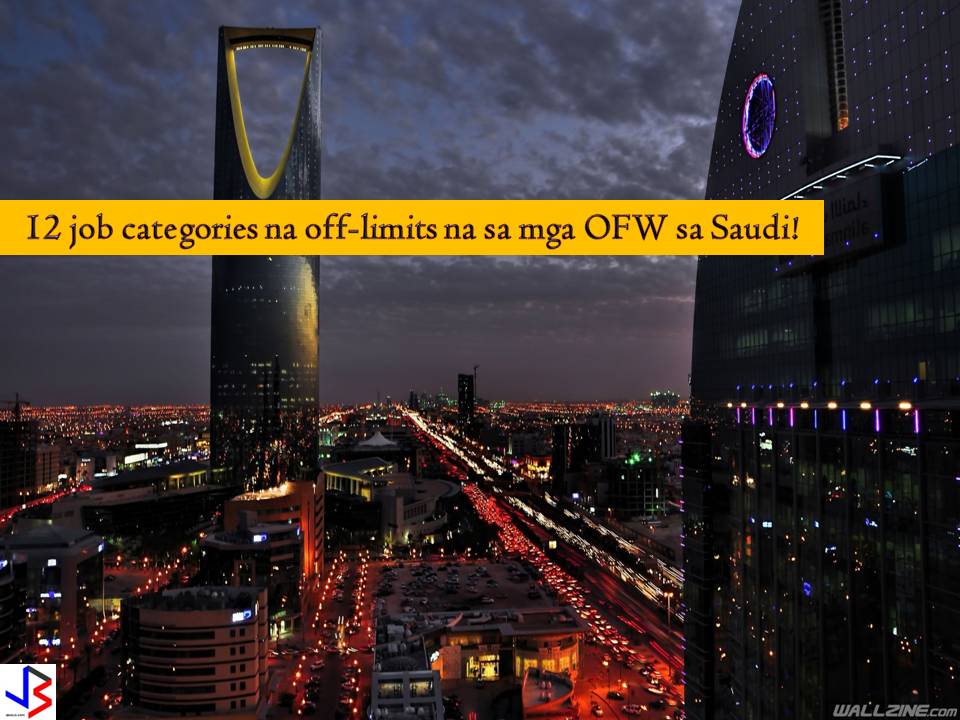

No doubt, Saudi Arabia is still a top destination for Overseas Filipino Workers (OFWs) for many years now. But with the implementation of Saudization, the "world" of OFWs and other expatriates in Saudi Arabia is getting smaller. Started in 2011 up to now, the Kingdom is slowly limiting some jobs to their locals to boost local employment of Saudis. This includes jobs that former belong to OFWs and other expats.  This 2018, another batch of job categories in Saudi Arabia will be limited to locals or their nationals by the end of the year. The Saudi Labor and Social Development Ministry has issued an order that limits 12 jobs and different shops only to their citizens. It means expat workers are no longer allowed to apply for these jobs.   According to ministry spokesman Khaled Aba Al Khail, starting September 11, 2018, no expats will be allowed to work in car and motorbike shops, men's and children's wear, home and office furniture, and home utensils.  This will be followed by Saudization on shops that sells electronics and electric appliances, watches, and eyeglasses that will take effect on November 9, this year.  This is not the end yet, because, by January next year, Saudi Arabia will also nationalize jobs at medical equipment, building materials, car spare parts, carpet and rugs and confectionary shops. This will start on January 7, 2019.  Saudization starts in 2011 as part of the Kingdom's initiative to encourage Saudi national to work in the private sector.
This 2018, another batch of job categories in Saudi Arabia will be limited to locals or Saudi nationals by the end of the year. The Saudi Labor and Social Development Ministry has issued an order that limits 12 jobs and different shops only to their citizens. It means expat workers are no longer allowed to apply for these jobs. 
Sponsored Links

According to ministry spokesman Khaled Aba Al Khail, starting September 11, 2018, no expats will be allowed to work in car and motorbike shops, men's and children's wear, home and office furniture, and home utensils.


This will be followed by Saudization on shops that sells electronics and electric appliances, watches, and eyeglasses that will take effect on November 9, this year.
No doubt, Saudi Arabia is still a top destination for Overseas Filipino Workers (OFWs) for many years now. But with the implementation of Saudization, the "world" of OFWs and other expatriates in Saudi Arabia is getting smaller. Started in 2011 up to now, the Kingdom is slowly limiting some jobs to their locals to boost local employment of Saudis. This includes jobs that former belong to OFWs and other expats.  This 2018, another batch of job categories in Saudi Arabia will be limited to locals or their nationals by the end of the year. The Saudi Labor and Social Development Ministry has issued an order that limits 12 jobs and different shops only to their citizens. It means expat workers are no longer allowed to apply for these jobs.   According to ministry spokesman Khaled Aba Al Khail, starting September 11, 2018, no expats will be allowed to work in car and motorbike shops, men's and children's wear, home and office furniture, and home utensils.  This will be followed by Saudization on shops that sells electronics and electric appliances, watches, and eyeglasses that will take effect on November 9, this year.  This is not the end yet, because, by January next year, Saudi Arabia will also nationalize jobs at medical equipment, building materials, car spare parts, carpet and rugs and confectionary shops. This will start on January 7, 2019.  Saudization starts in 2011 as part of the Kingdom's initiative to encourage Saudi national to work in the private sector.
This is not yet the end of the nationalization program. By January next year, Saudi Arabia will also nationalize jobs at medical equipment, building materials, car spare parts, carpet and rugs and confectionery shops. This will start on January 7, 2019.

Saudization started in 2011 as part of the Kingdom's initiative to encourage Saudi nationals to work in the private sector.


©2018 THOUGHTSKOTO

Friday, May 11, 2018

OFWs in Oman? Here are 7 Rights You Should Know and Salary You Should Earn

Oman is another country in the Middle East that is hiring Filipino workers every month. But don't you know how much Overseas Filipino Workers (OFWs) earn in that country per month?
Advertisement


Oman is another country in the Middle East that is hiring Filipino workers every month. But don't you know how much Overseas Filipino Workers (OFWs) earn in that country per month?  According to Philippine Embassy in Oman, employed Filipino workers should earn at least OMR290 (approximately Php39,000) per month while working in the country. Including in the salary is OFW's minimum pay and other monthly financial benefits.  Because of this, the Philippine Embassy in Oman is reminding the sponsors or principal employers as well as foreign recruitment agencies of the basic rights due to all Filipino workers. Aside from the minimum monthly payments, the Philippine Overseas Labour Office (POLO) listed the following rights of OFWs in the Gulf state!  1. Passports should be kept with the worker unless voluntary entrusted to persons or institution, preferably with FRAs.  2. Workers are entitled to a paid leave (day off/rest day) of one day per week.  3. Sponsors must pay a month basic salary of not less than USD400 or OMR160 for domestic workers, and more than OMR160 for skilled workers.  4. The sponsor must provide decent food or its equivalent of food allowance of not less than OMR30.  5. The sponsors must also provide a suitable and safe accommodation or its equivalent accommodation allowance of not less than OMR80.  6. The sponsor must also provide free transportation from the worker’s accommodation to the worksite and vice versa, or an equivalent transportation allowance of not less than OMR20.  7. The sponsor must provide health and accident insurance of the worker valid throughout the period of the working visa/contract.
According to Philippine Embassy in Oman, employed Filipino workers should earn at least OMR290 (approximately Php39,000) per month while working in the country. Including in the salary is OFW's minimum pay and other monthly financial benefits.
Sponsored Links

Because of this, the Philippine Embassy in Oman is reminding the sponsors or principal employers as well as foreign recruitment agencies of the basic rights due to all Filipino workers.


Aside from the minimum monthly payments, the Philippine Overseas Labour Office (POLO) listed the following rights of OFWs in the Gulf state!


1. Passports should be kept with the worker unless voluntary entrusted to persons or institution, preferably with FRAs.

2. Workers are entitled to a paid leave (day off/rest day) of one day per week.
Oman is another country in the Middle East that is hiring Filipino workers every month. But don't you know how much Overseas Filipino Workers (OFWs) earn in that country per month?  According to Philippine Embassy in Oman, employed Filipino workers should earn at least OMR290 (approximately Php39,000) per month while working in the country. Including in the salary is OFW's minimum pay and other monthly financial benefits.  Because of this, the Philippine Embassy in Oman is reminding the sponsors or principal employers as well as foreign recruitment agencies of the basic rights due to all Filipino workers. Aside from the minimum monthly payments, the Philippine Overseas Labour Office (POLO) listed the following rights of OFWs in the Gulf state!  1. Passports should be kept with the worker unless voluntary entrusted to persons or institution, preferably with FRAs.  2. Workers are entitled to a paid leave (day off/rest day) of one day per week.  3. Sponsors must pay a month basic salary of not less than USD400 or OMR160 for domestic workers, and more than OMR160 for skilled workers.  4. The sponsor must provide decent food or its equivalent of food allowance of not less than OMR30.  5. The sponsors must also provide a suitable and safe accommodation or its equivalent accommodation allowance of not less than OMR80.  6. The sponsor must also provide free transportation from the worker’s accommodation to the worksite and vice versa, or an equivalent transportation allowance of not less than OMR20.  7. The sponsor must provide health and accident insurance of the worker valid throughout the period of the working visa/contract.  There you go OFWs in Oman! We know that working in a foreign land is not easy that is why it is important that we know the rights that are entitled to us.
3. Sponsors must pay a month basic salary of not less than USD400 or OMR160 for domestic workers, and more than OMR160 for skilled workers.

4. The sponsor must provide decent food or its equivalent of food allowance of not less than OMR30.
Oman is another country in the Middle East that is hiring Filipino workers every month. But don't you know how much Overseas Filipino Workers (OFWs) earn in that country per month?  According to Philippine Embassy in Oman, employed Filipino workers should earn at least OMR290 (approximately Php39,000) per month while working in the country. Including in the salary is OFW's minimum pay and other monthly financial benefits.  Because of this, the Philippine Embassy in Oman is reminding the sponsors or principal employers as well as foreign recruitment agencies of the basic rights due to all Filipino workers. Aside from the minimum monthly payments, the Philippine Overseas Labour Office (POLO) listed the following rights of OFWs in the Gulf state!  1. Passports should be kept with the worker unless voluntary entrusted to persons or institution, preferably with FRAs.  2. Workers are entitled to a paid leave (day off/rest day) of one day per week.  3. Sponsors must pay a month basic salary of not less than USD400 or OMR160 for domestic workers, and more than OMR160 for skilled workers.  4. The sponsor must provide decent food or its equivalent of food allowance of not less than OMR30.  5. The sponsors must also provide a suitable and safe accommodation or its equivalent accommodation allowance of not less than OMR80.  6. The sponsor must also provide free transportation from the worker’s accommodation to the worksite and vice versa, or an equivalent transportation allowance of not less than OMR20.  7. The sponsor must provide health and accident insurance of the worker valid throughout the period of the working visa/contract.  There you go OFWs in Oman! We know that working in a foreign land is not easy that is why it is important that we know the rights that are entitled to us.
5. The sponsors must also provide a suitable and safe accommodation or its equivalent accommodation allowance of not less than OMR80.

6. The sponsor must also provide free transportation from the worker’s accommodation to the worksite and vice versa, or an equivalent transportation allowance of not less than OMR20.
Oman is another country in the Middle East that is hiring Filipino workers every month. But don't you know how much Overseas Filipino Workers (OFWs) earn in that country per month?  According to Philippine Embassy in Oman, employed Filipino workers should earn at least OMR290 (approximately Php39,000) per month while working in the country. Including in the salary is OFW's minimum pay and other monthly financial benefits.  Because of this, the Philippine Embassy in Oman is reminding the sponsors or principal employers as well as foreign recruitment agencies of the basic rights due to all Filipino workers. Aside from the minimum monthly payments, the Philippine Overseas Labour Office (POLO) listed the following rights of OFWs in the Gulf state!  1. Passports should be kept with the worker unless voluntary entrusted to persons or institution, preferably with FRAs.  2. Workers are entitled to a paid leave (day off/rest day) of one day per week.  3. Sponsors must pay a month basic salary of not less than USD400 or OMR160 for domestic workers, and more than OMR160 for skilled workers.  4. The sponsor must provide decent food or its equivalent of food allowance of not less than OMR30.  5. The sponsors must also provide a suitable and safe accommodation or its equivalent accommodation allowance of not less than OMR80.  6. The sponsor must also provide free transportation from the worker’s accommodation to the worksite and vice versa, or an equivalent transportation allowance of not less than OMR20.  7. The sponsor must provide health and accident insurance of the worker valid throughout the period of the working visa/contract.  There you go OFWs in Oman! We know that working in a foreign land is not easy that is why it is important that we know the rights that are entitled to us.
7. The sponsor must provide health and accident insurance of the worker valid throughout the period of the working visa/contract.

Oman is another country in the Middle East that is hiring Filipino workers every month. But don't you know how much Overseas Filipino Workers (OFWs) earn in that country per month?  According to Philippine Embassy in Oman, employed Filipino workers should earn at least OMR290 (approximately Php39,000) per month while working in the country. Including in the salary is OFW's minimum pay and other monthly financial benefits.  Because of this, the Philippine Embassy in Oman is reminding the sponsors or principal employers as well as foreign recruitment agencies of the basic rights due to all Filipino workers. Aside from the minimum monthly payments, the Philippine Overseas Labour Office (POLO) listed the following rights of OFWs in the Gulf state!  1. Passports should be kept with the worker unless voluntary entrusted to persons or institution, preferably with FRAs.  2. Workers are entitled to a paid leave (day off/rest day) of one day per week.  3. Sponsors must pay a month basic salary of not less than USD400 or OMR160 for domestic workers, and more than OMR160 for skilled workers.  4. The sponsor must provide decent food or its equivalent of food allowance of not less than OMR30.  5. The sponsors must also provide a suitable and safe accommodation or its equivalent accommodation allowance of not less than OMR80.  6. The sponsor must also provide free transportation from the worker’s accommodation to the worksite and vice versa, or an equivalent transportation allowance of not less than OMR20.  7. The sponsor must provide health and accident insurance of the worker valid throughout the period of the working visa/contract.  There you go OFWs in Oman! We know that working in a foreign land is not easy that is why it is important that we know the rights that are entitled to us.
There you go OFWs in Oman! We know that working in a foreign land is not easy that is why it is important that we know the rights that are entitled to us.


SEE MORE:
Oman is another country in the Middle East that is hiring Filipino workers every month. But don't you know how much Overseas Filipino Workers (OFWs) earn in that country per month?


Saudi Arabia is still one of the top destinations of Overseas Filipino Workers (OFW), especially for skilled workers. To manage expatriate or foreign hiring in the kingdom, the government is using Iqama also known as a residence permit. This permit is being issued to all expatriate who arrived in Saudi Arabia on an employment visa.  But heads up expats in Saudi Arabia, because there is an increase in Iqama fees in the Kingdom starting this year until 2020. For OFWs in Saudi Arabia or for those who are planning to work in the country, the following are Iqama fees for the next few years.  Iqama Services Fee for 2018, 2019, and 2020  For Domestic Worker 600SR — Iqama fee for the first timer (500SR Iqama Fee + 100SR Work License Fee 650SR — for renewal  For Employees working in the business establishments (Starting January 1, 2018)  If more than 50% of the employees in your company are Saudi nationals, then your fees will be the following; Work Permit Fee — 3,600 SR Iqama Fee —650SR Average Insurance — 450 SR ___________________________ Total — 4,700 SR  If more than 50% of the employees in your sponsored company are foreign workers or expatriate, then your fees will be the following; Work Permit Fee — 4,800 SR Iqama Fee — 650 SR Average Insurance — 450 SR ___________________________ Total — 5,900 SR  For Employees working in the business establishments (Starting January 1, 2019)  If more than 50% of the employees in your sponsored company are Saudi nationals, then your fees will be the following; Work Permit Fee — 6,000 SR Iqama Fee —650SR Average Insurance — 450 SR ___________________________ Total — 7,100 SR  If more than 50% of the employees in your sponsored company are foreign workers or expatriate, then your fees will be the following; Work Permit Fee — 7,200 SR Iqama Fee — 650 SR Average Insurance — 450 SR ___________________________ Total — 8,300 SR  For Employees working in the business establishments (Starting January 1, 2020)  If more than 50% of the employees in your sponsored company are Saudi nationals, then your fees will be the following; Work Permit Fee — 8,400 SR Iqama Fee —650SR Average Insurance — 450 SR __________________________ Total — 9,500 SR  If more than 50% of the employees in your sponsored company are foreign workers or expatriate, then your fees will be the following; Work Permit Fee — 9,600 SR Iqama Fee — 650 SR Average Insurance — 450 SR _______________________________ Total — 10,700 SR


Singapore is a few hours away from the Philippines, making the small city-state one of the top destinations of Overseas Filipino workers (OFWs). Every month the country is hiring Filipino workers in the different fields. Filipino domestic helpers or Filipino maids are also in demand in Singapore as well as nurses, engineers and construction workers, among others.  If you are interested in working in Singapore, check this latest job orders from the employment site or job site of Philippine Overseas Employment Administration (POEA) this month of May 2018.  Please reminded that jbsolis.com is not a recruitment agency, all information in this article is taken from POEA job posting sites and being sort out for much easier use.   The contact information of recruitment agencies is also listed. Just click your desired jobs to view the recruiter's info where you can ask a further question and send your application letter. Any transaction entered with the following recruitment agencies is at applicants risk and account.

Looking for international employment or job opportunities in other countries? Here are another two countries to consider. Guinea in West Africa and Papua New Guinea in the Pacific. Guinea is one of Africa's richest country due to its mineral wealth while Papua New Guinea is known long before in hiring Filipino workers for their local employment.  If you are interested in working in Guinea and Papua New Guinea, check this latest job orders from the employment site or job site of Philippine Overseas Employment Administration (POEA) this month of May 2018.  Please reminded that jbsolis.com is not a recruitment agency, all information in this article is taken from POEA job posting sites and being sort out for much easier use.   The contact information of recruitment agencies is also listed. Just click your desired jobs to view the recruiter's info where you can ask a further question and send your application letter. Any transaction entered with the following recruitment agencies is at applicants risk and account.
©2018 THOUGHTSKOTO

Thursday, January 04, 2018

Saving Tips for OFWs in Saudi Arabia to Counter Effect of VAT

The imposition of 5 percent Value Added Tax (VAT) in almost all goods and services in Saudi Arabia affects all people living in the country, even Overseas Filipino Workers (OFW) and other expat workers in the Kingdom.    With the imposition of the VAT, the electric bill is said to increase threefolds, along with vegetable and fruit products prices that will hike up to 40 percent, dairy products, and petroleum products are also rising that resulted to fare hike in public transport.    These things are affecting thousands of OFWs working in the Gulf Region.
The imposition of 5 percent Value Added Tax (VAT) in almost all goods and services in Saudi Arabia affects all people living in the country, even Overseas Filipino Workers (OFW) and other expat workers in the Kingdom.


With the imposition of the VAT, the electric bill is said to increase threefolds, along with vegetable and fruit products prices that will hike up to 40 percent, dairy products, and petroleum products are also rising that resulted to fare hike in public transport.

These things are affecting thousands of OFWs working in the Gulf Region.
Advertisements

We cannot change the fact that VAT-free living in Saudi Arabia is gone. But as an OFW we can always do something to limit our consumption and expenses to lessen the effect of VAT in our way of living and eventually to save.

To save money on your electric bills, switch off or unplug any chargers or appliances you do not need. It is because even if appliances are in standby mode, still they are using energy just by being plugged in.

The following are some "Koryente Tipid Tips" to consider to reduced your electricity bill
Sponsored Links


Advertisement


Another factor that has a big impact on OFWs in Saudi Arabia is prices of food products. So here are some saving tips when buying or doing groceries;
1. Always go with a list. Before going to the grocery store, prepare a list of everything you need. You may get it from your weekly menu. Check what is lacking in your kitchen or refrigerator and make sure you are not forgetting anything. When doing a grocery, stick to that list!

2. Plan out a weekly menu. This is the best way to make sure you or your family have something to eat. With this, an OFW may buy groceries once every two weeks. 

3. Do not when you are hungry. Sound common tip but this is true. When we are hungry we want to buy all food we see. We end up spending a lot more. But when you eat a good meal first, you will be more likely to stick to your list.

4. Have a Budget. Know exactly how much you need to spend and stick to that limit. If you do not know how much you can spend, you will spend too much without knowing it.

5. Pack your Lunch or Snacks. Canteen food or snacks is convenient but a big waste of money. Practice buying food and make your own lunch and snack to save!

6. Do not waste leftovers. Wasting food is wasting money. Cook what is enough for you or for your family. If leftover cant be avoided, serve it for the next meal.

7. Stock-up when there is a sale. Sale items can be a great deal. If it’s an item you normally use, buy a bunch of them. Just make sure you can consume it before the expiration date

8. Don’t buy junk food. Or buy as little as possible. Junk foods give you a zero nutrition. Choose fruits and veggies instead of healthy living abroad.

9. Drink Water. Sweetened beverages are taxable in Saudi Arabia so choose water, it is much better for you and much cheaper compared to iced tea, sodas and other types of soft drinks.

10. Cut back on your restaurant eating. Yes, it is expensive and eating at home is more nutritious than eating outside.


Aside from electricity and food consumption, OFWs in Saudi Arabia may feel the pain of 100 percent increase on dependent's fee from SR100 to SR200 starting July 1, 2018, and would reach SR300 by July 1, 2019. There is also the possibility that dependent's fee will hit SR400 in 2020. 

As an OFW in Saudi Arabia, you may consider sending home your dependent family living with you in the Kingdom to avoid this fees and have extra savings for the future. Although it is hard to be separated from your family, this is a decision you have to be made sooner or later.

OFWs in Saudi Arabia will also feel the pain of more than 100% increase in fuel prices. Due to this, fare hikes in taxis and other public transportation is also increasing. OFWs can avoid this by limiting their "gala" or outdoor activities that require riding on public transport.


SEE MORE:

©2017 THOUGHTSKOTO

SEARCH JBSOLIS, TYPE KEYWORDS and TITLE OF ARTICLE at the box below

Wednesday, November 15, 2017

Expats Facing Difficulties In Obtaining Saudi Licenses

Expatriates who want to put up a business in Saudi Arabia is now facing difficulties in establishing a legal way due to the stiff regulations in the kingdom.  The alternative way to start a business in Saudi Arabia without the need of a kafeel is through the Saudi Arabian General Investment Authority (SAGIA) where it is become the sponsor of expats who wish to start a business.  According to Ali Shah, CEO of business-consulting firms ASCS and VRS, there are many reasons the government does not allow expatriates to set up their businesses legally. “One of the major reasons is the influence the 'free' presence of foreign entities of different scales may have on the traditions, culture, social structure or even security of the Kingdom,” Shah said. Shah said Saudi society is nonetheless being compromised because of the ever-increasing population of expatriates. He suggests that a regulated and well-monitored system of allowing expatriates to run their businesses can legally be implemented. The Foreign Investment Law further states that SAGIA is responsible for granting a foreign investment license to foreign investors. “Allowing expatriates to set up businesses legally on their own will definitely add to the economy,” says Shah. “The only harm I can see is the entrance of undesirable crime-oriented entities, but that can be countered through effective law enforcement and intelligence.” Sponsored Links Expatriates residing in the Kingdom claim that the government should pay attention to the foreigners who have been already living in the country for several years. “I believe they should be given the opportunity to buy homes and have some sort of a permanent residence free of sponsorship that leads to citizenship based on track record,” said Shah. Paul Gamble, chief economist and head of research at Jadwa Investments, assumes the government does not allow expatriates to set up their businesses legally because it could undermine the position of locally owned businesses. “There is no reason that foreign-owned business would harm the Saudi economy,” says Gamble. “If it is a good business – one that generates products and services that are better than, cheaper than or different to those already available – then everyone benefits. Foreigners may choose to transfer more of their profits abroad, but if their business is successful they may prefer to invest more in the Kingdom. They will face the same restrictions on hiring foreign labor as locally owned firms.” Many expatriates from countries like Egypt and Syria demand investing in the Kingdom rather than back at home due to the revolutions. Shah says it is a good opportunity for Saudi Arabia to attract such investors if the main focus is on reduction of unemployment and contribution to the market. “If this privilege is given, monitors and regulations also have to be set up to protect everyone's rights,” said Shah. “In the case of Syria, I think they should be given any and every concession and privilege possible under the current conditions.” “The Kingdom has proven to be one of the most stable investment destinations in the region,” said Gamble. “It also has one of the strongest and best performing economies. It is therefore an attractive opportunity for investors from across the region.” “The original policy of SAGIA to allow any expatriate should be brought back, and in fact, the umbrella of SAGIA should get much bigger and accommodate expatriates that have been here a long time,” says Shah. He adds, “The condition that they leave on exit-only does not help. This will totally resolve the Saudization issue if a major condition is for businesses to train and hire locals.”
Advertisements


Expatriates who want to put up a business in Saudi Arabia is now facing difficulties in establishing a legal way due to the stiff regulations in the kingdom.

The alternative way to start a business in Saudi Arabia without the need of a kafeel is through the Saudi Arabian General Investment Authority (SAGIA) where it is become the sponsor of expats who wish to start a business.


Expatriates who want to put up a business in Saudi Arabia is now facing difficulties in establishing a legal way due to the stiff regulations in the kingdom.  The alternative way to start a business in Saudi Arabia without the need of a kafeel is through the Saudi Arabian General Investment Authority (SAGIA) where it is become the sponsor of expats who wish to start a business.  According to Ali Shah, CEO of business-consulting firms ASCS and VRS, there are many reasons the government does not allow expatriates to set up their businesses legally. “One of the major reasons is the influence the 'free' presence of foreign entities of different scales may have on the traditions, culture, social structure or even security of the Kingdom,” Shah said. Shah said Saudi society is nonetheless being compromised because of the ever-increasing population of expatriates. He suggests that a regulated and well-monitored system of allowing expatriates to run their businesses can legally be implemented. The Foreign Investment Law further states that SAGIA is responsible for granting a foreign investment license to foreign investors. “Allowing expatriates to set up businesses legally on their own will definitely add to the economy,” says Shah. “The only harm I can see is the entrance of undesirable crime-oriented entities, but that can be countered through effective law enforcement and intelligence.” Sponsored Links Expatriates residing in the Kingdom claim that the government should pay attention to the foreigners who have been already living in the country for several years. “I believe they should be given the opportunity to buy homes and have some sort of a permanent residence free of sponsorship that leads to citizenship based on track record,” said Shah. Paul Gamble, chief economist and head of research at Jadwa Investments, assumes the government does not allow expatriates to set up their businesses legally because it could undermine the position of locally owned businesses. “There is no reason that foreign-owned business would harm the Saudi economy,” says Gamble. “If it is a good business – one that generates products and services that are better than, cheaper than or different to those already available – then everyone benefits. Foreigners may choose to transfer more of their profits abroad, but if their business is successful they may prefer to invest more in the Kingdom. They will face the same restrictions on hiring foreign labor as locally owned firms.” Many expatriates from countries like Egypt and Syria demand investing in the Kingdom rather than back at home due to the revolutions. Shah says it is a good opportunity for Saudi Arabia to attract such investors if the main focus is on reduction of unemployment and contribution to the market. “If this privilege is given, monitors and regulations also have to be set up to protect everyone's rights,” said Shah. “In the case of Syria, I think they should be given any and every concession and privilege possible under the current conditions.” “The Kingdom has proven to be one of the most stable investment destinations in the region,” said Gamble. “It also has one of the strongest and best performing economies. It is therefore an attractive opportunity for investors from across the region.” “The original policy of SAGIA to allow any expatriate should be brought back, and in fact, the umbrella of SAGIA should get much bigger and accommodate expatriates that have been here a long time,” says Shah. He adds, “The condition that they leave on exit-only does not help. This will totally resolve the Saudization issue if a major condition is for businesses to train and hire locals.”
Ali Shah, CEO of business-consulting firms ASCS and VRS, said that there are numerous reasons why the government does not allow expatriates to set up their businesses legally.
Expatriates who want to put up a business in Saudi Arabia is now facing difficulties in establishing a legal way due to the stiff regulations in the kingdom.  The alternative way to start a business in Saudi Arabia without the need of a kafeel is through the Saudi Arabian General Investment Authority (SAGIA) where it is become the sponsor of expats who wish to start a business.  According to Ali Shah, CEO of business-consulting firms ASCS and VRS, there are many reasons the government does not allow expatriates to set up their businesses legally. “One of the major reasons is the influence the 'free' presence of foreign entities of different scales may have on the traditions, culture, social structure or even security of the Kingdom,” Shah said. Shah said Saudi society is nonetheless being compromised because of the ever-increasing population of expatriates. He suggests that a regulated and well-monitored system of allowing expatriates to run their businesses can legally be implemented. The Foreign Investment Law further states that SAGIA is responsible for granting a foreign investment license to foreign investors. “Allowing expatriates to set up businesses legally on their own will definitely add to the economy,” says Shah. “The only harm I can see is the entrance of undesirable crime-oriented entities, but that can be countered through effective law enforcement and intelligence.” Sponsored Links Expatriates residing in the Kingdom claim that the government should pay attention to the foreigners who have been already living in the country for several years. “I believe they should be given the opportunity to buy homes and have some sort of a permanent residence free of sponsorship that leads to citizenship based on track record,” said Shah. Paul Gamble, chief economist and head of research at Jadwa Investments, assumes the government does not allow expatriates to set up their businesses legally because it could undermine the position of locally owned businesses. “There is no reason that foreign-owned business would harm the Saudi economy,” says Gamble. “If it is a good business – one that generates products and services that are better than, cheaper than or different to those already available – then everyone benefits. Foreigners may choose to transfer more of their profits abroad, but if their business is successful they may prefer to invest more in the Kingdom. They will face the same restrictions on hiring foreign labor as locally owned firms.” Many expatriates from countries like Egypt and Syria demand investing in the Kingdom rather than back at home due to the revolutions. Shah says it is a good opportunity for Saudi Arabia to attract such investors if the main focus is on reduction of unemployment and contribution to the market. “If this privilege is given, monitors and regulations also have to be set up to protect everyone's rights,” said Shah. “In the case of Syria, I think they should be given any and every concession and privilege possible under the current conditions.” “The Kingdom has proven to be one of the most stable investment destinations in the region,” said Gamble. “It also has one of the strongest and best performing economies. It is therefore an attractive opportunity for investors from across the region.” “The original policy of SAGIA to allow any expatriate should be brought back, and in fact, the umbrella of SAGIA should get much bigger and accommodate expatriates that have been here a long time,” says Shah. He adds, “The condition that they leave on exit-only does not help. This will totally resolve the Saudization issue if a major condition is for businesses to train and hire locals.”

Sponsored Links
The expats who are already living in the kingdom has been clamoring for attention and consideration from the government to allow them to buy properties and permanent residencies outside sponsorship that leads to citizenship based on their track record.
Chief economist, Paul Gamble assumes that the reason behind government not allowing expats to do businesses legally is that it could undermine the position of locally owned businesses.
Expatriates who want to put up a business in Saudi Arabia is now facing difficulties in establishing a legal way due to the stiff regulations in the kingdom.  The alternative way to start a business in Saudi Arabia without the need of a kafeel is through the Saudi Arabian General Investment Authority (SAGIA) where it is become the sponsor of expats who wish to start a business.  According to Ali Shah, CEO of business-consulting firms ASCS and VRS, there are many reasons the government does not allow expatriates to set up their businesses legally. “One of the major reasons is the influence the 'free' presence of foreign entities of different scales may have on the traditions, culture, social structure or even security of the Kingdom,” Shah said. Shah said Saudi society is nonetheless being compromised because of the ever-increasing population of expatriates. He suggests that a regulated and well-monitored system of allowing expatriates to run their businesses can legally be implemented. The Foreign Investment Law further states that SAGIA is responsible for granting a foreign investment license to foreign investors. “Allowing expatriates to set up businesses legally on their own will definitely add to the economy,” says Shah. “The only harm I can see is the entrance of undesirable crime-oriented entities, but that can be countered through effective law enforcement and intelligence.” Sponsored Links Expatriates residing in the Kingdom claim that the government should pay attention to the foreigners who have been already living in the country for several years. “I believe they should be given the opportunity to buy homes and have some sort of a permanent residence free of sponsorship that leads to citizenship based on track record,” said Shah. Paul Gamble, chief economist and head of research at Jadwa Investments, assumes the government does not allow expatriates to set up their businesses legally because it could undermine the position of locally owned businesses. “There is no reason that foreign-owned business would harm the Saudi economy,” says Gamble. “If it is a good business – one that generates products and services that are better than, cheaper than or different to those already available – then everyone benefits. Foreigners may choose to transfer more of their profits abroad, but if their business is successful they may prefer to invest more in the Kingdom. They will face the same restrictions on hiring foreign labor as locally owned firms.” Many expatriates from countries like Egypt and Syria demand investing in the Kingdom rather than back at home due to the revolutions. Shah says it is a good opportunity for Saudi Arabia to attract such investors if the main focus is on reduction of unemployment and contribution to the market. “If this privilege is given, monitors and regulations also have to be set up to protect everyone's rights,” said Shah. “In the case of Syria, I think they should be given any and every concession and privilege possible under the current conditions.” “The Kingdom has proven to be one of the most stable investment destinations in the region,” said Gamble. “It also has one of the strongest and best performing economies. It is therefore an attractive opportunity for investors from across the region.” “The original policy of SAGIA to allow any expatriate should be brought back, and in fact, the umbrella of SAGIA should get much bigger and accommodate expatriates that have been here a long time,” says Shah. He adds, “The condition that they leave on exit-only does not help. This will totally resolve the Saudization issue if a major condition is for businesses to train and hire locals.”
Many expatriates from countries like Egypt and Syria demand investing in the Kingdom rather than back at their own countries due insurgencies.
However, Shah suggests that it is a good opportunity for Saudi Arabia to invite such investors if they really want to reduce unemployment and contribute to the market.

Saudi Arabia has been proven to be the most stable investment venue in the Gulf, nonetheless, the strongest and best performing economies in the GCC. Allowing expatriates to invest and do business could boost its economy further.

SAGIA's  original policy is to allow any expatriate to do legal businesses and it should be brought back. SAGIA should consider expats who are living at the kingdom for a very long time.
 “The condition that they leave on exit-only does not help. This will totally resolve the Saudization issue if a major condition is for businesses to train and hire locals,” Shah added.
Source: Arab News
Expatriates who want to put up a business in Saudi Arabia is now facing difficulties in establishing a legal way due to the stiff regulations in the kingdom.  The alternative way to start a business in Saudi Arabia without the need of a kafeel is through the Saudi Arabian General Investment Authority (SAGIA) where it is become the sponsor of expats who wish to start a business.  According to Ali Shah, CEO of business-consulting firms ASCS and VRS, there are many reasons the government does not allow expatriates to set up their businesses legally. “One of the major reasons is the influence the 'free' presence of foreign entities of different scales may have on the traditions, culture, social structure or even security of the Kingdom,” Shah said. Shah said Saudi society is nonetheless being compromised because of the ever-increasing population of expatriates. He suggests that a regulated and well-monitored system of allowing expatriates to run their businesses can legally be implemented. The Foreign Investment Law further states that SAGIA is responsible for granting a foreign investment license to foreign investors. “Allowing expatriates to set up businesses legally on their own will definitely add to the economy,” says Shah. “The only harm I can see is the entrance of undesirable crime-oriented entities, but that can be countered through effective law enforcement and intelligence.” Sponsored Links Expatriates residing in the Kingdom claim that the government should pay attention to the foreigners who have been already living in the country for several years. “I believe they should be given the opportunity to buy homes and have some sort of a permanent residence free of sponsorship that leads to citizenship based on track record,” said Shah. Paul Gamble, chief economist and head of research at Jadwa Investments, assumes the government does not allow expatriates to set up their businesses legally because it could undermine the position of locally owned businesses. “There is no reason that foreign-owned business would harm the Saudi economy,” says Gamble. “If it is a good business – one that generates products and services that are better than, cheaper than or different to those already available – then everyone benefits. Foreigners may choose to transfer more of their profits abroad, but if their business is successful they may prefer to invest more in the Kingdom. They will face the same restrictions on hiring foreign labor as locally owned firms.” Many expatriates from countries like Egypt and Syria demand investing in the Kingdom rather than back at home due to the revolutions. Shah says it is a good opportunity for Saudi Arabia to attract such investors if the main focus is on reduction of unemployment and contribution to the market. “If this privilege is given, monitors and regulations also have to be set up to protect everyone's rights,” said Shah. “In the case of Syria, I think they should be given any and every concession and privilege possible under the current conditions.” “The Kingdom has proven to be one of the most stable investment destinations in the region,” said Gamble. “It also has one of the strongest and best performing economies. It is therefore an attractive opportunity for investors from across the region.” “The original policy of SAGIA to allow any expatriate should be brought back, and in fact, the umbrella of SAGIA should get much bigger and accommodate expatriates that have been here a long time,” says Shah. He adds, “The condition that they leave on exit-only does not help. This will totally resolve the Saudization issue if a major condition is for businesses to train and hire locals.”
Advertisement

Read More:


©2017 THOUGHTSKOTO

SEARCH JBSOLIS, TYPE KEYWORDS and TITLE OF ARTICLE at the box below

Thursday, August 10, 2017

Nationalities from 80 Countries Can Now Enter Qatar Visa-Free!


Citizens of 80 countries worldwide can no enter Qatar visa free. This is after Qatar announced a program to allow visa-free entry to boost air transport and tourism.  The program is implemented despite the two-month boycott imposed on the tiny gulf state by its neighbor, spearheaded by Saudi Arabia.  Nationals from a different part of the world, including from India, Lebanon, New Zealand, South Africa and the United States only need to present a valid passport to enter the country.

"ADVERTISEMENTS"


Citizens of 80 countries worldwide can no enter Qatar visa free. This is after Qatar announced a program to allow visa-free entry to boost air transport and tourism.

The program is implemented despite the two-month boycott imposed on the tiny gulf state by its neighbor, spearheaded by Saudi Arabia.

Nationals from a different part of the world, including from India, Lebanon, New Zealand, South Africa and the United States only need to present a valid passport to enter the country.

"ADVERTISEMENTS"


Qatar will be hosting World Cup in 2022.

According to Chief Tourism Development Officer Hassan al-Ibrahim, visa exemption will make Qatar most open country in the region.

Out of 80 countries, 33 nations will be allowed to stay for 180 days or six months while 47 others can stay up to 30 days.


The following are 33 countries whose nationals are no longer required for a visa to enter Qatar:


1. Austria

2. Bahamas
3. Belgium

4. Bulgaria

5. Croatia

6. Cyprus

7. Czech Republic
8. Denmark
9. Estonia
10. Finland
11. France 
12. Germany
13. Greece
14. Hungary
15. Iceland
16. Italy
17. Latvia
18. Liechtenstein
19. Lithuania
20. Luxembourg
21. Malta
22. Netherlands
23. Norway
24. Poland
25. Portugal
26. Romania
27. Seychelles
28. Slovakia
29. Slovenia
30. Spain
31. Sweden
32. Switzerland
33. Turkey

They can obtain visa waiver that will be valid for 180 days upon arrival in Qatar.


Meanwhile, here are the 47 countries that do not require prior visa arrangement and can obtain a visa waiver upon arrival but only valid for a month or 30 days stay in Qatar. This waiver may be extended for a further 30 days.


1. Andorra

2. Argentina

3. Australia
4. Azerbaijan
5. Belarus
6. Bolivia
7. Brazil
8. Brunei
9. Canada
10. Chile
11. China
12. Colombia
13. Costa Rica
14. Cuba
15. Ecuador
16. Georgia 
17. Guyana
18. Hong Kong
19. India
20. Indonesia
21. Ireland
22. Japan
23. Kazakhstan
24. Lebanon
25. Macedonia
26. Malaysia
27. Maldives
28. Mexico
29. Moldova
30. Monaco
31. New Zealand
32. Panama
33. Paraguay
34. Peru
35. Russia
36. San Marino
37. Singapore
38. South Africa
39. South Korea
40. Suriname
41. Thailand
42. Ukraine
43. United Kingdom
44. United States
45. Uruguay
46. Vatican City
47. Venezuela

The sad part is, the Philippines is not included in the long list.

Only this month that Qatar approved legislation allowing certain permanent residents to benefit from parts of the state's generous welfare system, including education and health-care services.

Qatar is the first country in the gulf that passed that kind of legislation.

Under the law, children of Qatari women married to foreigners and people with special skills "needed by the state," can benefit from the new status.

SEE MORE:


©2017 THOUGHTSKOTO
SEARCH JBSOLIS, TYPE KEYWORDS and TITLE OF ARTICLE at the box below