Carousel

Sponsored Links

Looking for House and Lot Within Tagaytay Area? CONTACT US!

Name

Email *

Message *

Showing posts with label transportation. Show all posts

Friday, October 19, 2018

Airport Loop Buses Where You Can Commute To and From NAIA for P20!


Taxi drivers who overcharge or doesn't give a change is a common complaint of travelers from and going to Ninoy Aquino International Airport (NAIA). But don't you know that aside from the Point-to-Point (P2P) busses, there are airport buses in NAIA that are very affordable and convenient? This is called an Airport Loop that goes to the major intersection in Metro Manila with a single fare of P20 per person.   According to HM Transport, a company that operates the Airport Loop in NAIA, busses are operating within a five-kilometer area follows a zonal fare structure and currently charges a single fare of P20 per person. These buses operate from the Pasay Rotonda to NAIA Terminals 1, 2, and 3 and the Domestic Airport via Tramo and vise-versa. According to some news report, this Airport Loop started in 2014.   When going to NAIA using Airport Loop, the terminal can be found downstairs of the MRT EDSA Taft station. Each service will leave at the terminal on an hourly schedule.  When going outside NAIA, they have routes to MRT station as well as Alabang.
Taxi drivers who overcharge or doesn't give a change is a common complaint of travelers from and going to Ninoy Aquino International Airport (NAIA). But don't you know that aside from the Point-to-Point (P2P) busses, there are airport buses in NAIA that are very affordable and convenient? This is called an Airport Loop that goes to the major intersection in Metro Manila with a single fare of P20 per person.

Indeed this is a good news for those who do not know that this service is existing at NAIA. 

Ads


Sponsored Links

 According to HM Transport, a company that operates the Airport Loop in NAIA, busses are operating within a five-kilometer area follows a zonal fare structure and currently charges a single fare of P20 per person. 

These buses operate from the Pasay Rotonda to NAIA Terminals 1, 2, and 3 and the Domestic Airport via Tramo and vise-versa. According to some news report, this Airport Loop started in 2014. So it means when you don't have enough money to pay a taxi going outside NAIA, you can check this busses on their terminal.


Ads


When going to NAIA using Airport Loop, the terminal can be found near Starmall. Each service will leave at the terminal on an hourly schedule. When going outside NAIA, they have routes to MRT station as well as Alabang.

The following are schedules of Airport Loop. (Photo Source: Tadonggeniuskuno Facebook Page)


This article is filed under airport bus, transport system, airport loop, point to point system buses, transportation, and airports.
©2018 THOUGHTSKOTO

Tuesday, September 18, 2018

You Can Beat Inflation By Doing These Things

Our country is now experiencing high inflation rate like its neighboring countries. The only thing is that, while other countries in the region like India, Malaysia, Thailand, Indonesia, etc., seems to recuperate with high inflation rates, we are just started to hit the peak. 
The high inflation rate is so evident that even the families of overseas Filipino workers  (OFW) who used to catch up with their expenses using the remittances sent by the OFWs to pay their bills, mortgages etc., are now complaining of budget shortage due to high prices of food items, transportation, and basic commodities. 
Recruitment and migration expert Emmanuel Geslani even advised the OFWs to send at least 20% more remittances in order for their families to cope up as the prices soar high.
Could it really help? How do we beat the high prices brought about by the inflation?
Our country is now experiencing high inflation rate like its neighboring countries. The only thing is that, while other countries in the region like India, Malaysia, Thailand, Indonesia, etc., seems to recuperate with high inflation rates, we are just started to hit the peak.   The high inflation rate is so evident that even the families of overseas Filipino workers  (OFW) who used to catch up with their expenses using the remittances sent by the OFWs to pay their bills, mortgages etc., are now complaining of budget shortage due to high prices of food items, transportation, and basic commodities.   Recruitment and migration expert Emmanuel Geslani even advised the OFWs to send at least 20% more remittances in order for their families to cope up as the prices soar high.  Could it really help? How do we beat the high prices brought about by the inflation?      Ads      Sponsored Links    As we are all affected by high prices, there is a need for a great effort for everybody to work together and beat inflation. This challenge is not for the government alone. It includes the private sector, media, and common people. We all know that this condition is temporary and everything will come to pass. Its all a matter of cooperation and we can all survive just like what we did in the past crises.      Keep a record of your spendings  Tracking your expenses by keeping a record and listing down your purchases. It will allow you to determine your average spendings. You can compare them and find out which will be your basis of a monthly allowance. Check out which month you spent the least and make it a reference for your preceding monthly budget plan.     Have a contingency budget of at least 10% every payday   Set aside at least 10%  from your monthly take-home pay for emergency purposes. Financial emergencies are inevitable and it is important that we are ready.   Watch your lifestyle  We often hear that we should not spend more than what we earn. Buying things that you need must be a priority over the things that you want.     Exercise frugality  Saving for the future benefit none other than yourself. The money you save today could save your life in the future. Everyone will come to their retirement but some of them will not retire well. Spending your money like there will be no tomorrow will render you broke on your retirement. As the inflation rate soar, buy only where you can save a lot like on sale items.     Keep your spending on needs only  Shopping for things you want but you don't really need could make the effect of the high inflation even worse. Allocate your spending on the basic things you need at least for the moment.     Look for extra income  Even if you have a pretty decent take-home pay, having a side hustle will be a great help during this time where the prices of almost everything are rising. Having an extra income could help you beat the effects of the high inflation rate.    Invest  The best way to save is not by putting your money in the bank but to find a profitable investment to make your money grow. Over the years, with the right investments, your money will grow rapidly compared with just putting it into a savings deposit. However, be careful where you invest. Make sure you are putting your hard-earned money to legitimate investments.   Filed under the category of high inflation rate, India, Malaysia, Thailand, Indonesia, OFW, mortgages, transportation, Recruitment, migration.

Ads


Sponsored Links


As we are all affected by high prices, there is a need for a great effort for everybody to work together and beat inflation. This challenge is not for the government alone. It includes the private sector, media, and common people. We all know that this condition is temporary and everything will come to pass. Its all a matter of cooperation and we can all survive just like what we did in the past crises.


Keep a record of your spendings
Tracking your expenses by keeping a record and listing down your purchases. It will allow you to determine your average spendings. You can compare them and find out which will be your basis of a monthly allowance. Check out which month you spent the least and make it a reference for your preceding monthly budget plan.


Have a contingency budget of at least 10% every payday

Set aside at least 10%  from your monthly take-home pay for emergency purposes. Financial emergencies are inevitable and it is important that we are ready.

Watch your lifestyle
We often hear that we should not spend more than what we earn. Buying things that you need must be a priority over the things that you want.


Exercise frugality
Saving for the future benefit none other than yourself. The money you save today could save your life in the future. Everyone will come to their retirement but some of them will not retire well. Spending your money like there will be no tomorrow will render you broke on your retirement. As the inflation rate soar, buy only where you can save a lot like on sale items.


Keep your spending on needs only
Shopping for things you want but you don't really need could make the effect of the high inflation even worse. Allocate your spending on the basic things you need at least for the moment.

Look for extra income
Even if you have a pretty decent take-home pay, having a side hustle will be a great help during this time where the prices of almost everything are rising. Having an extra income could help you beat the effects of the high inflation rate.

Invest
The best way to save is not by putting your money in the bank but to find a profitable investment to make your money grow. Over the years, with the right investments, your money will grow rapidly compared with just putting it into a savings deposit. However, be careful where you invest. Make sure you are putting your hard-earned money to legitimate investments.

Filed under the category of high inflation rate, India, Malaysia, Thailand, Indonesia, OFW, mortgages, transportation, Recruitment, migration. 
Ads

Read More:
As a move to urge Filipinos and foreign businessmen to engage in doing business in the country, President Rodrigo Duterte signed the Ease of Doing Business and Efficient Government Service Delivery Act into law in May 2018. This new law sets a deadline for the government to quickly act on business applications, about three to five days for simple processes and seven to 10 days for complex ones. Even before the effectivity of this new law, the government had already been doing its part to make business registration for prospective entrepreneurs easier by making some application processes online.   As a move to urge Filipinos and foreign businessmen to engage in doing business in the country, President Rodrigo Duterte signed the Ease of Doing Business and Efficient Government Service Delivery Act into law in May 2018. This new law sets a deadline for the government to quickly act on business applications, about three to five days for simple processes and seven to 10 days for complex ones. Even before the effectivity of this new law, the government had already been doing its part to make business registration for prospective entrepreneurs easier by making some application processes online.      Ads      Sponsored Links      The Department of Trade and Industry (DTI)’s business name registration for single proprietors is among the first processes to become digitized.  The Philippine Business Registry (PBR), DTI’s business name registration system, has been made more accessible for single business owners since 2012.    A prospective entrepreneur is not anymore required to visit DTI offices to secure a Certificate of Business Registration. With the PBR website, the certificate can even be printed in the comfort of their own home.     Here are the steps you have to take to secure that certificate.    Check the availability of a business name  Before starting the registration process, it helps to check if the business name you have in mind is still available to use. At the PBR, one can easily type in the prospective business name and it will check the database if there are enterprises already using that trade name.    A word of advice: don’t just try to check the business name you are aiming for once. Try to modify your search to save time later on. For example, if you are thinking of putting up a business called “Juan dela Cruz Services,” modify your search and break down every part of the business name from just “Juan dela” to “Cruz Services.” Some business names just differ in spacing or spelling.    The DTI also reminds applicants to ensure that the business name isn’t similar to an existing trade name or trademark, such as “Anne Dok’s Lechon,” “Jolibee” and "Starbax Café.” On the other hand, names that are too generic, such as “The Coffee Shop” for your café, aren’t permissible, too.    Business owners also can’t use the abbreviation of a government agency or international organization.    Business name registration  Once you’ve verified that your prospective business name is still available for use, you can proceed to the business name application.    Once in the page, you will be required to choose the geographic scope of the enterprise: national, regional, city or town, and barangay. If you are keen on operating a business that will reach clients in different parts of the country—for example, an online shop—then it’s best to register your scope as nationwide. The fees will vary depending on the scope, ranging from Php200 to Php2,000.    Afterward, the business owner’s personal info will be required. You will only have to submit some basic details such as tax identification number, residence address and mobile number.    By this time, you’re done with the most tedious part of the online registration process. You may now choose whether to pay cash through either a local DTI office or Go Negosyo Center, or via an online payments system.    The PBR only accepts two kinds of online payments: Bancnet and GCash. If you have an online account with any bank, then paying through Bancnet is advisable. Otherwise, a GCash account may be needed to complete the transaction.    You also have the option whether to pick up your business certificate from a local DTI office or have it printed yourself.    Once the payment is complete, a message will be sent to your e-mail on how you will retrieve the certificate based on the method you selected. Most likely, the whole process will only require 15 to 30 minutes of your time.      Filed under the category of Filipinos, foreign businessmen, President Rodrigo Duterte, Ease of Doing Business and Efficient Government Service Delivery Act, business registration, entrepreneurs,  application processes online   Ads      Sponsored Links      The Department of Trade and Industry (DTI)’s business name registration for single proprietors is among the first processes to become digitized.  The Philippine Business Registry (PBR), DTI’s business name registration system, has been made more accessible for single business owners since 2012.    A prospective entrepreneur is not anymore required to visit DTI offices to secure a Certificate of Business Registration. With the PBR website, the certificate can even be printed in the comfort of their own home.     Here are the steps you have to take to secure that certificate.    Check the availability of a business name  Before starting the registration process, it helps to check if the business name you have in mind is still available to use. At the PBR, one can easily type in the prospective business name and it will check the database if there are enterprises already using that trade name.    A word of advice: don’t just try to check the business name you are aiming for once. Try to modify your search to save time later on. For example, if you are thinking of putting up a business called “Juan dela Cruz Services,” modify your search and break down every part of the business name from just “Juan dela” to “Cruz Services.” Some business names just differ in spacing or spelling.    The DTI also reminds applicants to ensure that the business name isn’t similar to an existing trade name or trademark, such as “Anne Dok’s Lechon,” “Jolibee” and "Starbax Café.” On the other hand, names that are too generic, such as “The Coffee Shop” for your café, aren’t permissible, too.    Business owners also can’t use the abbreviation of a government agency or international organization.    Business name registration  Once you’ve verified that your prospective business name is still available for use, you can proceed to the business name application.    Once in the page, you will be required to choose the geographic scope of the enterprise: national, regional, city or town, and barangay. If you are keen on operating a business that will reach clients in different parts of the country—for example, an online shop—then it’s best to register your scope as nationwide. The fees will vary depending on the scope, ranging from Php200 to Php2,000.    Afterward, the business owner’s personal info will be required. You will only have to submit some basic details such as tax identification number, residence address and mobile number.    By this time, you’re done with the most tedious part of the online registration process. You may now choose whether to pay cash through either a local DTI office or Go Negosyo Center, or via an online payments system.    The PBR only accepts two kinds of online payments: Bancnet and GCash. If you have an online account with any bank, then paying through Bancnet is advisable. Otherwise, a GCash account may be needed to complete the transaction.    You also have the option whether to pick up your business certificate from a local DTI office or have it printed yourself.    Once the payment is complete, a message will be sent to your e-mail on how you will retrieve the certificate based on the method you selected. Most likely, the whole process will only require 15 to 30 minutes of your time.      Filed under the category of Filipinos, foreign businessmen, President Rodrigo Duterte, Ease of Doing Business and Efficient Government Service Delivery Act, business registration, entrepreneurs,  application processes online  Ads    Update: The DTI online business registration is temporarily suspended due to systems upgrade and will notify the public when it is ready. The business owners are advised to proceed to the nearest DTI offices near your area. To download the application form for business registration, you may visit the DTI official website.
The Social Security System (SSS) has announced the new batch of loan condonation program or the loan restructuring program (LRP) whereas the members with delinquent status in paying their previous loan in a period of more than 6 months will be allowed to settle their accounts without paying any penalty. Overseas Filipino workers (OFWs) in the United Arab Emirates (UAE)who currently has current unpaid loans are urged to apply for the LRP until October 1.     Ads      Sponsored Links   SSS continues to encourage its members, including OFWs, to apply for loan restructuring program with penalty condonation especially OFWs who have short-term member loans including calamity, salary, educational, and emergency loans.  Under the program, members will no longer pay the additional penalties for the unsettled loans. Members only need to pay for the annual interest alongside the principal loan.  Payments can be done in whole or on a monthly basis as long as the payment terms will not exceed 5 years.  OFWs can apply for LRP in two ways: 1. If you are currently in the UAE, you can visit the SSS office located at the Philippine Consulate in Dubai and the Philippine Embassy in Abu Dhabi.  2. OFWs can also delegate their application to their authorized representative. Give them an authorization letter to process the application through the SSS office in the Philippines.    You can download the application form at the SSS official website.              Ads     Filed under the category of Social Security System , SSS, loan restructuring program, loan condonation program, Overseas Filipino workers, United Arab Emirates , loans
Being considered as modern-day heroes, government offices, as well as some private establishment, give different perks and privileges to overseas Filipino workers (OFW). Aside from the sacrifices they had to go through just to earn better by working abroad, OFWs are the breadwinners of their families back home and the major contributor to keep the Philippine economy afloat by sending their remittances. they deserve to be rewarded by these kinds of privileges.     Ads      Sponsored Links  Exemption on Fees It’s all because of the Overseas Employment Certificate or OEC. Being an OFW, specifically, a legitimate one means you will be exempted from various fees like airport terminal fee, travel tax, and documentary stamp tax.  Tax-Free Shopping at Duty-Free If you want to do some additional shopping before heading home, then the Duty-Free Philippines can be your partner. You can enjoy tax-free shopping within 15 days from the time you arrived so you can give pasalubong to your family, relatives, and friends.   Housing Loan from SSS or PAG-IBIG Are you thinking of buying a house or giving your existing home a much-needed renovation? SSS or PAG-IBIG can help you on this since they offer housing facilities at lower rates compared to banks and other lending institutions.  SSS offers Direct Housing Facility Loan for OFWs where you can loan for as much as P2 million and payable up to 15 years maximum. On the other hand, PAG-IBIG also offers a housing loan facility for OFWs where you can borrow as much as P6 million.   Free Language Courses at TESDA Yes, you read that right. TESDA Language Skills Institute offers free language training for Spanish, English, Japanese, Mandarin, and Arabic to help Filipinos become more equipped in terms of language. This will come in handy when you are headed to any of the countries that speak any of these languages as well as an advantage on your part as OFW.  If you plan to enroll, then make sure you register early because slots are limited. Nonetheless, OFWs are given priority, but it’s best to reserve your slot early. You can check TESDA website for further details about this program.    OWWA Benefits  The Overseas Workers Welfare Administration or OWWA is the agency that protects and promotes the welfare of OFWs and their dependents. In line with this, several benefits are being offered by the agency such as onsite assistance, livelihood trainings, education assistance for dependents, counseling, and legal assistance among others.   DFA Courtesy Lanes With the recent opening of passport renewal slots (86,889 New Slots in September!), you can now apply for your passport related concern without hassle. OFWs are given access to DFA Courtesy Lanes. You don’t need to even schedule an appointment online.   No OFWs will miss a job just because of delays in Passport Application. How good is that?   Low interest loans  There are loan programs from the banks that are tailored for OFWs and they are giving it for very low-interest rates and flexible tenures.   Flexible Investment scheme from SSS  SSS provides a program they called SSS Flexi-fund where OFWs can invest their excess contributions to earn dividends and they can withdraw it anytime they wish or when they finally decided to stay home for good.         Ads     Filed under the category of modern-day heroes, overseas Filipino workers, working abroad, OFW remittances
Food, shelter, and clothing are the basic necessities of human lives.  We can choose our lifestyle whatever we want like living in a simple yet safe home and wearing modest low-end clothing to save but the rising cost of food is a serious matter and we need to do something about it.  Imagine that you are earning just enough to pay your bills, mortgages and other household expenses and your company seldom give you a raise in your salary. Even the families of overseas Filipino workers (OFW) are finding it difficult to budget the remittances they receive due to inflation. Everything has increased its prices and you need to catch up.      Ads     Sponsored Links  Here are some practical tips to save money on food items.      Make A Shopping List And Stick to It  Planning your meals for the week and carefully selecting specific ingredients to buy can save a lot out of your food budget. With the list on hand, purchase only the items  you need to buy and avoid impulse buys.      Eat Before You Shop  When you are hungry and you walk into a building full of food, it is more likely that you are going to grab unnecessary and expensive items that appeal more to your palate than your pocket. It is highly advised that you eat first and shop.     Avoid Fastfoods   Ready-made meals are easy to buy but come with a cost. Instead of eating in fast food or restaurant, buy the ingredients and do it at home preparing the meal yourself. It could save you a lot and still keep the leftovers for the next meal.    Do Not bring Your Kids While Shopping  Every extra minute that you spend in the store increases the chances of you buying more and this includes toys and snacks meant to keep the kids behave while you try to focus on your hunt for a good bargain. Do not bring your kids with you while shopping to save time and money.      Buy in Bulk  Buying in bigger packaging can save you a lot. You can usually find great deals in buying a larger packaging. However, pay attention to your spending habits and consider your storage capacity.        Use Store Reward Cards And Coupons  Coupons provide an easy way to save money. There is no harm in clipping them and using them in purchasing foods, helping you save on your food shopping cost.       Buy locally produced foods  Locally grown or produced food is cheaper because you don't pay for long transportation costs. You also help local farmers and food producers meet their daily needs as well.   Compare Store Prices; Grab the cheapest  Have an assessment of which stores offers lower prices for particular food items and buy it from them. Some grocery stores have special prices for a specific item and they are not often applicable to other stores. Be aware of the price tags and grab it where it cost the lowest.   Look Down at the lower shelf  Most expensive items are usually displayed at eye-level. To find less expensive items, look down.     Avoid the Checkout Temptations  Beware of the displays placed at the end of each aisle. They often feature premium brands and they are placed there for a purpose.    Shop for Sales  Pay attention to sales on necessity items and stock up on non-perishables and freezer goods. Be mindful of the expiration date because most of the sale items are often near expiration dates.  Ads    Shop Infrequently  Reducing the number of trips that you make to the store each week or month reduces the chances of unnecessary purchases and minimizes the amount of transportation cost spent getting there.    Pay in Cash  Avoid using your credit card in purchasing food. If you don't pay off the card in full each month, you pay interest on the purchase. To avoid paying the extra cost, use cash when you shop.    Check Your Bill  Electronic scanners make the shopping experience faster and more convenient, however, scanners aren't foolproof. Take a look at the receipt to make sure your coupons and discounts were accurate.    In addition to this, try planting edible plants and vegetables and use it to save on your next food purchase. Having an organic vegetable garden in your yard lets you eat your favorite veggise for free.
©2018 THOUGHTSKOTO

Monday, September 18, 2017

Should Every Car Have A Dash Cam?


Advertisements


Dash cameras are getting popular nowadays. This thing typically records the incident on the road and it is now common for a police to ask for a dash cam footage if someone met an accident. Dash cameras can prove who is at fault in accidents and many said it can make road a lot safer.

Here in the Philippines, there is a bill pending in the House of Representative that seeks to make dashboard cameras a mandatory in all vehicles.

House Bill No. 6265 or the "Dashboard Camera Act of 2017," introduced by Representative Rozzano Rufino Biazon, gives car manufacturers six months to ensure that all its model is fitted with dash cams once put on the market.

Read: List of Traffic Violations and Penalties in the Philippines + 10 Things You Need To Know About Anti-Distracted Driving Act
Sponsored Links


Under the Bill, the Land Transportation Office will reject the registration of vehicles with no dash cams while public utility vehicles (PUV) operators will not be given a franchise if they fail to comply.

PUVs already in operation prior to the effectivity of the measure should comply with requirements upon renewal of registration, or not later than six months from the issuance of implementing rules and regulations.

The LTFRB will be in charge of maintaining an archive of all recordings from vehicles involved in traffic accidents.
Advertisement


The videos will be confidential, and their use, viewing, disclosure, or publication will not be allowed, except for use as evidence.
PENALTIES 


  • P100,000 for manufacturers and owners if they fail to install dashcams 
For PUV Operators:
  • P5,000 - first offense 
  • P10 - second offense 
  • P15 - third and succeeding offenses. Licenses or franchise can be revoked for subsequent offenses


House Bill 6265
Those who tamper with dashcams or fail to provide videos upon order of the LTFRB will likewise be meted fines.

Those who violate the secrecy of the videos, meanwhile, can face imprisonment of one to three years, and a fine of P100,000 to P2 million.Under Biazon's bills, it is stated that dash cameras can be used for the following;

1. It is able to record first-hand evidence of vehicular accidents 

2. It can be used, undisciplined drivers 

3. It may be utilized to secure vehicles 

4. It may prevent insurance fraud and such other fraudulent claims 

Meanwhile, in the Senate, the Senate Bill 1457 or the Dash Cam Law is still pending.

SEE MORE:


©2017 THOUGHTSKOTO
SEARCH JBSOLIS, TYPE KEYWORDS and TITLE OF ARTICLE at the box below

Thursday, August 17, 2017

House Bill Requires Government Officials To Use Public Transportation Once A Month


Traffic is the the problem that the commuters in the Philippines is facing everyday and deemed almost impossible to solve. With millions of commuters and growing number of vehicles added by inefficient and faulty railways, this dilemma is a burden for every commuters who come to work schools and elsewhere. This is the problem that has been handed down from administration to administration and unless the government formulate and implement an effective solution, will stay for generations.  Representative Niel Abayon of AANGAT TAYO Party List passed a bill that will require all public officials to experience the sentiments of the riding public by ordering them to take public transportation once a month.    House Bill 6195 or the "Public Servants' Commuting via Public Transport Act" requires all elected and appointed national and local government officials and public servants with the rank of division chief to department secretary. The President , Vice-president, supreme court justices and those in serious medical conditions are exempted. Public officials can take their pick from buses, jeepneys, trains, taxis. It they have to travel by air, officials has to use the economy class seats. penalties awaits those who will not comply.  The bill proponent said that this will help the lawmakers to further influence their policy making to solve the growing traffic problem in the country. Some public officials agreed on the policy. DFA Secretary Allan Peter Cayetano said that it doesn't even need to be a bill for the public officials to do it. They can take initiative and take public transportation systems to feel how the common people struggle everyday.  President Duterte and his cabinet now embarks with massive infrastructure projects to provide ease in transportation by building roads and mass transport system. Abayon believes that public service requires empathy and concern for the people whom they serve. Source: CNN Philippines  Read More:     China's plans to hire Filipino household workers to their five major cities including Beijing and Shanghai, was reported at a local newspaper Philippine Star. it could be a big break for the household workers who are trying their luck in finding greener pastures by working overseas  China is offering up to P100,000  a month, or about HK$15,000. The existing minimum allowable wage for a foreign domestic helper in Hong Kong is  around HK$4,310 per month.  Dominador Say, undersecretary of the Department of Labor and Employment (DOLE), said that talks are underway with Chinese embassy officials on this possibility. China’s five major cities, including Beijing, Shanghai and Xiamen will soon be the haven for Filipino domestic workers who are seeking higher income.  DOLE is expected to have further negotiations on the launch date with a delegation from China in September.   according to Usec Say, Chinese employers favor Filipino domestic workers for their English proficiency, which allows them to teach their employers’ children.    Chinese embassy officials also mentioned that improving ties with the leadership of President Rodrigo Duterte has paved the way for the new policy to materialize.  There is presently a strict work visa system for foreign workers who want to enter mainland China. But according Usec. Say, China is serious about the proposal.   Philippine Labor Secretary Silvestre Bello said an estimated 200,000 Filipino domestic helpers are  presently working illegally in China. With a great demand for skilled domestic workers, Filipino OFWs would have an option to apply using legal processes on their desired higher salary for their sector. Source: ejinsight.com, PhilStar Read More:  The effectivity of the Nationwide Smoking Ban or  E.O. 26 (Providing for the Establishment of Smoke-free Environment in Public and Enclosed Places) started today, July 23, but only a few seems to be aware of it.  President Rodrigo Duterte signed the Executive Order 26 with the citizens health in mind. Presidential Spokesperson Ernesto Abella said the executive order is a milestone where the government prioritize public health protection.    The smoking ban includes smoking in places such as  schools, universities and colleges, playgrounds, restaurants and food preparation areas, basketball courts, stairwells, health centers, clinics, public and private hospitals, hotels, malls, elevators, taxis, buses, public utility jeepneys, ships, tricycles, trains, airplanes, and  gas stations which are prone to combustion. The Department of Health  urges all the establishments to post "no smoking" signs in compliance with the new executive order. They also appeal to the public to report any violation against the nationwide ban on smoking in public places.   Read More:          ©2017 THOUGHTSKOTO www.jbsolis.com SEARCH JBSOLIS, TYPE KEYWORDS and TITLE OF ARTICLE at the box below Smoking is only allowed in designated smoking areas to be provided by the owner of the establishment. Smoking in private vehicles parked in public areas is also prohibited. What Do You Need To know About The Nationwide Smoking Ban Violators will be fined P500 to P10,000, depending on their number of offenses, while owners of establishments caught violating the EO will face a fine of P5,000 or imprisonment of not more than 30 days. The Department of Health  urges all the establishments to post "no smoking" signs in compliance with the new executive order. They also appeal to the public to report any violation against the nationwide ban on smoking in public places.          ©2017 THOUGHTSKOTO  Dominador Say, undersecretary of the Department of Labor and Employment (DOLE), said that talks are underway with Chinese embassy officials on this possibility. China’s five major cities, including Beijing, Shanghai and Xiamen will soon be the destination for Filipino domestic workers who are seeking higher income.
"ADVERTISEMENTS"


Traffic is the the problem that the commuters in the Philippines is facing everyday and deemed almost impossible to solve. With millions of commuters and growing number of vehicles added by inefficient and faulty railways, this dilemma is a burden for every commuters who come to work schools and elsewhere. This is the problem that has been handed down from administration to administration and unless the government formulate and implement an effective solution, will stay for generations.
 Representative Niel Abayon of AANGAT TAYO Party List passed a bill that will require all public officials to experience the sentiments of the riding public by ordering them to take public transportation once a month. 


"ADVERTISEMENTS"
 House Bill 6195 or the "Public Servants' Commuting via Public Transport Act" requires all elected and appointed national and local government officials and public servants with the rank of division chief to department secretary. The President , Vice-president, supreme court justices and those in serious medical conditions are exempted.
Public officials can take their pick from buses, jeepneys, trains, taxis. It they have to travel by air, officials has to use the economy class seats. penalties awaits those who will not comply.

The bill proponent said that this will help the lawmakers to further influence their policy making to solve the growing traffic problem in the country. Some public officials agreed on the policy. DFA Secretary Allan Peter Cayetano said that it doesn't even need to be a bill for the public officials to do it. They can take initiative and take public transportation systems to feel how the common people struggle everyday.
Source: CNN Philippines President Duterte and his cabinet now embarks with massive infrastructure projects to provide ease in transportation by building roads and mass transport system.

Abayon believes that public service requires empathy and concern for the people whom they serve.


"ADVERTISEMENTS"

©2017 THOUGHTSKOTO

SEARCH JBSOLIS, TYPE KEYWORDS and TITLE OF ARTICLE at the box below

Saturday, August 05, 2017

Fuel Efficient Jeeps Start Transport Operations - Here's How To Get One or Apply as Driver

The Philippine government's Jeepney Modernization program has introduced a slew of energy efficient and electric jeepneys. The good news - some have started plying roads in Quezon City and other metros across the country officially! While the early routes for e-jeeps and fuel efficient jeeps were merely test routes, the LTFRB are now opening franchise for these energy efficient public transports.  The BEEP - or "Bagong Jeeps" - were introduced under an initiative led by transport group "Kilusan sa Pagbabago ng Industriya ng Transportasyon" (Kapit).  The bright blue BEEPs were acquired by their new owners through a loan from the Development Bank of the Philippines, which can be paid back in seven years. The deal has new BEEP owners turning over their old jeeps for these new Euro 4 compliant jeeps with emissions well below the standard.  The government aims to eventually phase out smoke emitting public utility transports that are 15 years old or older, in a bid to modernize the Philippines' transport sector. There are currently about 250,000 registered jeepneys in the country. Among the aim is to introduce 10,000 electric jeepneys within the next three years. Currently, among the number of newly deployed BEEPs, it's not clear how many of them are electric.  KAPIT Chairman Vigor Mendoza II said it is a good move from the government in ensuring the safety and protection of the riding public. The group said several Beeps jeepneys are already plying in Quezon City, Cagayan de Oro, Tarlac City, Baguio City and Cebu City.  These BEEP Jeeps have GPS so the operator can do strict monitoring of the BEEP's speed and route. While previous designs say they will have televisions, I have yet to see one that has a TV inside. But CCTV and dashcam are installed for safety. They also have a fire extinguisher inside each unit, something you will rarely find in old jeeps. The LTFRB said modernized PUVs will soon have Internet connection too. BEEP cards, for e-payments will also be incorporated.  The BEEPs are Euro 4 compliant, meaning they are environment-friendly and fuel efficient. This means the new e-jeeps follow a world standard set in 2008-2010 while many of the old jeeps we are used to have standards well before the 90's - that's about 30 years ago or more!  A standard BEEP has a capacity of 25 persons, and is more spacious than the traditional jeep.  So how do you get one of these cool rides? KAPIT Chairman Mendoza explains the requirements.  1. An operator has to be a member of a transport association. They will have to sign a Management Contract, allowing the transport association management of the vehicle for franchise purposes. If the operator has an old jeepney unit, he has to retire it. It is unclear if this program is allowed for new operators.  2. The official price for these new units are 1.4 Million for the non air-conditioned BEEPS and P1.6 Million for the air-conditioned BEEPs. But the operator does not need to shell out money!  3. KAPIT will actually provide the initial capital for the downpayment or guarantee in lieu of. They will also assist with the banking requirements.  4. The monthly amortization of the air-conditioned BEEP is P17,000 per month. Each unit can service up to 600 passengers per day.  Are they good for Drivers? Under the transport association, the BEEPs are good for drivers too. Unlike in the old system, BEEP drivers are regular employees. They get a fixed salary of P1,100 per day and there is no profit boundary or quota required! That's for an 8-10 hour's worth of driving. They also wear uniforms, have SSS contributions. Drivers get assistance from a “passenger assistance officer” on board better known as conductors. The group also have their own mechanics for the maintenance and repair of the BEEP units.  What are the Passenger Benefits? Apart from the bigger and more spacious interior, passengers of air conditioned BEEPS travel in comfort, even if stuck in traffic. They also pay similar fare compared to older jeeps, starting with P8 minimum fare. Passenger safety is also foremost as drivers undergo medical, drug and psychological tests, and attend weekly seminars with their operators.  If you are interested or have questions, you may contact BEEP Program below. Apparently, they are also looking for drivers.  For the BEEP Facebook Page, click the BEEP logo below:   You may also contact them at 410-8601 or visit their website at 1team.ph (currently under construction)  Interested driver applicants may contact 0950-524-7994 You should be at least 25 years old, high school graduate and posses a restriction code 2 license.


The Philippine government's Jeepney Modernization program has introduced a slew of energy efficient and electric jeepneys. The good news - some have started plying roads in Quezon City and other metros across the country officially! While the early routes for e-jeeps and fuel efficient jeeps were merely test routes, the LTFRB are now opening franchise for these energy efficient public transports.
The Philippine government's Jeepney Modernization program has introduced a slew of energy efficient and electric jeepneys. The good news - some have started plying roads in Quezon City and other metros across the country officially! While the early routes for e-jeeps and fuel efficient jeeps were merely test routes, the LTFRB are now opening franchise for these energy efficient public transports.  The BEEP - or "Bagong Jeeps" - were introduced under an initiative led by transport group "Kilusan sa Pagbabago ng Industriya ng Transportasyon" (Kapit).  The bright blue BEEPs were acquired by their new owners through a loan from the Development Bank of the Philippines, which can be paid back in seven years. The deal has new BEEP owners turning over their old jeeps for these new Euro 4 compliant jeeps with emissions well below the standard.  The government aims to eventually phase out smoke emitting public utility transports that are 15 years old or older, in a bid to modernize the Philippines' transport sector. There are currently about 250,000 registered jeepneys in the country. Among the aim is to introduce 10,000 electric jeepneys within the next three years. Currently, among the number of newly deployed BEEPs, it's not clear how many of them are electric.  KAPIT Chairman Vigor Mendoza II said it is a good move from the government in ensuring the safety and protection of the riding public. The group said several Beeps jeepneys are already plying in Quezon City, Cagayan de Oro, Tarlac City, Baguio City and Cebu City.  These BEEP Jeeps have GPS so the operator can do strict monitoring of the BEEP's speed and route. While previous designs say they will have televisions, I have yet to see one that has a TV inside. But CCTV and dashcam are installed for safety. They also have a fire extinguisher inside each unit, something you will rarely find in old jeeps. The LTFRB said modernized PUVs will soon have Internet connection too. BEEP cards, for e-payments will also be incorporated.  The BEEPs are Euro 4 compliant, meaning they are environment-friendly and fuel efficient. This means the new e-jeeps follow a world standard set in 2008-2010 while many of the old jeeps we are used to have standards well before the 90's - that's about 30 years ago or more!  A standard BEEP has a capacity of 25 persons, and is more spacious than the traditional jeep.  So how do you get one of these cool rides? KAPIT Chairman Mendoza explains the requirements.  1. An operator has to be a member of a transport association. They will have to sign a Management Contract, allowing the transport association management of the vehicle for franchise purposes. If the operator has an old jeepney unit, he has to retire it. It is unclear if this program is allowed for new operators.  2. The official price for these new units are 1.4 Million for the non air-conditioned BEEPS and P1.6 Million for the air-conditioned BEEPs. But the operator does not need to shell out money!  3. KAPIT will actually provide the initial capital for the downpayment or guarantee in lieu of. They will also assist with the banking requirements.  4. The monthly amortization of the air-conditioned BEEP is P17,000 per month. Each unit can service up to 600 passengers per day.  Are they good for Drivers? Under the transport association, the BEEPs are good for drivers too. Unlike in the old system, BEEP drivers are regular employees. They get a fixed salary of P1,100 per day and there is no profit boundary or quota required! That's for an 8-10 hour's worth of driving. They also wear uniforms, have SSS contributions. Drivers get assistance from a “passenger assistance officer” on board better known as conductors. The group also have their own mechanics for the maintenance and repair of the BEEP units.  What are the Passenger Benefits? Apart from the bigger and more spacious interior, passengers of air conditioned BEEPS travel in comfort, even if stuck in traffic. They also pay similar fare compared to older jeeps, starting with P8 minimum fare. Passenger safety is also foremost as drivers undergo medical, drug and psychological tests, and attend weekly seminars with their operators.  If you are interested or have questions, you may contact BEEP Program below. Apparently, they are also looking for drivers.  For the BEEP Facebook Page, click the BEEP logo below:   You may also contact them at 410-8601 or visit their website at 1team.ph (currently under construction)  Interested driver applicants may contact 0950-524-7994 You should be at least 25 years old, high school graduate and posses a restriction code 2 license.
A BEEP with its LTFRB Franchise number - Aurora Blvd Route.

The BEEP - or "Bagong Jeeps" - were introduced under an initiative led by transport group "Kilusan sa Pagbabago ng Industriya ng Transportasyon" (Kapit).


The bright blue BEEPs were acquired by their new owners through a loan from the Development Bank of the Philippines, which can be paid back in seven years. The deal has new BEEP owners turning over their old jeeps for these new Euro 4 compliant jeeps with emissions well below the standard.

https://www.youtube.com/watch?v=us4LJB3ellM

The government aims to eventually phase out smoke emitting public utility transports that are 15 years old or older, in a bid to modernize the Philippines' transport sector. There are currently about 250,000 registered jeepneys in the country. Among the aim is to introduce 10,000 electric jeepneys within the next three years. Currently, among the number of newly deployed BEEPs, it's not clear how many of them are electric.


KAPIT Chairman Vigor Mendoza II said it is a good move from the government in ensuring the safety and protection of the riding public. The group said several Beeps jeepneys are already plying in Quezon City, Cagayan de Oro, Tarlac City, Baguio City and Cebu City.
The Philippine government's Jeepney Modernization program has introduced a slew of energy efficient and electric jeepneys. The good news - some have started plying roads in Quezon City and other metros across the country officially! While the early routes for e-jeeps and fuel efficient jeeps were merely test routes, the LTFRB are now opening franchise for these energy efficient public transports.  The BEEP - or "Bagong Jeeps" - were introduced under an initiative led by transport group "Kilusan sa Pagbabago ng Industriya ng Transportasyon" (Kapit).  The bright blue BEEPs were acquired by their new owners through a loan from the Development Bank of the Philippines, which can be paid back in seven years. The deal has new BEEP owners turning over their old jeeps for these new Euro 4 compliant jeeps with emissions well below the standard.  The government aims to eventually phase out smoke emitting public utility transports that are 15 years old or older, in a bid to modernize the Philippines' transport sector. There are currently about 250,000 registered jeepneys in the country. Among the aim is to introduce 10,000 electric jeepneys within the next three years. Currently, among the number of newly deployed BEEPs, it's not clear how many of them are electric.  KAPIT Chairman Vigor Mendoza II said it is a good move from the government in ensuring the safety and protection of the riding public. The group said several Beeps jeepneys are already plying in Quezon City, Cagayan de Oro, Tarlac City, Baguio City and Cebu City.  These BEEP Jeeps have GPS so the operator can do strict monitoring of the BEEP's speed and route. While previous designs say they will have televisions, I have yet to see one that has a TV inside. But CCTV and dashcam are installed for safety. They also have a fire extinguisher inside each unit, something you will rarely find in old jeeps. The LTFRB said modernized PUVs will soon have Internet connection too. BEEP cards, for e-payments will also be incorporated.  The BEEPs are Euro 4 compliant, meaning they are environment-friendly and fuel efficient. This means the new e-jeeps follow a world standard set in 2008-2010 while many of the old jeeps we are used to have standards well before the 90's - that's about 30 years ago or more!  A standard BEEP has a capacity of 25 persons, and is more spacious than the traditional jeep.  So how do you get one of these cool rides? KAPIT Chairman Mendoza explains the requirements.  1. An operator has to be a member of a transport association. They will have to sign a Management Contract, allowing the transport association management of the vehicle for franchise purposes. If the operator has an old jeepney unit, he has to retire it. It is unclear if this program is allowed for new operators.  2. The official price for these new units are 1.4 Million for the non air-conditioned BEEPS and P1.6 Million for the air-conditioned BEEPs. But the operator does not need to shell out money!  3. KAPIT will actually provide the initial capital for the downpayment or guarantee in lieu of. They will also assist with the banking requirements.  4. The monthly amortization of the air-conditioned BEEP is P17,000 per month. Each unit can service up to 600 passengers per day.  Are they good for Drivers? Under the transport association, the BEEPs are good for drivers too. Unlike in the old system, BEEP drivers are regular employees. They get a fixed salary of P1,100 per day and there is no profit boundary or quota required! That's for an 8-10 hour's worth of driving. They also wear uniforms, have SSS contributions. Drivers get assistance from a “passenger assistance officer” on board better known as conductors. The group also have their own mechanics for the maintenance and repair of the BEEP units.  What are the Passenger Benefits? Apart from the bigger and more spacious interior, passengers of air conditioned BEEPS travel in comfort, even if stuck in traffic. They also pay similar fare compared to older jeeps, starting with P8 minimum fare. Passenger safety is also foremost as drivers undergo medical, drug and psychological tests, and attend weekly seminars with their operators.  If you are interested or have questions, you may contact BEEP Program below. Apparently, they are also looking for drivers.  For the BEEP Facebook Page, click the BEEP logo below:   You may also contact them at 410-8601 or visit their website at 1team.ph (currently under construction)  Interested driver applicants may contact 0950-524-7994 You should be at least 25 years old, high school graduate and posses a restriction code 2 license.


These BEEP Jeeps have GPS so the operator can do strict monitoring of the BEEP's speed and route. While previous designs say they will have televisions, I have yet to see one that has a TV inside. But CCTV and dashcam are installed for safety. They also have a fire extinguisher inside each unit, something you will rarely find in old jeeps. The LTFRB said modernized PUVs will soon have Internet connection too. BEEP cards, for e-payments will also be incorporated.

The BEEPs are Euro 4 compliant, meaning they are environment-friendly and fuel efficient. This means the new e-jeeps follow a world standard set in 2008-2010 while many of the old jeeps we are used to have standards well before the 90's - that's about 30 years ago or more!

A standard BEEP has a capacity of 25 persons, and is more spacious than the traditional jeep.


So how do you get one of these cool rides?
KAPIT Chairman Mendoza explains the requirements.


1. An operator has to be a member of a transport association. They will have to sign a Management Contract, allowing the transport association management of the vehicle for franchise purposes. If the operator has an old jeepney unit, he has to retire it. It is unclear if this program is allowed for new operators.

2. The official price for these new units are 1.4 Million for the non air-conditioned BEEPS and P1.6 Million for the air-conditioned BEEPs. But the operator does not need to shell out money!

3. KAPIT will actually provide the initial capital for the downpayment or guarantee in lieu of. They will also assist with the banking requirements.

4. The monthly amortization of the air-conditioned BEEP is P17,000 per month. Each unit can service up to 600 passengers per day.
The Philippine government's Jeepney Modernization program has introduced a slew of energy efficient and electric jeepneys. The good news - some have started plying roads in Quezon City and other metros across the country officially! While the early routes for e-jeeps and fuel efficient jeeps were merely test routes, the LTFRB are now opening franchise for these energy efficient public transports.  The BEEP - or "Bagong Jeeps" - were introduced under an initiative led by transport group "Kilusan sa Pagbabago ng Industriya ng Transportasyon" (Kapit).  The bright blue BEEPs were acquired by their new owners through a loan from the Development Bank of the Philippines, which can be paid back in seven years. The deal has new BEEP owners turning over their old jeeps for these new Euro 4 compliant jeeps with emissions well below the standard.  The government aims to eventually phase out smoke emitting public utility transports that are 15 years old or older, in a bid to modernize the Philippines' transport sector. There are currently about 250,000 registered jeepneys in the country. Among the aim is to introduce 10,000 electric jeepneys within the next three years. Currently, among the number of newly deployed BEEPs, it's not clear how many of them are electric.  KAPIT Chairman Vigor Mendoza II said it is a good move from the government in ensuring the safety and protection of the riding public. The group said several Beeps jeepneys are already plying in Quezon City, Cagayan de Oro, Tarlac City, Baguio City and Cebu City.  These BEEP Jeeps have GPS so the operator can do strict monitoring of the BEEP's speed and route. While previous designs say they will have televisions, I have yet to see one that has a TV inside. But CCTV and dashcam are installed for safety. They also have a fire extinguisher inside each unit, something you will rarely find in old jeeps. The LTFRB said modernized PUVs will soon have Internet connection too. BEEP cards, for e-payments will also be incorporated.  The BEEPs are Euro 4 compliant, meaning they are environment-friendly and fuel efficient. This means the new e-jeeps follow a world standard set in 2008-2010 while many of the old jeeps we are used to have standards well before the 90's - that's about 30 years ago or more!  A standard BEEP has a capacity of 25 persons, and is more spacious than the traditional jeep.  So how do you get one of these cool rides? KAPIT Chairman Mendoza explains the requirements.  1. An operator has to be a member of a transport association. They will have to sign a Management Contract, allowing the transport association management of the vehicle for franchise purposes. If the operator has an old jeepney unit, he has to retire it. It is unclear if this program is allowed for new operators.  2. The official price for these new units are 1.4 Million for the non air-conditioned BEEPS and P1.6 Million for the air-conditioned BEEPs. But the operator does not need to shell out money!  3. KAPIT will actually provide the initial capital for the downpayment or guarantee in lieu of. They will also assist with the banking requirements.  4. The monthly amortization of the air-conditioned BEEP is P17,000 per month. Each unit can service up to 600 passengers per day.  Are they good for Drivers? Under the transport association, the BEEPs are good for drivers too. Unlike in the old system, BEEP drivers are regular employees. They get a fixed salary of P1,100 per day and there is no profit boundary or quota required! That's for an 8-10 hour's worth of driving. They also wear uniforms, have SSS contributions. Drivers get assistance from a “passenger assistance officer” on board better known as conductors. The group also have their own mechanics for the maintenance and repair of the BEEP units.  What are the Passenger Benefits? Apart from the bigger and more spacious interior, passengers of air conditioned BEEPS travel in comfort, even if stuck in traffic. They also pay similar fare compared to older jeeps, starting with P8 minimum fare. Passenger safety is also foremost as drivers undergo medical, drug and psychological tests, and attend weekly seminars with their operators.  If you are interested or have questions, you may contact BEEP Program below. Apparently, they are also looking for drivers.  For the BEEP Facebook Page, click the BEEP logo below:   You may also contact them at 410-8601 or visit their website at 1team.ph (currently under construction)  Interested driver applicants may contact 0950-524-7994 You should be at least 25 years old, high school graduate and posses a restriction code 2 license.


Are they good for Drivers?
Under the transport association, the BEEPs are good for drivers too. Unlike in the old system, BEEP drivers are regular employees. They get a fixed salary of P1,100 per day and there is no profit boundary or quota required! That's for an 8-10 hour's worth of driving. They also wear uniforms, have SSS contributions. Drivers get assistance from a “passenger assistance officer” on board better known as conductors. The group also have their own mechanics for the maintenance and repair of the BEEP units.The Philippine government's Jeepney Modernization program has introduced a slew of energy efficient and electric jeepneys. The good news - some have started plying roads in Quezon City and other metros across the country officially! While the early routes for e-jeeps and fuel efficient jeeps were merely test routes, the LTFRB are now opening franchise for these energy efficient public transports.  The BEEP - or "Bagong Jeeps" - were introduced under an initiative led by transport group "Kilusan sa Pagbabago ng Industriya ng Transportasyon" (Kapit).  The bright blue BEEPs were acquired by their new owners through a loan from the Development Bank of the Philippines, which can be paid back in seven years. The deal has new BEEP owners turning over their old jeeps for these new Euro 4 compliant jeeps with emissions well below the standard.  The government aims to eventually phase out smoke emitting public utility transports that are 15 years old or older, in a bid to modernize the Philippines' transport sector. There are currently about 250,000 registered jeepneys in the country. Among the aim is to introduce 10,000 electric jeepneys within the next three years. Currently, among the number of newly deployed BEEPs, it's not clear how many of them are electric.  KAPIT Chairman Vigor Mendoza II said it is a good move from the government in ensuring the safety and protection of the riding public. The group said several Beeps jeepneys are already plying in Quezon City, Cagayan de Oro, Tarlac City, Baguio City and Cebu City.  These BEEP Jeeps have GPS so the operator can do strict monitoring of the BEEP's speed and route. While previous designs say they will have televisions, I have yet to see one that has a TV inside. But CCTV and dashcam are installed for safety. They also have a fire extinguisher inside each unit, something you will rarely find in old jeeps. The LTFRB said modernized PUVs will soon have Internet connection too. BEEP cards, for e-payments will also be incorporated.  The BEEPs are Euro 4 compliant, meaning they are environment-friendly and fuel efficient. This means the new e-jeeps follow a world standard set in 2008-2010 while many of the old jeeps we are used to have standards well before the 90's - that's about 30 years ago or more!  A standard BEEP has a capacity of 25 persons, and is more spacious than the traditional jeep.  So how do you get one of these cool rides? KAPIT Chairman Mendoza explains the requirements.  1. An operator has to be a member of a transport association. They will have to sign a Management Contract, allowing the transport association management of the vehicle for franchise purposes. If the operator has an old jeepney unit, he has to retire it. It is unclear if this program is allowed for new operators.  2. The official price for these new units are 1.4 Million for the non air-conditioned BEEPS and P1.6 Million for the air-conditioned BEEPs. But the operator does not need to shell out money!  3. KAPIT will actually provide the initial capital for the downpayment or guarantee in lieu of. They will also assist with the banking requirements.  4. The monthly amortization of the air-conditioned BEEP is P17,000 per month. Each unit can service up to 600 passengers per day.  Are they good for Drivers? Under the transport association, the BEEPs are good for drivers too. Unlike in the old system, BEEP drivers are regular employees. They get a fixed salary of P1,100 per day and there is no profit boundary or quota required! That's for an 8-10 hour's worth of driving. They also wear uniforms, have SSS contributions. Drivers get assistance from a “passenger assistance officer” on board better known as conductors. The group also have their own mechanics for the maintenance and repair of the BEEP units.  What are the Passenger Benefits? Apart from the bigger and more spacious interior, passengers of air conditioned BEEPS travel in comfort, even if stuck in traffic. They also pay similar fare compared to older jeeps, starting with P8 minimum fare. Passenger safety is also foremost as drivers undergo medical, drug and psychological tests, and attend weekly seminars with their operators.  If you are interested or have questions, you may contact BEEP Program below. Apparently, they are also looking for drivers.  For the BEEP Facebook Page, click the BEEP logo below:   You may also contact them at 410-8601 or visit their website at 1team.ph (currently under construction)  Interested driver applicants may contact 0950-524-7994 You should be at least 25 years old, high school graduate and posses a restriction code 2 license.
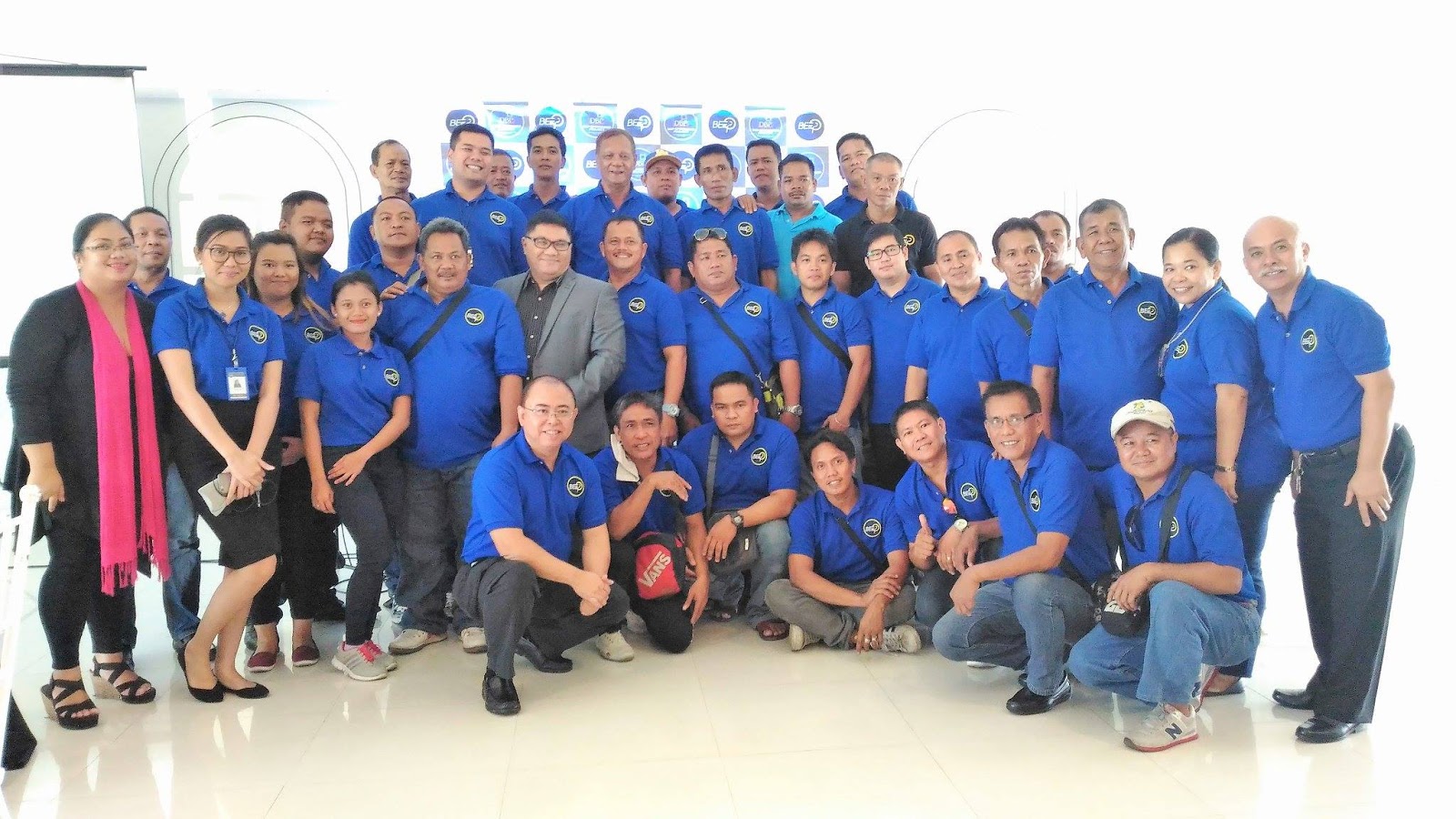
Beep Operators, Drivers and Employers

What are the Passenger Benefits?
Apart from the bigger and more spacious interior, passengers of air conditioned BEEPS travel in comfort, even if stuck in traffic. They also pay similar fare compared to older jeeps, starting with P8 minimum fare. Passenger safety is also foremost as drivers undergo medical, drug and psychological tests, and attend weekly seminars with their operators.
The Philippine government's Jeepney Modernization program has introduced a slew of energy efficient and electric jeepneys. The good news - some have started plying roads in Quezon City and other metros across the country officially! While the early routes for e-jeeps and fuel efficient jeeps were merely test routes, the LTFRB are now opening franchise for these energy efficient public transports.  The BEEP - or "Bagong Jeeps" - were introduced under an initiative led by transport group "Kilusan sa Pagbabago ng Industriya ng Transportasyon" (Kapit).  The bright blue BEEPs were acquired by their new owners through a loan from the Development Bank of the Philippines, which can be paid back in seven years. The deal has new BEEP owners turning over their old jeeps for these new Euro 4 compliant jeeps with emissions well below the standard.  The government aims to eventually phase out smoke emitting public utility transports that are 15 years old or older, in a bid to modernize the Philippines' transport sector. There are currently about 250,000 registered jeepneys in the country. Among the aim is to introduce 10,000 electric jeepneys within the next three years. Currently, among the number of newly deployed BEEPs, it's not clear how many of them are electric.  KAPIT Chairman Vigor Mendoza II said it is a good move from the government in ensuring the safety and protection of the riding public. The group said several Beeps jeepneys are already plying in Quezon City, Cagayan de Oro, Tarlac City, Baguio City and Cebu City.  These BEEP Jeeps have GPS so the operator can do strict monitoring of the BEEP's speed and route. While previous designs say they will have televisions, I have yet to see one that has a TV inside. But CCTV and dashcam are installed for safety. They also have a fire extinguisher inside each unit, something you will rarely find in old jeeps. The LTFRB said modernized PUVs will soon have Internet connection too. BEEP cards, for e-payments will also be incorporated.  The BEEPs are Euro 4 compliant, meaning they are environment-friendly and fuel efficient. This means the new e-jeeps follow a world standard set in 2008-2010 while many of the old jeeps we are used to have standards well before the 90's - that's about 30 years ago or more!  A standard BEEP has a capacity of 25 persons, and is more spacious than the traditional jeep.  So how do you get one of these cool rides? KAPIT Chairman Mendoza explains the requirements.  1. An operator has to be a member of a transport association. They will have to sign a Management Contract, allowing the transport association management of the vehicle for franchise purposes. If the operator has an old jeepney unit, he has to retire it. It is unclear if this program is allowed for new operators.  2. The official price for these new units are 1.4 Million for the non air-conditioned BEEPS and P1.6 Million for the air-conditioned BEEPs. But the operator does not need to shell out money!  3. KAPIT will actually provide the initial capital for the downpayment or guarantee in lieu of. They will also assist with the banking requirements.  4. The monthly amortization of the air-conditioned BEEP is P17,000 per month. Each unit can service up to 600 passengers per day.  Are they good for Drivers? Under the transport association, the BEEPs are good for drivers too. Unlike in the old system, BEEP drivers are regular employees. They get a fixed salary of P1,100 per day and there is no profit boundary or quota required! That's for an 8-10 hour's worth of driving. They also wear uniforms, have SSS contributions. Drivers get assistance from a “passenger assistance officer” on board better known as conductors. The group also have their own mechanics for the maintenance and repair of the BEEP units.  What are the Passenger Benefits? Apart from the bigger and more spacious interior, passengers of air conditioned BEEPS travel in comfort, even if stuck in traffic. They also pay similar fare compared to older jeeps, starting with P8 minimum fare. Passenger safety is also foremost as drivers undergo medical, drug and psychological tests, and attend weekly seminars with their operators.  If you are interested or have questions, you may contact BEEP Program below. Apparently, they are also looking for drivers.  For the BEEP Facebook Page, click the BEEP logo below:   You may also contact them at 410-8601 or visit their website at 1team.ph (currently under construction)  Interested driver applicants may contact 0950-524-7994 You should be at least 25 years old, high school graduate and posses a restriction code 2 license.
A fully-loaded air-conditioned BEEP. Notice the passenger assistance officer wearing a uniform?


If you are interested or have questions, you may contact BEEP Program below. Apparently, they are also looking for drivers.

For the BEEP Facebook Page, click the BEEP logo below:
The Philippine government's Jeepney Modernization program has introduced a slew of energy efficient and electric jeepneys. The good news - some have started plying roads in Quezon City and other metros across the country officially! While the early routes for e-jeeps and fuel efficient jeeps were merely test routes, the LTFRB are now opening franchise for these energy efficient public transports.  The BEEP - or "Bagong Jeeps" - were introduced under an initiative led by transport group "Kilusan sa Pagbabago ng Industriya ng Transportasyon" (Kapit).  The bright blue BEEPs were acquired by their new owners through a loan from the Development Bank of the Philippines, which can be paid back in seven years. The deal has new BEEP owners turning over their old jeeps for these new Euro 4 compliant jeeps with emissions well below the standard.  The government aims to eventually phase out smoke emitting public utility transports that are 15 years old or older, in a bid to modernize the Philippines' transport sector. There are currently about 250,000 registered jeepneys in the country. Among the aim is to introduce 10,000 electric jeepneys within the next three years. Currently, among the number of newly deployed BEEPs, it's not clear how many of them are electric.  KAPIT Chairman Vigor Mendoza II said it is a good move from the government in ensuring the safety and protection of the riding public. The group said several Beeps jeepneys are already plying in Quezon City, Cagayan de Oro, Tarlac City, Baguio City and Cebu City.  These BEEP Jeeps have GPS so the operator can do strict monitoring of the BEEP's speed and route. While previous designs say they will have televisions, I have yet to see one that has a TV inside. But CCTV and dashcam are installed for safety. They also have a fire extinguisher inside each unit, something you will rarely find in old jeeps. The LTFRB said modernized PUVs will soon have Internet connection too. BEEP cards, for e-payments will also be incorporated.  The BEEPs are Euro 4 compliant, meaning they are environment-friendly and fuel efficient. This means the new e-jeeps follow a world standard set in 2008-2010 while many of the old jeeps we are used to have standards well before the 90's - that's about 30 years ago or more!  A standard BEEP has a capacity of 25 persons, and is more spacious than the traditional jeep.  So how do you get one of these cool rides? KAPIT Chairman Mendoza explains the requirements.  1. An operator has to be a member of a transport association. They will have to sign a Management Contract, allowing the transport association management of the vehicle for franchise purposes. If the operator has an old jeepney unit, he has to retire it. It is unclear if this program is allowed for new operators.  2. The official price for these new units are 1.4 Million for the non air-conditioned BEEPS and P1.6 Million for the air-conditioned BEEPs. But the operator does not need to shell out money!  3. KAPIT will actually provide the initial capital for the downpayment or guarantee in lieu of. They will also assist with the banking requirements.  4. The monthly amortization of the air-conditioned BEEP is P17,000 per month. Each unit can service up to 600 passengers per day.  Are they good for Drivers? Under the transport association, the BEEPs are good for drivers too. Unlike in the old system, BEEP drivers are regular employees. They get a fixed salary of P1,100 per day and there is no profit boundary or quota required! That's for an 8-10 hour's worth of driving. They also wear uniforms, have SSS contributions. Drivers get assistance from a “passenger assistance officer” on board better known as conductors. The group also have their own mechanics for the maintenance and repair of the BEEP units.  What are the Passenger Benefits? Apart from the bigger and more spacious interior, passengers of air conditioned BEEPS travel in comfort, even if stuck in traffic. They also pay similar fare compared to older jeeps, starting with P8 minimum fare. Passenger safety is also foremost as drivers undergo medical, drug and psychological tests, and attend weekly seminars with their operators.  If you are interested or have questions, you may contact BEEP Program below. Apparently, they are also looking for drivers.  For the BEEP Facebook Page, click the BEEP logo below:   You may also contact them at 410-8601 or visit their website at 1team.ph (currently under construction)  Interested driver applicants may contact 0950-524-7994 You should be at least 25 years old, high school graduate and posses a restriction code 2 license.

You may also contact them at 410-8601
or visit their website at 1team.ph (currently under construction)

Interested driver applicants may contact 0950-524-7994
You should be at least 25 years old, high school graduate and posses a restriction code 2 license.


©2017 THOUGHTSKOTO

SEARCH JBSOLIS, TYPE KEYWORDS and TITLE OF ARTICLE at the box below