Carousel

Sponsored Links

Looking for House and Lot Within Tagaytay Area? CONTACT US!

Name

Email *

Message *

Showing posts with label Libya. Show all posts

Tuesday, June 06, 2017

Qatari Royals Kidnapped - is the $1B Ransom to Terrorists the Cause of Gulf Rift?

A ransom payment of up to $1 billion to Iranian and al-Qaeda-linked forces in Syria may have been the tipping point for Qatari-Gulf Arab relations, the Financial Times reported on Monday.   According to people involved in the hostage deal, Qatar coughed up the money to release 9 members of the Gulf state’s royal family who were kidnapped in Iraq while on a hunting trip.  Local militia commanders and government officials in the region allege that Doha spent the money in a transaction that secured the release of 26 members of a Qatari falconry group in southern Iraqm 9 of whom are members of the ruling Al-Thani clan. The ransom also includes about 50 militants captured by jihadis in Syria. If they are to be believed, Qatar paid off two of the most infamous groups in the region: an al-Qaeda linked group in Syria and Iranian security officials.  According to local sources, the breakdown of ransom is $120-$140 million to Tahrir al-Sham (former al-Nusra Front) and another $80 million Ahrar al-Sham (Free Men of the Levant) while funneling some $700 million to Tehran.  But how did Qatar strike the deal, and how did they manage to cover the huge amount of money transferring hands? - The Four Towns Deal.  The Four Towns Deal is an agreement reached between warring factions in Syria, and sponsored by - guess who - Qatar. The deal involved four towns in Syria described by UN as "catastrophic", with more than 64,000 civilians "trapped in a cycle of daily violence and deprivation".   Foah and Kefraya, most of whose residents are Shia Muslims, have been encircled by rebels and al-Qaeda-linked Sunni jihadists since March 2015.  Madaya and Zabadani, which are predominantly Sunni Muslims, have meanwhile been besieged since June 2015 by the Syrian army and fighters from Lebanon's Hezbollah.  In the "Four Towns Agreement", the warring parties have allowed the UN and Red Cross to deliver aid on a few occasions in the past two years and to evacuate limited numbers of sick and injured people. Aid convoys last reached the towns on 14 March. Several thousand civilians were also allowed to leave Foah and Kefraya in December as part of a deal that saw the evacuation of a besieged rebel enclave in eastern Aleppo. Madaya and Zabadani residents will be taken to rebel-held areas around the city of Idlib and the town of Jarablus.  Analysts theorized that Qatar has used the deal as a cover to fund jihadists. “If you want to know how Qatar funds jihadists, look no further than the hostage deal,” said a Syrian opposition figure who has worked with an al-Qaeda mediator on hostage swaps in Syria. “And this isn’t the first — it is one of a series since the beginning of the war.”  The deal highlighted why Qatar is frequently accused of funding jihadists in Syria, usually via hostage payments. But perhaps the upsetting fact is that Doha may have paid off Saudi Arabia's main regional rival, Iran, which they accuse of fueling conflicts in the Arab world. The hostage deal, masked by the Four Towns Agreement, is the trigger to this latest and most drastic diplomatic row in the gulf region.  Is there any proof to these outlandish theory? The timeline of events seem to fit. After 16 months in captivity, the Qatari hunting party walked free, returned by their captors to Iraq’s Interior Ministry in Baghdad. They were then delivered to the embassy of Qatar, which for days had stationed a plane at the airport in anticipation of their release. The evacuation of the four villages under the "Four Towns Agreement" happened about the same time.  Iraqi Shiite official said the release of the Qatari prisoners was linked to the safe evacuation of — and delivery of humanitarian aid to — residents of two Shiite villages in Idlib Province, Fouaa and Kfarya. As part of that agreement, residents of two predominantly Sunni villages, Madaya and Zabadani, that have been held by rebels but besieged by forces loyal to the Syrian government are to be bused to safety.  Another interesting note, Haidar al-Abadi, the Iraqi prime minister, said in April his government had seized hundreds of millions of dollars, which Iraqi officials said arrived on Qatari planes “illegally”. It is not clear if this is money is part of the ransom money mentioned above, or an additional amount.  The Qatar News Agency "hacking" incident and the showing of a video which appears to present Qatari Emir Sheikh Tamim bin Hamad al-Thani making inciting statements about Iran and Israel sparked the regional dispute, raised tensions to its highest levels, where it ended in the current situation.
A ransom payment of up to $1 billion to Iranian and al-Qaeda-linked forces in Syria may have been the tipping point for Qatari-Gulf Arab relations, the Financial Times reported on Monday.

 According to people involved in the hostage deal, Qatar coughed up the money to release 9 members of the Gulf state’s royal family who were kidnapped in Iraq while on a falcon hunting trip.

A ransom payment of up to $1 billion to Iranian and al-Qaeda-linked forces in Syria may have been the tipping point for Qatari-Gulf Arab relations, the Financial Times reported on Monday.   According to people involved in the hostage deal, Qatar coughed up the money to release 9 members of the Gulf state’s royal family who were kidnapped in Iraq while on a hunting trip.  Local militia commanders and government officials in the region allege that Doha spent the money in a transaction that secured the release of 26 members of a Qatari falconry group in southern Iraqm 9 of whom are members of the ruling Al-Thani clan. The ransom also includes about 50 militants captured by jihadis in Syria. If they are to be believed, Qatar paid off two of the most infamous groups in the region: an al-Qaeda linked group in Syria and Iranian security officials.  According to local sources, the breakdown of ransom is $120-$140 million to Tahrir al-Sham (former al-Nusra Front) and another $80 million Ahrar al-Sham (Free Men of the Levant) while funneling some $700 million to Tehran.  But how did Qatar strike the deal, and how did they manage to cover the huge amount of money transferring hands? - The Four Towns Deal.  The Four Towns Deal is an agreement reached between warring factions in Syria, and sponsored by - guess who - Qatar. The deal involved four towns in Syria described by UN as "catastrophic", with more than 64,000 civilians "trapped in a cycle of daily violence and deprivation".   Foah and Kefraya, most of whose residents are Shia Muslims, have been encircled by rebels and al-Qaeda-linked Sunni jihadists since March 2015.  Madaya and Zabadani, which are predominantly Sunni Muslims, have meanwhile been besieged since June 2015 by the Syrian army and fighters from Lebanon's Hezbollah.  In the "Four Towns Agreement", the warring parties have allowed the UN and Red Cross to deliver aid on a few occasions in the past two years and to evacuate limited numbers of sick and injured people. Aid convoys last reached the towns on 14 March. Several thousand civilians were also allowed to leave Foah and Kefraya in December as part of a deal that saw the evacuation of a besieged rebel enclave in eastern Aleppo. Madaya and Zabadani residents will be taken to rebel-held areas around the city of Idlib and the town of Jarablus.  Analysts theorized that Qatar has used the deal as a cover to fund jihadists. “If you want to know how Qatar funds jihadists, look no further than the hostage deal,” said a Syrian opposition figure who has worked with an al-Qaeda mediator on hostage swaps in Syria. “And this isn’t the first — it is one of a series since the beginning of the war.”  The deal highlighted why Qatar is frequently accused of funding jihadists in Syria, usually via hostage payments. But perhaps the upsetting fact is that Doha may have paid off Saudi Arabia's main regional rival, Iran, which they accuse of fueling conflicts in the Arab world. The hostage deal, masked by the Four Towns Agreement, is the trigger to this latest and most drastic diplomatic row in the gulf region.  Is there any proof to these outlandish theory? The timeline of events seem to fit. After 16 months in captivity, the Qatari hunting party walked free, returned by their captors to Iraq’s Interior Ministry in Baghdad. They were then delivered to the embassy of Qatar, which for days had stationed a plane at the airport in anticipation of their release. The evacuation of the four villages under the "Four Towns Agreement" happened about the same time.  Iraqi Shiite official said the release of the Qatari prisoners was linked to the safe evacuation of — and delivery of humanitarian aid to — residents of two Shiite villages in Idlib Province, Fouaa and Kfarya. As part of that agreement, residents of two predominantly Sunni villages, Madaya and Zabadani, that have been held by rebels but besieged by forces loyal to the Syrian government are to be bused to safety.  Another interesting note, Haidar al-Abadi, the Iraqi prime minister, said in April his government had seized hundreds of millions of dollars, which Iraqi officials said arrived on Qatari planes “illegally”. It is not clear if this is money is part of the ransom money mentioned above, or an additional amount.  The Qatar News Agency "hacking" incident and the showing of a video which appears to present Qatari Emir Sheikh Tamim bin Hamad al-Thani making inciting statements about Iran and Israel sparked the regional dispute, raised tensions to its highest levels, where it ended in the current situation.
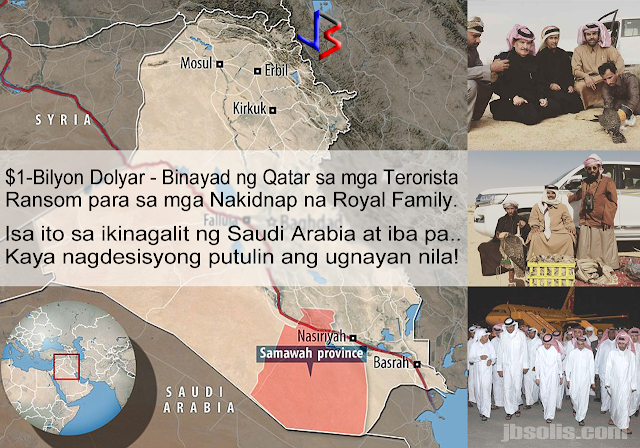
One of the Qataris, Sheikh Nayef bin Eid Mohammed Al Thani, posted a series of photographs on the internet about a week before the kidnapping 
Local militia commanders and government officials in the region allege that Doha spent the money in a transaction that secured the release of 26 members of a Qatari falconry group in southern Iraq 9 of whom are members of the ruling Al-Thani clan. The ransom also includes about 50 militants captured by jihadis in Syria. If they are to be believed, Qatar paid off two of the most infamous groups in the region: an al-Qaeda linked group in Syria and Iranian security officials.

According to local sources, the breakdown of ransom is $120-$140 million to Tahrir al-Sham (former al-Nusra Front) and another $80 million Ahrar al-Sham (Free Men of the Levant) while funneling some $700 million to Tehran.

But how did Qatar strike the deal, and how did they manage to cover the huge amount of money transferring hands? - The Four Towns Deal.
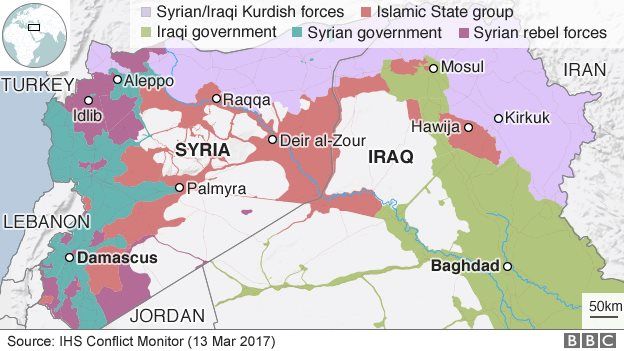
The Four Towns Deal is an agreement reached between warring factions in Syria, and sponsored by - guess who - Qatar. The deal involved four towns in Syria described by UN as "catastrophic", with more than 64,000 civilians "trapped in a cycle of daily violence and deprivation". 
A ransom payment of up to $1 billion to Iranian and al-Qaeda-linked forces in Syria may have been the tipping point for Qatari-Gulf Arab relations, the Financial Times reported on Monday.   According to people involved in the hostage deal, Qatar coughed up the money to release 9 members of the Gulf state’s royal family who were kidnapped in Iraq while on a hunting trip.  Local militia commanders and government officials in the region allege that Doha spent the money in a transaction that secured the release of 26 members of a Qatari falconry group in southern Iraqm 9 of whom are members of the ruling Al-Thani clan. The ransom also includes about 50 militants captured by jihadis in Syria. If they are to be believed, Qatar paid off two of the most infamous groups in the region: an al-Qaeda linked group in Syria and Iranian security officials.  According to local sources, the breakdown of ransom is $120-$140 million to Tahrir al-Sham (former al-Nusra Front) and another $80 million Ahrar al-Sham (Free Men of the Levant) while funneling some $700 million to Tehran.  But how did Qatar strike the deal, and how did they manage to cover the huge amount of money transferring hands? - The Four Towns Deal.  The Four Towns Deal is an agreement reached between warring factions in Syria, and sponsored by - guess who - Qatar. The deal involved four towns in Syria described by UN as "catastrophic", with more than 64,000 civilians "trapped in a cycle of daily violence and deprivation".   Foah and Kefraya, most of whose residents are Shia Muslims, have been encircled by rebels and al-Qaeda-linked Sunni jihadists since March 2015.  Madaya and Zabadani, which are predominantly Sunni Muslims, have meanwhile been besieged since June 2015 by the Syrian army and fighters from Lebanon's Hezbollah.  In the "Four Towns Agreement", the warring parties have allowed the UN and Red Cross to deliver aid on a few occasions in the past two years and to evacuate limited numbers of sick and injured people. Aid convoys last reached the towns on 14 March. Several thousand civilians were also allowed to leave Foah and Kefraya in December as part of a deal that saw the evacuation of a besieged rebel enclave in eastern Aleppo. Madaya and Zabadani residents will be taken to rebel-held areas around the city of Idlib and the town of Jarablus.  Analysts theorized that Qatar has used the deal as a cover to fund jihadists. “If you want to know how Qatar funds jihadists, look no further than the hostage deal,” said a Syrian opposition figure who has worked with an al-Qaeda mediator on hostage swaps in Syria. “And this isn’t the first — it is one of a series since the beginning of the war.”  The deal highlighted why Qatar is frequently accused of funding jihadists in Syria, usually via hostage payments. But perhaps the upsetting fact is that Doha may have paid off Saudi Arabia's main regional rival, Iran, which they accuse of fueling conflicts in the Arab world. The hostage deal, masked by the Four Towns Agreement, is the trigger to this latest and most drastic diplomatic row in the gulf region.  Is there any proof to these outlandish theory? The timeline of events seem to fit. After 16 months in captivity, the Qatari hunting party walked free, returned by their captors to Iraq’s Interior Ministry in Baghdad. They were then delivered to the embassy of Qatar, which for days had stationed a plane at the airport in anticipation of their release. The evacuation of the four villages under the "Four Towns Agreement" happened about the same time.  Iraqi Shiite official said the release of the Qatari prisoners was linked to the safe evacuation of — and delivery of humanitarian aid to — residents of two Shiite villages in Idlib Province, Fouaa and Kfarya. As part of that agreement, residents of two predominantly Sunni villages, Madaya and Zabadani, that have been held by rebels but besieged by forces loyal to the Syrian government are to be bused to safety.  Another interesting note, Haidar al-Abadi, the Iraqi prime minister, said in April his government had seized hundreds of millions of dollars, which Iraqi officials said arrived on Qatari planes “illegally”. It is not clear if this is money is part of the ransom money mentioned above, or an additional amount.  The Qatar News Agency "hacking" incident and the showing of a video which appears to present Qatari Emir Sheikh Tamim bin Hamad al-Thani making inciting statements about Iran and Israel sparked the regional dispute, raised tensions to its highest levels, where it ended in the current situation.
Foah and Kefraya, most of whose residents are Shia Muslims, have been encircled by rebels and al-Qaeda-linked Sunni jihadists since March 2015.

Madaya and Zabadani, which are predominantly Sunni Muslims, have meanwhile been besieged since June 2015 by the Syrian army and fighters from Lebanon's Hezbollah.


In the "Four Towns Agreement", the warring parties have allowed the UN and Red Cross to deliver aid on a few occasions in the past two years and to evacuate limited numbers of sick and injured people. Aid convoys last reached the towns on 14 March. Several thousand civilians were also allowed to leave Foah and Kefraya in December as part of a deal that saw the evacuation of a besieged rebel enclave in eastern Aleppo. Madaya and Zabadani residents will be taken to rebel-held areas around the city of Idlib and the town of Jarablus.

Analysts theorized that Qatar has used the deal as a cover to fund jihadists. “If you want to know how Qatar funds jihadists, look no further than the hostage deal,” said a Syrian opposition figure who has worked with an al-Qaeda mediator on hostage swaps in Syria. “And this isn’t the first — it is one of a series since the beginning of the war.”

The deal highlighted why Qatar is frequently accused of funding jihadists in Syria, usually via hostage payments. But perhaps the upsetting fact is that Doha may have paid off Saudi Arabia's main regional rival, Iran, which they accuse of fueling conflicts in the Arab world. The hostage deal, masked by the Four Towns Agreement, is the trigger to this latest and most drastic diplomatic row in the gulf region.

Is there any proof to these outlandish theory? The timeline of events seem to fit. After 16 months in captivity, the Qatari hunting party walked free, returned by their captors to Iraq’s Interior Ministry in Baghdad. They were then delivered to the embassy of Qatar, which for days had stationed a plane at the airport in anticipation of their release. The evacuation of the four villages under the "Four Towns Agreement" happened about the same time.

Iraqi Shiite official said the release of the Qatari prisoners was linked to the safe evacuation of — and delivery of humanitarian aid to — residents of two Shiite villages in Idlib Province, Fouaa and Kfarya. As part of that agreement, residents of two predominantly Sunni villages, Madaya and Zabadani, that have been held by rebels but besieged by forces loyal to the Syrian government are to be bused to safety.
A ransom payment of up to $1 billion to Iranian and al-Qaeda-linked forces in Syria may have been the tipping point for Qatari-Gulf Arab relations, the Financial Times reported on Monday.   According to people involved in the hostage deal, Qatar coughed up the money to release 9 members of the Gulf state’s royal family who were kidnapped in Iraq while on a hunting trip.  Local militia commanders and government officials in the region allege that Doha spent the money in a transaction that secured the release of 26 members of a Qatari falconry group in southern Iraqm 9 of whom are members of the ruling Al-Thani clan. The ransom also includes about 50 militants captured by jihadis in Syria. If they are to be believed, Qatar paid off two of the most infamous groups in the region: an al-Qaeda linked group in Syria and Iranian security officials.  According to local sources, the breakdown of ransom is $120-$140 million to Tahrir al-Sham (former al-Nusra Front) and another $80 million Ahrar al-Sham (Free Men of the Levant) while funneling some $700 million to Tehran.  But how did Qatar strike the deal, and how did they manage to cover the huge amount of money transferring hands? - The Four Towns Deal.  The Four Towns Deal is an agreement reached between warring factions in Syria, and sponsored by - guess who - Qatar. The deal involved four towns in Syria described by UN as "catastrophic", with more than 64,000 civilians "trapped in a cycle of daily violence and deprivation".   Foah and Kefraya, most of whose residents are Shia Muslims, have been encircled by rebels and al-Qaeda-linked Sunni jihadists since March 2015.  Madaya and Zabadani, which are predominantly Sunni Muslims, have meanwhile been besieged since June 2015 by the Syrian army and fighters from Lebanon's Hezbollah.  In the "Four Towns Agreement", the warring parties have allowed the UN and Red Cross to deliver aid on a few occasions in the past two years and to evacuate limited numbers of sick and injured people. Aid convoys last reached the towns on 14 March. Several thousand civilians were also allowed to leave Foah and Kefraya in December as part of a deal that saw the evacuation of a besieged rebel enclave in eastern Aleppo. Madaya and Zabadani residents will be taken to rebel-held areas around the city of Idlib and the town of Jarablus.  Analysts theorized that Qatar has used the deal as a cover to fund jihadists. “If you want to know how Qatar funds jihadists, look no further than the hostage deal,” said a Syrian opposition figure who has worked with an al-Qaeda mediator on hostage swaps in Syria. “And this isn’t the first — it is one of a series since the beginning of the war.”  The deal highlighted why Qatar is frequently accused of funding jihadists in Syria, usually via hostage payments. But perhaps the upsetting fact is that Doha may have paid off Saudi Arabia's main regional rival, Iran, which they accuse of fueling conflicts in the Arab world. The hostage deal, masked by the Four Towns Agreement, is the trigger to this latest and most drastic diplomatic row in the gulf region.  Is there any proof to these outlandish theory? The timeline of events seem to fit. After 16 months in captivity, the Qatari hunting party walked free, returned by their captors to Iraq’s Interior Ministry in Baghdad. They were then delivered to the embassy of Qatar, which for days had stationed a plane at the airport in anticipation of their release. The evacuation of the four villages under the "Four Towns Agreement" happened about the same time.  Iraqi Shiite official said the release of the Qatari prisoners was linked to the safe evacuation of — and delivery of humanitarian aid to — residents of two Shiite villages in Idlib Province, Fouaa and Kfarya. As part of that agreement, residents of two predominantly Sunni villages, Madaya and Zabadani, that have been held by rebels but besieged by forces loyal to the Syrian government are to be bused to safety.  Another interesting note, Haidar al-Abadi, the Iraqi prime minister, said in April his government had seized hundreds of millions of dollars, which Iraqi officials said arrived on Qatari planes “illegally”. It is not clear if this is money is part of the ransom money mentioned above, or an additional amount.  The Qatar News Agency "hacking" incident and the showing of a video which appears to present Qatari Emir Sheikh Tamim bin Hamad al-Thani making inciting statements about Iran and Israel sparked the regional dispute, raised tensions to its highest levels, where it ended in the current situation.
Civilians being evacuated as part of the Four Towns Deal
Another interesting note, Haidar al-Abadi, the Iraqi prime minister, said in April his government had seized hundreds of millions of dollars, which Iraqi officials said arrived on Qatari planes “illegally”. It is not clear if this money is part of the ransom money mentioned above, or an additional amount.

The Qatar News Agency "hacking" incident and the showing of a video which appears to present Qatari Emir Sheikh Tamim bin Hamad al-Thani making inciting statements about Iran and Israel worsened the regional dispute and raised tensions to its highest levels, where it ended in the current situation.

source: FT. Al Bab


SEE ALSO

©2017 THOUGHTSKOTO
SEARCH JBSOLIS, TYPE KEYWORDS and TITLE OF ARTICLE at the box below

Monday, June 05, 2017

UPDATE: Empty Shelves Reported in Qatar, Government Denies News as Fake

Many residents have rushed to supermarkets in Qatar today to stock up on food items after waking up to news of Saudi Arabia closing the country’s only land border. Other neighboring countries Bahrain and UAE have closed their doors as well, closing all sea and airports access to Doha. Egypt, Yemen and Libya have followed suit, virtually leaving only one entry-exit point for Qatar, Iran.  Customers could be seen piling their carts high with supplies of milk, water, rice, flour and eggs at several grocery stores today, which were even busier than is usual for Ramadan.  Photographs of empty chiller shelves have already been circulating on social media sites, as residents reportedly cleared out stores of chicken and other fresh and frozen meat in some shops.  Some stores continue to have plentiful stocks, but that may soon change as news of trucks carrying food for Qatar are now lining up across the border in Saudi Arabia, unable to enter the country amid a diplomatic row between it and Arab nations.  Qatar’s foreign affairs ministry insisted that the border closing would not impact normal life in the country for citizens and residents. It added that the Qatari government will “take all the necessary measures to make certain of that and to thwart attempts to negatively affect Qatari society and economy.”  The grocery rush follows an escalating rift between Qatar and its neighboring Gulf states. Some analysts differ though, "It will immediately cause inflation and that will directly affect normal Qatari people," Ghanem Nuseibeh, a director at advisory firm Cornerstone Global, told the BBC. Earlier this morning, Saudi Arabia, the UAE and Bahrain announced that they would close all land, air and sea borders with Qatar within 24 hours. Egypt followed suit. One of the ruling governments in Libya later announced they are cutting ties with Qatar as well. Libya is currently under three separate government fighting a civil war. Maldives is the latest country to follow the same action against Doha.  As a peninsula that neighbors Saudi Arabia, Qatar relies heavily on its only land border to access food, as well as raw materials for its numerous mega infrastructure projects. Qatar’s agricultural production is constrained by scarce water resources, infertile soil, harsh climatic conditions and poor water management.  Qatar is located in one of the driest and water-stressed regions in the world. Low rainfall, high evaporation rates and a lack of arable land limit its ability to produce food, driving it to depend on imports to meet 90 per cent of its consumption needs.  A survey by Qatari officials suggests that six per cent of land is arable but others estimate this figure could be as low as 1.21 per cent. The over-exploitation of limited groundwater also puts significant pressure on existing domestic agriculture. Irrigation accounts for 60 per cent of the total national water use.  Less than ten percent of the food consumed in Qatar is produced within the country; the rest is imported.  Qatar experiences the lowest self-sufficiency in cereals, importing 99.5 per cent of the cereal consumed in 2012. Other highly imported foods include dairy products with 74.6 per cent imported in 2012, vegetables (83.4%), fruits (86%), meats (93.6%), legumes (95%), and edible oil (100%).  Abundant gas revenues have supported Qatar’s ability to import food and bridge the shortfall in domestic production. This however does not assure food security in the small gulf nation. This was made evident following the global food price crisis of 2008 where major food producing countries placed bans on food exports; as a result Qatar faced skyrocketing grain prices. The decision to cut off ties to Qatar comes weeks after Qatar News Agency was apparently hacked. At the time, insulting remarks attributed to the Emir about the country’s Gulf neighbors were published.  Officials debunked these as false, but many GCC countries doubt this to be true.

UPDATE: Turkey and Iran Exporting Food Items to Qatar. Money agencies report lowering dollar reserves.


Listen to this interview with an OFW in Qatar


Many residents have rushed to supermarkets in Qatar today to stock up on food items after waking up to news of Saudi Arabia closing the country’s only land border. Other neighboring countries Bahrain and UAE have closed their doors as well, closing all sea and airports access to Doha. Egypt, Yemen and Libya have followed suit, virtually leaving only one entry-exit point for Qatar, Iran.


Many residents have rushed to supermarkets in Qatar today to stock up on food items after waking up to news of Saudi Arabia closing the country’s only land border. Other neighboring countries Bahrain and UAE have closed their doors as well, closing all sea and airports access to Doha. Egypt, Yemen and Libya have followed suit, virtually leaving only one entry-exit point for Qatar, Iran.  Customers could be seen piling their carts high with supplies of milk, water, rice, flour and eggs at several grocery stores today, which were even busier than is usual for Ramadan.  Photographs of empty chiller shelves have already been circulating on social media sites, as residents reportedly cleared out stores of chicken and other fresh and frozen meat in some shops.  Some stores continue to have plentiful stocks, but that may soon change as news of trucks carrying food for Qatar are now lining up across the border in Saudi Arabia, unable to enter the country amid a diplomatic row between it and Arab nations.  Qatar’s foreign affairs ministry insisted that the border closing would not impact normal life in the country for citizens and residents. It added that the Qatari government will “take all the necessary measures to make certain of that and to thwart attempts to negatively affect Qatari society and economy.”  The grocery rush follows an escalating rift between Qatar and its neighboring Gulf states. Some analysts differ though, "It will immediately cause inflation and that will directly affect normal Qatari people," Ghanem Nuseibeh, a director at advisory firm Cornerstone Global, told the BBC. Earlier this morning, Saudi Arabia, the UAE and Bahrain announced that they would close all land, air and sea borders with Qatar within 24 hours. Egypt followed suit. One of the ruling governments in Libya later announced they are cutting ties with Qatar as well. Libya is currently under three separate government fighting a civil war. Maldives is the latest country to follow the same action against Doha.  As a peninsula that neighbors Saudi Arabia, Qatar relies heavily on its only land border to access food, as well as raw materials for its numerous mega infrastructure projects. Qatar’s agricultural production is constrained by scarce water resources, infertile soil, harsh climatic conditions and poor water management.  Qatar is located in one of the driest and water-stressed regions in the world. Low rainfall, high evaporation rates and a lack of arable land limit its ability to produce food, driving it to depend on imports to meet 90 per cent of its consumption needs.  A survey by Qatari officials suggests that six per cent of land is arable but others estimate this figure could be as low as 1.21 per cent. The over-exploitation of limited groundwater also puts significant pressure on existing domestic agriculture. Irrigation accounts for 60 per cent of the total national water use.  Less than ten percent of the food consumed in Qatar is produced within the country; the rest is imported.  Qatar experiences the lowest self-sufficiency in cereals, importing 99.5 per cent of the cereal consumed in 2012. Other highly imported foods include dairy products with 74.6 per cent imported in 2012, vegetables (83.4%), fruits (86%), meats (93.6%), legumes (95%), and edible oil (100%).  Abundant gas revenues have supported Qatar’s ability to import food and bridge the shortfall in domestic production. This however does not assure food security in the small gulf nation. This was made evident following the global food price crisis of 2008 where major food producing countries placed bans on food exports; as a result Qatar faced skyrocketing grain prices. The decision to cut off ties to Qatar comes weeks after Qatar News Agency was apparently hacked. At the time, insulting remarks attributed to the Emir about the country’s Gulf neighbors were published.  Officials debunked these as false, but many GCC countries doubt this to be true.

Customers could be seen piling their carts high with supplies of milk, water, rice, flour and eggs at several grocery stores today, which were even busier than is usual for Ramadan.
Photographs of empty chiller shelves have already been circulating on social media sites, as residents reportedly cleared out stores of chicken and other fresh and frozen meat in some shops.

Many residents have rushed to supermarkets in Qatar today to stock up on food items after waking up to news of Saudi Arabia closing the country’s only land border. Other neighboring countries Bahrain and UAE have closed their doors as well, closing all sea and airports access to Doha. Egypt, Yemen and Libya have followed suit, virtually leaving only one entry-exit point for Qatar, Iran.  Customers could be seen piling their carts high with supplies of milk, water, rice, flour and eggs at several grocery stores today, which were even busier than is usual for Ramadan.  Photographs of empty chiller shelves have already been circulating on social media sites, as residents reportedly cleared out stores of chicken and other fresh and frozen meat in some shops.  Some stores continue to have plentiful stocks, but that may soon change as news of trucks carrying food for Qatar are now lining up across the border in Saudi Arabia, unable to enter the country amid a diplomatic row between it and Arab nations.  Qatar’s foreign affairs ministry insisted that the border closing would not impact normal life in the country for citizens and residents. It added that the Qatari government will “take all the necessary measures to make certain of that and to thwart attempts to negatively affect Qatari society and economy.”  The grocery rush follows an escalating rift between Qatar and its neighboring Gulf states. Some analysts differ though, "It will immediately cause inflation and that will directly affect normal Qatari people," Ghanem Nuseibeh, a director at advisory firm Cornerstone Global, told the BBC. Earlier this morning, Saudi Arabia, the UAE and Bahrain announced that they would close all land, air and sea borders with Qatar within 24 hours. Egypt followed suit. One of the ruling governments in Libya later announced they are cutting ties with Qatar as well. Libya is currently under three separate government fighting a civil war. Maldives is the latest country to follow the same action against Doha.  As a peninsula that neighbors Saudi Arabia, Qatar relies heavily on its only land border to access food, as well as raw materials for its numerous mega infrastructure projects. Qatar’s agricultural production is constrained by scarce water resources, infertile soil, harsh climatic conditions and poor water management.  Qatar is located in one of the driest and water-stressed regions in the world. Low rainfall, high evaporation rates and a lack of arable land limit its ability to produce food, driving it to depend on imports to meet 90 per cent of its consumption needs.  A survey by Qatari officials suggests that six per cent of land is arable but others estimate this figure could be as low as 1.21 per cent. The over-exploitation of limited groundwater also puts significant pressure on existing domestic agriculture. Irrigation accounts for 60 per cent of the total national water use.  Less than ten percent of the food consumed in Qatar is produced within the country; the rest is imported.  Qatar experiences the lowest self-sufficiency in cereals, importing 99.5 per cent of the cereal consumed in 2012. Other highly imported foods include dairy products with 74.6 per cent imported in 2012, vegetables (83.4%), fruits (86%), meats (93.6%), legumes (95%), and edible oil (100%).  Abundant gas revenues have supported Qatar’s ability to import food and bridge the shortfall in domestic production. This however does not assure food security in the small gulf nation. This was made evident following the global food price crisis of 2008 where major food producing countries placed bans on food exports; as a result Qatar faced skyrocketing grain prices. The decision to cut off ties to Qatar comes weeks after Qatar News Agency was apparently hacked. At the time, insulting remarks attributed to the Emir about the country’s Gulf neighbors were published.  Officials debunked these as false, but many GCC countries doubt this to be true.

 Some stores continue to have plentiful stocks, but that may soon change as news of trucks carrying food for Qatar are now lining up across the border in Saudi Arabia, unable to enter the country amid a diplomatic row between it and Arab nations.

Qatar’s foreign affairs ministry insisted that the border closing would not impact normal life in the country for citizens and residents. It added that the Qatari government will “take all the necessary measures to make certain of that and to thwart attempts to negatively affect Qatari society and economy.”


Many residents have rushed to supermarkets in Qatar today to stock up on food items after waking up to news of Saudi Arabia closing the country’s only land border. Other neighboring countries Bahrain and UAE have closed their doors as well, closing all sea and airports access to Doha. Egypt, Yemen and Libya have followed suit, virtually leaving only one entry-exit point for Qatar, Iran.  Customers could be seen piling their carts high with supplies of milk, water, rice, flour and eggs at several grocery stores today, which were even busier than is usual for Ramadan.  Photographs of empty chiller shelves have already been circulating on social media sites, as residents reportedly cleared out stores of chicken and other fresh and frozen meat in some shops.  Some stores continue to have plentiful stocks, but that may soon change as news of trucks carrying food for Qatar are now lining up across the border in Saudi Arabia, unable to enter the country amid a diplomatic row between it and Arab nations.  Qatar’s foreign affairs ministry insisted that the border closing would not impact normal life in the country for citizens and residents. It added that the Qatari government will “take all the necessary measures to make certain of that and to thwart attempts to negatively affect Qatari society and economy.”  The grocery rush follows an escalating rift between Qatar and its neighboring Gulf states. Some analysts differ though, "It will immediately cause inflation and that will directly affect normal Qatari people," Ghanem Nuseibeh, a director at advisory firm Cornerstone Global, told the BBC. Earlier this morning, Saudi Arabia, the UAE and Bahrain announced that they would close all land, air and sea borders with Qatar within 24 hours. Egypt followed suit. One of the ruling governments in Libya later announced they are cutting ties with Qatar as well. Libya is currently under three separate government fighting a civil war. Maldives is the latest country to follow the same action against Doha.  As a peninsula that neighbors Saudi Arabia, Qatar relies heavily on its only land border to access food, as well as raw materials for its numerous mega infrastructure projects. Qatar’s agricultural production is constrained by scarce water resources, infertile soil, harsh climatic conditions and poor water management.  Qatar is located in one of the driest and water-stressed regions in the world. Low rainfall, high evaporation rates and a lack of arable land limit its ability to produce food, driving it to depend on imports to meet 90 per cent of its consumption needs.  A survey by Qatari officials suggests that six per cent of land is arable but others estimate this figure could be as low as 1.21 per cent. The over-exploitation of limited groundwater also puts significant pressure on existing domestic agriculture. Irrigation accounts for 60 per cent of the total national water use.  Less than ten percent of the food consumed in Qatar is produced within the country; the rest is imported.  Qatar experiences the lowest self-sufficiency in cereals, importing 99.5 per cent of the cereal consumed in 2012. Other highly imported foods include dairy products with 74.6 per cent imported in 2012, vegetables (83.4%), fruits (86%), meats (93.6%), legumes (95%), and edible oil (100%).  Abundant gas revenues have supported Qatar’s ability to import food and bridge the shortfall in domestic production. This however does not assure food security in the small gulf nation. This was made evident following the global food price crisis of 2008 where major food producing countries placed bans on food exports; as a result Qatar faced skyrocketing grain prices. The decision to cut off ties to Qatar comes weeks after Qatar News Agency was apparently hacked. At the time, insulting remarks attributed to the Emir about the country’s Gulf neighbors were published.  Officials debunked these as false, but many GCC countries doubt this to be true.
Trucks bound for Qatar are idle on the roadside. The Saudi-Qatar land border remains closed.

The grocery rush follows an escalating rift between Qatar and its neighboring Gulf states. Some analysts differ though, "It will immediately cause inflation and that will directly affect normal Qatari people," Ghanem Nuseibeh, a director at advisory firm Cornerstone Global, told the BBC.


Earlier this morning, Saudi Arabia, the UAE and Bahrain announced that they would close all land, air and sea borders with Qatar within 24 hours. Egypt followed suit. One of the ruling governments in Libya later announced they are cutting ties with Qatar as well. Libya is currently under three separate government fighting a civil war. Maldives is the latest country to follow the same action against Doha.
Many residents have rushed to supermarkets in Qatar today to stock up on food items after waking up to news of Saudi Arabia closing the country’s only land border. Other neighboring countries Bahrain and UAE have closed their doors as well, closing all sea and airports access to Doha. Egypt, Yemen and Libya have followed suit, virtually leaving only one entry-exit point for Qatar, Iran.  Customers could be seen piling their carts high with supplies of milk, water, rice, flour and eggs at several grocery stores today, which were even busier than is usual for Ramadan.  Photographs of empty chiller shelves have already been circulating on social media sites, as residents reportedly cleared out stores of chicken and other fresh and frozen meat in some shops.  Some stores continue to have plentiful stocks, but that may soon change as news of trucks carrying food for Qatar are now lining up across the border in Saudi Arabia, unable to enter the country amid a diplomatic row between it and Arab nations.  Qatar’s foreign affairs ministry insisted that the border closing would not impact normal life in the country for citizens and residents. It added that the Qatari government will “take all the necessary measures to make certain of that and to thwart attempts to negatively affect Qatari society and economy.”  The grocery rush follows an escalating rift between Qatar and its neighboring Gulf states. Some analysts differ though, "It will immediately cause inflation and that will directly affect normal Qatari people," Ghanem Nuseibeh, a director at advisory firm Cornerstone Global, told the BBC. Earlier this morning, Saudi Arabia, the UAE and Bahrain announced that they would close all land, air and sea borders with Qatar within 24 hours. Egypt followed suit. One of the ruling governments in Libya later announced they are cutting ties with Qatar as well. Libya is currently under three separate government fighting a civil war. Maldives is the latest country to follow the same action against Doha.  As a peninsula that neighbors Saudi Arabia, Qatar relies heavily on its only land border to access food, as well as raw materials for its numerous mega infrastructure projects. Qatar’s agricultural production is constrained by scarce water resources, infertile soil, harsh climatic conditions and poor water management.  Qatar is located in one of the driest and water-stressed regions in the world. Low rainfall, high evaporation rates and a lack of arable land limit its ability to produce food, driving it to depend on imports to meet 90 per cent of its consumption needs.  A survey by Qatari officials suggests that six per cent of land is arable but others estimate this figure could be as low as 1.21 per cent. The over-exploitation of limited groundwater also puts significant pressure on existing domestic agriculture. Irrigation accounts for 60 per cent of the total national water use.  Less than ten percent of the food consumed in Qatar is produced within the country; the rest is imported.  Qatar experiences the lowest self-sufficiency in cereals, importing 99.5 per cent of the cereal consumed in 2012. Other highly imported foods include dairy products with 74.6 per cent imported in 2012, vegetables (83.4%), fruits (86%), meats (93.6%), legumes (95%), and edible oil (100%).  Abundant gas revenues have supported Qatar’s ability to import food and bridge the shortfall in domestic production. This however does not assure food security in the small gulf nation. This was made evident following the global food price crisis of 2008 where major food producing countries placed bans on food exports; as a result Qatar faced skyrocketing grain prices. The decision to cut off ties to Qatar comes weeks after Qatar News Agency was apparently hacked. At the time, insulting remarks attributed to the Emir about the country’s Gulf neighbors were published.  Officials debunked these as false, but many GCC countries doubt this to be true.

As a peninsula that neighbors Saudi Arabia, Qatar relies heavily on its only land border to access food, as well as raw materials for its numerous mega infrastructure projects.
Qatar’s agricultural production is constrained by scarce water resources, infertile soil, harsh climatic conditions and poor water management.

Qatar is located in one of the driest and water-stressed regions in the world. Low rainfall, high evaporation rates and a lack of arable land limit its ability to produce food, driving it to depend on imports to meet 90 per cent of its consumption needs.
Many residents have rushed to supermarkets in Qatar today to stock up on food items after waking up to news of Saudi Arabia closing the country’s only land border. Other neighboring countries Bahrain and UAE have closed their doors as well, closing all sea and airports access to Doha. Egypt, Yemen and Libya have followed suit, virtually leaving only one entry-exit point for Qatar, Iran.  Customers could be seen piling their carts high with supplies of milk, water, rice, flour and eggs at several grocery stores today, which were even busier than is usual for Ramadan.  Photographs of empty chiller shelves have already been circulating on social media sites, as residents reportedly cleared out stores of chicken and other fresh and frozen meat in some shops.  Some stores continue to have plentiful stocks, but that may soon change as news of trucks carrying food for Qatar are now lining up across the border in Saudi Arabia, unable to enter the country amid a diplomatic row between it and Arab nations.  Qatar’s foreign affairs ministry insisted that the border closing would not impact normal life in the country for citizens and residents. It added that the Qatari government will “take all the necessary measures to make certain of that and to thwart attempts to negatively affect Qatari society and economy.”  The grocery rush follows an escalating rift between Qatar and its neighboring Gulf states. Some analysts differ though, "It will immediately cause inflation and that will directly affect normal Qatari people," Ghanem Nuseibeh, a director at advisory firm Cornerstone Global, told the BBC. Earlier this morning, Saudi Arabia, the UAE and Bahrain announced that they would close all land, air and sea borders with Qatar within 24 hours. Egypt followed suit. One of the ruling governments in Libya later announced they are cutting ties with Qatar as well. Libya is currently under three separate government fighting a civil war. Maldives is the latest country to follow the same action against Doha.  As a peninsula that neighbors Saudi Arabia, Qatar relies heavily on its only land border to access food, as well as raw materials for its numerous mega infrastructure projects. Qatar’s agricultural production is constrained by scarce water resources, infertile soil, harsh climatic conditions and poor water management.  Qatar is located in one of the driest and water-stressed regions in the world. Low rainfall, high evaporation rates and a lack of arable land limit its ability to produce food, driving it to depend on imports to meet 90 per cent of its consumption needs.  A survey by Qatari officials suggests that six per cent of land is arable but others estimate this figure could be as low as 1.21 per cent. The over-exploitation of limited groundwater also puts significant pressure on existing domestic agriculture. Irrigation accounts for 60 per cent of the total national water use.  Less than ten percent of the food consumed in Qatar is produced within the country; the rest is imported.  Qatar experiences the lowest self-sufficiency in cereals, importing 99.5 per cent of the cereal consumed in 2012. Other highly imported foods include dairy products with 74.6 per cent imported in 2012, vegetables (83.4%), fruits (86%), meats (93.6%), legumes (95%), and edible oil (100%).  Abundant gas revenues have supported Qatar’s ability to import food and bridge the shortfall in domestic production. This however does not assure food security in the small gulf nation. This was made evident following the global food price crisis of 2008 where major food producing countries placed bans on food exports; as a result Qatar faced skyrocketing grain prices. The decision to cut off ties to Qatar comes weeks after Qatar News Agency was apparently hacked. At the time, insulting remarks attributed to the Emir about the country’s Gulf neighbors were published.  Officials debunked these as false, but many GCC countries doubt this to be true.
A survey by Qatari officials suggests that six per cent of land is arable but others estimate this figure could be as low as 1.21 percent. The over-exploitation of limited groundwater also puts significant pressure on existing domestic agriculture. Irrigation accounts for 60 percent of the total national water use.

Less than ten percent of the food consumed in Qatar is produced within the country; the rest is imported.

Qatar experiences the lowest self-sufficiency in cereals, importing 99.5 per cent of the cereal consumed in 2012. Other highly imported foods include dairy products with 74.6 per cent imported in 2012, vegetables (83.4%), fruits (86%), meats (93.6%), legumes (95%), and edible oil (100%).


Many residents have rushed to supermarkets in Qatar today to stock up on food items after waking up to news of Saudi Arabia closing the country’s only land border. Other neighboring countries Bahrain and UAE have closed their doors as well, closing all sea and airports access to Doha. Egypt, Yemen and Libya have followed suit, virtually leaving only one entry-exit point for Qatar, Iran.  Customers could be seen piling their carts high with supplies of milk, water, rice, flour and eggs at several grocery stores today, which were even busier than is usual for Ramadan.  Photographs of empty chiller shelves have already been circulating on social media sites, as residents reportedly cleared out stores of chicken and other fresh and frozen meat in some shops.  Some stores continue to have plentiful stocks, but that may soon change as news of trucks carrying food for Qatar are now lining up across the border in Saudi Arabia, unable to enter the country amid a diplomatic row between it and Arab nations.  Qatar’s foreign affairs ministry insisted that the border closing would not impact normal life in the country for citizens and residents. It added that the Qatari government will “take all the necessary measures to make certain of that and to thwart attempts to negatively affect Qatari society and economy.”  The grocery rush follows an escalating rift between Qatar and its neighboring Gulf states. Some analysts differ though, "It will immediately cause inflation and that will directly affect normal Qatari people," Ghanem Nuseibeh, a director at advisory firm Cornerstone Global, told the BBC. Earlier this morning, Saudi Arabia, the UAE and Bahrain announced that they would close all land, air and sea borders with Qatar within 24 hours. Egypt followed suit. One of the ruling governments in Libya later announced they are cutting ties with Qatar as well. Libya is currently under three separate government fighting a civil war. Maldives is the latest country to follow the same action against Doha.  As a peninsula that neighbors Saudi Arabia, Qatar relies heavily on its only land border to access food, as well as raw materials for its numerous mega infrastructure projects. Qatar’s agricultural production is constrained by scarce water resources, infertile soil, harsh climatic conditions and poor water management.  Qatar is located in one of the driest and water-stressed regions in the world. Low rainfall, high evaporation rates and a lack of arable land limit its ability to produce food, driving it to depend on imports to meet 90 per cent of its consumption needs.  A survey by Qatari officials suggests that six per cent of land is arable but others estimate this figure could be as low as 1.21 per cent. The over-exploitation of limited groundwater also puts significant pressure on existing domestic agriculture. Irrigation accounts for 60 per cent of the total national water use.  Less than ten percent of the food consumed in Qatar is produced within the country; the rest is imported.  Qatar experiences the lowest self-sufficiency in cereals, importing 99.5 per cent of the cereal consumed in 2012. Other highly imported foods include dairy products with 74.6 per cent imported in 2012, vegetables (83.4%), fruits (86%), meats (93.6%), legumes (95%), and edible oil (100%).  Abundant gas revenues have supported Qatar’s ability to import food and bridge the shortfall in domestic production. This however does not assure food security in the small gulf nation. This was made evident following the global food price crisis of 2008 where major food producing countries placed bans on food exports; as a result Qatar faced skyrocketing grain prices. The decision to cut off ties to Qatar comes weeks after Qatar News Agency was apparently hacked. At the time, insulting remarks attributed to the Emir about the country’s Gulf neighbors were published.  Officials debunked these as false, but many GCC countries doubt this to be true.

Abundant gas revenues have supported Qatar’s ability to import food and bridge the shortfall in domestic production. This however does not assure food security in the small gulf nation. This was made evident following the global food price crisis of 2008 where major food producing countries placed bans on food exports; as a result Qatar faced skyrocketing grain prices.

The decision to cut off ties to Qatar comes weeks after Qatar News Agency was apparently hacked. At the time, insulting remarks attributed to the Emir about the country’s Gulf neighbors were published.
Officials debunked these as false, but many GCC countries doubt this to be true.

Update: Two days after the severing of ties, Qatar's government vows that supplies are plenty in the country. Al Jazeera, a news network owned by the Qatari government, aired news videos showing store shelves full with stocks.

People are not doubting this, however, the question remains about the future of supplies as stocks continue to dwindle due to higher than normal demand created by the current situation.

source: Doha News, Meed, Bloomberg

©2017 THOUGHTSKOTO
SEARCH JBSOLIS, TYPE KEYWORDS and TITLE OF ARTICLE at the box below