Carousel

Sponsored Links

Looking for House and Lot Within Tagaytay Area? CONTACT US!

Name

Email *

Message *

Showing posts with label drug war. Show all posts

Saturday, August 26, 2017

When To Refuse A Drug Test

Recent developments in the Philippine government's War on Drugs saw officers of one police district in Manila conducting a "House-to-house" drug testing. Apparently, they were doing the "voluntary" drug testing to a community to clear the are of drug users, and to help drug users enroll in a rehabilitation program.  But a group of human rights lawyers as well as some members of the community are reacting with the police initiative. They say the move is against the constitutional rights of an individual against self-incrimination and right to privacy.  Related News: Why Would The Police Kill A Grade 11 Son Of An OFW?  Meanwhile, the police say that the community drug testing is being conducted in coordination with local community officials and that the house-to-house drug testing is an option for some individuals who prefer to undergo testing in the privacy of their home instead of a common area.  "Advertisements" Which situations require a Drug Test without excuse?  By law, Drug Testing is an integral part of ensuring the safety of the public. However, it should not violate an individual's rights as established by the Constitution. It is however mandatory in certain situations below: applicants for drivers’ licenses applicants for firearms licenses high school and college students officers and employees of public and private offices members of the police, military and other law enforcement agencies those charged with crimes related to drugs - possession, sale, manufacture or transportation of illegal drugs and all candidates for public office, whether appointed or elected Also, note that Republic Act 9165 or the Dangerous Drugs Acts also specifies that drug tests must be done by “government forensic laboratories or by any of the drug testing laboratories accredited and monitored by the DOH to safeguard the quality of test results.”    "Sponsored Links"  When can an individual refuse a drug test? a high school student can actually refuse a drug test if he/she were picked as part of a sample group in the school's random drug test. His or her name however will be submitted to the Secretary of Education without prejudice or suspicion of drug use. outside a school setting, minors cannot be forced to undergo a drug test without a parent or guardian's consent suspects can refuse a drug test if they were apprehended for a minor crime (penalties are LESS than six years) - even if police profiles the suspect as a user a private citizen, even if he or she is suspected of drug use or into the illegal trade of drugs, can refuse a drug test unless he or she has been charged with drug related offense a private citizen, in his or her own residence, can also refuse a drug test being offered "voluntarily" if he or she feels being pressured by a higher authority  an individual can refuse a drug test if it is conducted WITHOUT a DOH-accredited personnel Also Read: Drug Testing For College - High School Students To Undergo in September   Effects of a Positive Drug Test Result All drug test results must remain confidential unless in cases involving violations of the  Republic Act 9165 or the Dangerous Drugs Acts. Also, a positive test must be backed by a confirmatory test, a second drug test conducted in a lab using a machine - not a testing kit.  For individuals testing positive for drugs, the result itself cannot be used to prosecute the person. Instead, he or she should be given options for treatment and rehabilitation.  Drug use in the workplace of an employee constitutes serious misconduct, which is one of the just causes for termination of said employee.  Policemen and government employees found to be drug users will be dismissed from the service upon positive confirmatory tests, whereas before, they were given a second chance with rehabilitation.
"Advertisements"


House-to-house Drug Testing
Recent developments in the Philippine government's War on Drugs saw officers of one police district in Manila conducting a "House-to-house" drug testing. Apparently, they were doing the "voluntary" drug testing to a community to clear the are of drug users, and to help drug users enroll in a rehabilitation program.


But a group of human rights lawyers as well as some members of the community are reacting with the police initiative. They say the move is against the constitutional rights of an individual against self-incrimination and right to privacy.


Related News: Why Would The Police Kill A Grade 11 Son Of An OFW?


Meanwhile, the police say that the community drug testing is being conducted in coordination with local community officials and that the house-to-house drug testing is an option for some individuals who prefer to undergo testing in the privacy of their home instead of a common area.

"Advertisements"

Which situations require a Drug Test without excuse?
By law, Drug Testing is an integral part of ensuring the safety of the public. However, it should not violate an individual's rights as established by the Constitution. It is however mandatory in certain situations below:

  • applicants for drivers’ licenses
  • applicants for firearms licenses
  • high school and college students
  • officers and employees of public and private offices
  • members of the police, military and other law enforcement agencies
  • those charged with crimes related to drugs - possession, sale, manufacture or transportation of illegal drugs
  • and all candidates for public office, whether appointed or elected
Also, note that Republic Act 9165 or the Dangerous Drugs Acts also specifies that drug tests must be done by “government forensic laboratories or by any of the drug testing laboratories accredited and monitored by the DOH to safeguard the quality of test results.”


"Sponsored Links"


When can an individual refuse a drug test?
  • a high school student can actually refuse a drug test if he/she were picked as part of a sample group in the school's random drug test. His or her name however will be submitted to the Secretary of Education without prejudice or suspicion of drug use.
  • outside a school setting, minors cannot be forced to undergo a drug test without a parent or guardian's consent
  • suspects can refuse a drug test if they were apprehended for a minor crime (penalties are LESS than six years) - even if police profiles the suspect as a user
  • a private citizen, even if he or she is suspected of drug use or into the illegal trade of drugs, can refuse a drug test unless he or she has been charged with drug related offense
  • a private citizen, in his or her own residence, can also refuse a drug test being offered "voluntarily" if he or she feels being pressured by a higher authority 
  • an individual can refuse a drug test if it is conducted WITHOUT a DOH-accredited personnel

Recent developments in the Philippine government's War on Drugs saw officers of one police district in Manila conducting a "House-to-house" drug testing. Apparently, they were doing the "voluntary" drug testing to a community to clear the are of drug users, and to help drug users enroll in a rehabilitation program.  But a group of human rights lawyers as well as some members of the community are reacting with the police initiative. They say the move is against the constitutional rights of an individual against self-incrimination and right to privacy.  Related News: Why Would The Police Kill A Grade 11 Son Of An OFW?  Meanwhile, the police say that the community drug testing is being conducted in coordination with local community officials and that the house-to-house drug testing is an option for some individuals who prefer to undergo testing in the privacy of their home instead of a common area.  "Advertisements" Which situations require a Drug Test without excuse?  By law, Drug Testing is an integral part of ensuring the safety of the public. However, it should not violate an individual's rights as established by the Constitution. It is however mandatory in certain situations below: applicants for drivers’ licenses applicants for firearms licenses high school and college students officers and employees of public and private offices members of the police, military and other law enforcement agencies those charged with crimes related to drugs - possession, sale, manufacture or transportation of illegal drugs and all candidates for public office, whether appointed or elected Also, note that Republic Act 9165 or the Dangerous Drugs Acts also specifies that drug tests must be done by “government forensic laboratories or by any of the drug testing laboratories accredited and monitored by the DOH to safeguard the quality of test results.”    "Sponsored Links"  When can an individual refuse a drug test? a high school student can actually refuse a drug test if he/she were picked as part of a sample group in the school's random drug test. His or her name however will be submitted to the Secretary of Education without prejudice or suspicion of drug use. outside a school setting, minors cannot be forced to undergo a drug test without a parent or guardian's consent suspects can refuse a drug test if they were apprehended for a minor crime (penalties are LESS than six years) - even if police profiles the suspect as a user a private citizen, even if he or she is suspected of drug use or into the illegal trade of drugs, can refuse a drug test unless he or she has been charged with drug related offense a private citizen, in his or her own residence, can also refuse a drug test being offered "voluntarily" if he or she feels being pressured by a higher authority  an individual can refuse a drug test if it is conducted WITHOUT a DOH-accredited personnel Also Read: Drug Testing For College - High School Students To Undergo in September   Effects of a Positive Drug Test Result All drug test results must remain confidential unless in cases involving violations of the  Republic Act 9165 or the Dangerous Drugs Acts. Also, a positive test must be backed by a confirmatory test, a second drug test conducted in a lab using a machine - not a testing kit.  For individuals testing positive for drugs, the result itself cannot be used to prosecute the person. Instead, he or she should be given options for treatment and rehabilitation.  Drug use in the workplace of an employee constitutes serious misconduct, which is one of the just causes for termination of said employee.  Policemen and government employees found to be drug users will be dismissed from the service upon positive confirmatory tests, whereas before, they were given a second chance with rehabilitation.

Effects of a Positive Drug Test Result
All drug test results must remain confidential unless in cases involving violations of the  Republic Act 9165 or the Dangerous Drugs Acts. Also, a positive result must be backed by a confirmatory test, a second drug test conducted in a lab using a machine - not a testing kit.

For individuals testing positive for drugs, the result itself cannot be used to prosecute the person. Instead, he or she should be given options for treatment and rehabilitation.

Drug use in the workplace of an employee constitutes serious misconduct, which is one of the just causes for termination of said employee.

Policemen and government employees found to be drug users will be dismissed from the service upon positive confirmatory tests, whereas before, they were given a second chance with rehabilitation.


©2017 THOUGHTSKOTO

SEARCH JBSOLIS, TYPE KEYWORDS and TITLE OF ARTICLE at the box below

Sunday, June 25, 2017

BBC Journalist Who Interviewed Sen Trillanes Went To The Philippines - Here's What He Found Out

Almost everyone who has access to the internet is now familiar with Senator Trillanes' infamous interview fiasco with BBC Anchor Stephen Sackur in his popular show HARDtalk.  Described as an experienced interviewer, Sackur went straight to business and threw tough questions to the senator. Viewers immediately noticed how Trillanes' answers were indirect and sometimes not related at all.  One point people noticed is how Trillanes' actually denied the existence of a national drug problem, saying the population of drug users in the Philippines is very low, even saying that most drug users use marijuana and not "shabu" or methamphetamine. This was far from the facts and numbers as compiled by the Philippine Drug Enforcement Agency and obviously researched by HARDtalk.  In an embarrassing turn of events, Sackur asked Trillanes if he was a democrat - someone who is committed to democracy. Trillanes answers "I am from the Nacionalista Party" to which Sackur cuts him off saying he was not asking about party affiliation.  Midway in their interview, Sackur pointed out that President Duterte actually maintains a huge public support, something that any western world leader could only dream of.  Among other topics discussed were the two coup attempts by Trillanes, which Sackur laughingly described as "pathetic" and "lasted only one day." At that point, viewers are realizing that Stephen Sackur actually knows what he is talking about, and not simply taking the senator's answers as facts.  Truth is, unlike many journalists who report about events in the Philippines, Stephen Sackur has been to the country himself. It was in 2015, before President Duterte became president.  The documentary starts with Sackur driving around Manila at night. He goes on to visit a call-center office - one of the fastest growing industries in the Philippines. Pinning the fact that the Philippines is one of the fastest-growing economies in Asia, Sackur correctly points out that the biggest single contributor to this economic growth is the millions of OFWs abroad.  He goes on to visit a shanty town, showing the poverty-stricken side of the country. He's even visited inside one family's house to see their condition. The documentary is really expansive, since he was able to link the existence of poverty with the fast population growth.  Sackur goes on to interview a head of the Catholic Church, to know why the Church is not supporting the government's efforts to control the population by Family Planning.  The documentary's focus was the contrast of economic growth against poverty in the Philippines, it did touched a little on crime and drug use, especially by the youth.  It is important to know that, when it comes to asking questions, Mr. Sackur knows his stuff, especially since we have seen him go to the Philippines and do his own research.  So who is Stephen Sackur? Stephen began working at the BBC as a trainee in 1986. He has been assigned to different parts of the world and in war zones.  Sackur became the regular host of the HARDtalk in 2004. He has interviewed prominent international personalities including President Hugo Chávez of Venezuela, President Luiz Inácio Lula da Silva of Brazil, Prime Minister Sheikh Hasina of Bangladesh, President Felipe Calderón of Mexico, President Shimon Peres of Israel, former Malaysian Prime Minister Dr. Mahathir Mohamad, President Jalal Talabani of Iraq, US vice-president Al Gore, US President George W. Bush and a host of other leaders and politicians from around the world.  Sackur was named 'International TV Personality of the Year' by the Association for International Broadcasting (AIB) in November 2010 and was nominated as  'Speech Broadcaster of the Year' at the Sony Radio Awards 2013.


Almost everyone who has access to the internet is now familiar with Senator Trillanes' infamous interview fiasco with BBC Anchor Stephen Sackur in his popular show HARDtalk.


Described as an experienced interviewer, Sackur went straight to business and grilled the senator. Viewers immediately noticed how Trillanes was stuttering and his answers were indirect and sometimes not related at all.

One point people noticed is how Trillanes' actually denied the existence of a national drug problem, saying the population of drug users in the Philippines is very low, even saying that most drug users use marijuana and not "shabu" or methamphetamine. This was far from the facts and numbers as compiled by the Philippine Drug Enforcement Agency and obviously researched by HARDtalk.

In an embarrassing turn of events, Sackur asked Trillanes if he was a democrat - someone who is committed to democracy. Trillanes answers "I am from the Nacionalista Party" to which Sackur cuts him off saying he was not asking about party affiliation.

Midway in their interview, Sackur pointed out that President Duterte actually maintains a huge public support, something that any western world leader could only dream of.

Among other topics discussed were the two coup attempts by Trillanes, which Sackur laughingly described as "pathetic" and "lasted only one day." At that point, viewers are realizing that Stephen Sackur actually knows what he is talking about, and not simply taking the senator's answers as facts.

Truth is, unlike many journalists who report about events in the Philippines, Stephen Sackur has been to the country himself. It was in 2015, before President Duterte became president.


The documentary starts with Sackur driving around Manila at night. He goes on to visit a call-center office - one of the fastest growing industries in the Philippines. Pinning the fact that the Philippines is one of the fastest-growing economies in Asia, Sackur correctly points out that the biggest single contributor to this economic growth is the millions of OFWs abroad.

He goes on to visit a shanty town, showing the poverty-stricken side of the country. He's even visited inside one family's house to see their condition. The documentary is really expansive, since he was able to link the existence of poverty with the fast population growth.


Sackur goes on to interview a head of the Catholic Church, to know why the Church is not supporting the government's efforts to control the population by Family Planning.

The documentary's focus was the contrast of economic growth against poverty in the Philippines, it did touched a little on crime and drug use, especially by the youth.


It is important to know that, when it comes to asking questions, Mr. Sackur knows his stuff, especially since we have seen him go to the Philippines and do his own research.

So who is Stephen Sackur? Stephen began working at the BBC as a trainee in 1986. He has been assigned to different parts of the world and in war zones.

Sackur became the regular host of the HARDtalk in 2004. He has interviewed prominent international personalities including President Hugo Chávez of Venezuela, President Luiz Inácio Lula da Silva of Brazil, Prime Minister Sheikh Hasina of Bangladesh, President Felipe Calderón of Mexico, President Shimon Peres of Israel, former Malaysian Prime Minister Dr. Mahathir Mohamad, President Jalal Talabani of Iraq, US vice-president Al Gore, US President George W. Bush and a host of other leaders and politicians from around the world.

Sackur was named 'International TV Personality of the Year' by the Association for International Broadcasting (AIB) in November 2010 and was nominated as  'Speech Broadcaster of the Year' at the Sony Radio Awards 2013.

sources: Wikipedia, BBC, YouTube


©2017 THOUGHTSKOTO
SEARCH JBSOLIS, TYPE KEYWORDS and TITLE OF ARTICLE at the box below

Friday, April 21, 2017

Duterte Is One Of 100 Most Influential People 2017 - But Time Magazine Says This

After winning the Time Magazine Readers' Poll on who should be included in their annual list of 100 Most Influential People in the World, beating out US President Donald Trump, UK Prime Minister Theresa May and Canada's PM Justin Trudeau, Philippine President Rodrigo Duterte is finally featured in the famous list.  Time Magazine editors however chose the opportunity to politicize the situation and hit the Philippine President over his controversial War on Drugs by choosing Former Colombian President César Gaviria to write the profile article of Duterte, and why he is included in the list. Gaviria has criticized Duterte before.  With Gaviria as its mouthpiece, Time Magazine focused on Duterte's War on Drugs, painting a grim picture that is not reflective of the actual situation in the Philippines. They instead chose to repeat accusations and false statistics that Duterte's critics have continued to spew via different media entities. Gaviria's words are quoted below: "Hitler massacred 3 million Jews. Now there are 3 million drug addicts. I'd be happy to slaughter them," Rodrigo Duterte, the Philippines' President, has said. His approach is as ill considered as his grasp of history (more than half of Hitler's 11 million victims were Jewish). Since Duterte's inauguration last year, some 7,000 people have been killed. His ironfisted strategy alarms governments, human-rights organizations and faith-based groups while winning high approval ratings at home.  When I was President of Colombia, I was also seduced into taking a tough stance on drugs. But after spending billions, I discovered that the war was unwinnable and the human costs were devastating. The cure was infinitely worse than the disease.  There are solutions that work. Duterte could start by treating drugs as a health, human rights and development issue. He could prosecute the most violent criminals and provide treatment for users rather than condemn them to prison, or worse. There will always be drugs in the Philippines, whether the President likes it or not. The tragedy is that many more people are likely going to die as he learns this lesson. Looking at the background of Cesar Gaviria, one would think it ironic that Time Magazine chooses the former leader of a country infamous for being the number one source of illegal drugs in America. In 2013, Colombia was the number one producer of Cocaine in the world. While that number is lower now, 60% of the world's cocaine come from Colombia.  Gaviria himself became controversial after it was discovered that his government had a secret agreement with Drug Kingpin Pablo Escobar. Escobar agreed to surrender to authorities and serve a maximum term of five years, and the Colombian government would not extradite him to the United States. In addition, the prison to house him, La Catedral, was built to Escobar's specifications. Escobar was also given the right to choose who would guard him, and it was believed he chose guards loyal only to him. Moreover, the prison was believed to have been designed more to keep out Escobar's enemies and protect him from assassination attempts, than to keep Escobar in. The finished prison was often called "Hotel Escobar" or "Club Medellín", because of its amenities. La Catedral featured a football pitch, giant doll house, bar, jacuzzi, and waterfall. It is also interesting to note that Gaviria is the head of the Liberal Party of Colombia. He became a replacement presidential candidate after the original candidate died (assasinated by drug cartels).  During his single, four-year term, he led a failed peace deal with Colombian FARC rebels. During his term, the Colombian Constitution was replaced. Part of the main change is the ban on extradition of Colombian citizens, likely influenced by Cartel bosses who are avoiding extradition to the US. His only "victory" in the Colombian Drug War was the killing of Pablo Escobar. Some believe that it was done to silence the drug kingpin forever.  Duterte's Real Accomplishment in the War on Drugs Never included in the article written about President Duterte were the massive accomplishments in the War on Drugs. There was no mention of the hundreds of thousands of drug users and pushers who surrendered and are now the the mega-rehab centers that the government built for them. De Lima is in the List too? Adding insult to the negative portrayal of President Duterte, Time Magazine included his most vocal critic, and accused drug lord protector, Senator Leila De Lima in the list. Placed under the "Icons" category, De Lima is being portrayed as the only voice brave enough to oppose the President's brutal carckdown. A former human rights lawyer, De Lima is in prison after being tagged by several drug lords for receiving drug money and turning a blind eye, and in fact encouraging their continued illegal operations, while providing them cozier prison houses called "kubols." Sounds a lot like that Colombian president's deal with Escobar. Her Time Magazine profile was written by Samantha Jane Power, a fellow human rights advocate with extreme views. She (again) used Duterte's Drug War, painted as an assault on human rights, to give credence to De Lima being included in the list. Samantha Jane Power, was a former UN Ambassador to UN, and was once a campaign adviser to Barrack Obama. She resigned after calling then candidate Hillary Clinton a "monster". She was criticized for wanting to deploy the United States armed forces to combat human rights abuses in other countries, contrary to the idea that the main purpose of the military is for national defense. Russian diplomats call her a stabilizer of countries not allied to the US.   Missing in the profile she wrote were the several cases that De Lima is facing, as well as the controversial private details of her amorous relationships with several of her bodyguards.   Netizens slammed the inclusion of De Lima in the list. No one really believes why she is considered an icon. Among the comment include these screenshots:


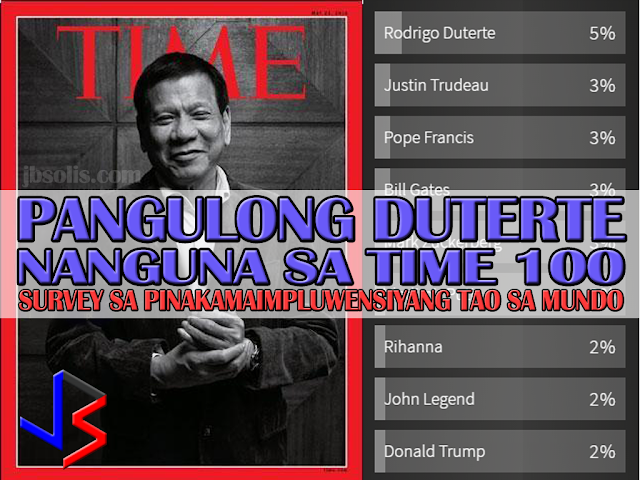
After winning the Time Magazine Readers' Poll on who should be included in their annual list of 100 Most Influential People in the World, beating out US President Donald Trump, UK Prime Minister Theresa May and Canada's PM Justin Trudeau, Philippine President Rodrigo Duterte is finally featured in the famous list.


After winning the Time Magazine Readers' Poll on who should be included in their annual list of 100 Most Influential People in the World, beating out US President Donald Trump, UK Prime Minister Theresa May and Canada's PM Justin Trudeau, Philippine President Rodrigo Duterte is finally featured in the famous list.  Time Magazine editors however chose the opportunity to politicize the situation and hit the Philippine President over his controversial War on Drugs by choosing Former Colombian President César Gaviria to write the profile article of Duterte, and why he is included in the list. Gaviria has criticized Duterte before.  With Gaviria as its mouthpiece, Time Magazine focused on Duterte's War on Drugs, painting a grim picture that is not reflective of the actual situation in the Philippines. They instead chose to repeat accusations and false statistics that Duterte's critics have continued to spew via different media entities. Gaviria's words are quoted below: "Hitler massacred 3 million Jews. Now there are 3 million drug addicts. I'd be happy to slaughter them," Rodrigo Duterte, the Philippines' President, has said. His approach is as ill considered as his grasp of history (more than half of Hitler's 11 million victims were Jewish). Since Duterte's inauguration last year, some 7,000 people have been killed. His ironfisted strategy alarms governments, human-rights organizations and faith-based groups while winning high approval ratings at home.  When I was President of Colombia, I was also seduced into taking a tough stance on drugs. But after spending billions, I discovered that the war was unwinnable and the human costs were devastating. The cure was infinitely worse than the disease.  There are solutions that work. Duterte could start by treating drugs as a health, human rights and development issue. He could prosecute the most violent criminals and provide treatment for users rather than condemn them to prison, or worse. There will always be drugs in the Philippines, whether the President likes it or not. The tragedy is that many more people are likely going to die as he learns this lesson. Looking at the background of Cesar Gaviria, one would think it ironic that Time Magazine chooses the former leader of a country infamous for being the number one source of illegal drugs in America. In 2013, Colombia was the number one producer of Cocaine in the world. While that number is lower now, 60% of the world's cocaine come from Colombia.  Gaviria himself became controversial after it was discovered that his government had a secret agreement with Drug Kingpin Pablo Escobar. Escobar agreed to surrender to authorities and serve a maximum term of five years, and the Colombian government would not extradite him to the United States. In addition, the prison to house him, La Catedral, was built to Escobar's specifications. Escobar was also given the right to choose who would guard him, and it was believed he chose guards loyal only to him. Moreover, the prison was believed to have been designed more to keep out Escobar's enemies and protect him from assassination attempts, than to keep Escobar in. The finished prison was often called "Hotel Escobar" or "Club Medellín", because of its amenities. La Catedral featured a football pitch, giant doll house, bar, jacuzzi, and waterfall. It is also interesting to note that Gaviria is the head of the Liberal Party of Colombia. He became a replacement presidential candidate after the original candidate died (assasinated by drug cartels).  During his single, four-year term, he led a failed peace deal with Colombian FARC rebels. During his term, the Colombian Constitution was replaced. Part of the main change is the ban on extradition of Colombian citizens, likely influenced by Cartel bosses who are avoiding extradition to the US. His only "victory" in the Colombian Drug War was the killing of Pablo Escobar. Some believe that it was done to silence the drug kingpin forever.  Duterte's Real Accomplishment in the War on Drugs Never included in the article written about President Duterte were the massive accomplishments in the War on Drugs. There was no mention of the hundreds of thousands of drug users and pushers who surrendered and are now the the mega-rehab centers that the government built for them. De Lima is in the List too? Adding insult to the negative portrayal of President Duterte, Time Magazine included his most vocal critic, and accused drug lord protector, Senator Leila De Lima in the list. Placed under the "Icons" category, De Lima is being portrayed as the only voice brave enough to oppose the President's brutal carckdown. A former human rights lawyer, De Lima is in prison after being tagged by several drug lords for receiving drug money and turning a blind eye, and in fact encouraging their continued illegal operations, while providing them cozier prison houses called "kubols." Sounds a lot like that Colombian president's deal with Escobar. Her Time Magazine profile was written by Samantha Jane Power, a fellow human rights advocate with extreme views. She (again) used Duterte's Drug War, painted as an assault on human rights, to give credence to De Lima being included in the list. Samantha Jane Power, was a former UN Ambassador to UN, and was once a campaign adviser to Barrack Obama. She resigned after calling then candidate Hillary Clinton a "monster". She was criticized for wanting to deploy the United States armed forces to combat human rights abuses in other countries, contrary to the idea that the main purpose of the military is for national defense. Russian diplomats call her a stabilizer of countries not allied to the US.   Missing in the profile she wrote were the several cases that De Lima is facing, as well as the controversial private details of her amorous relationships with several of her bodyguards.   Netizens slammed the inclusion of De Lima in the list. No one really believes why she is considered an icon. Among the comment include these screenshots:

Time Magazine editors however chose the opportunity to politicize the situation and hit the Philippine President over his controversial War on Drugs by choosing Former Colombian President CĂ©sar Gaviria to write the profile article of Duterte, and why he is included in the list. Gaviria has criticized Duterte before.


With Gaviria as its mouthpiece, Time Magazine focused on Duterte's War on Drugs, painting a grim picture that is not reflective of the actual situation in the Philippines. They instead chose to repeat accusations and false statistics that Duterte's critics have continued to spew via different media entities. Gaviria's words are quoted below:

"Hitler massacred 3 million Jews. Now there are 3 million drug addicts. I'd be happy to slaughter them," Rodrigo Duterte, the Philippines' President, has said. His approach is as ill considered as his grasp of history (more than half of Hitler's 11 million victims were Jewish). Since Duterte's inauguration last year, some 7,000 people have been killed. His ironfisted strategy alarms governments, human-rights organizations and faith-based groups while winning high approval ratings at home.

When I was President of Colombia, I was also seduced into taking a tough stance on drugs. But after spending billions, I discovered that the war was unwinnable and the human costs were devastating. The cure was infinitely worse than the disease.

There are solutions that work. Duterte could start by treating drugs as a health, human rights and development issue. He could prosecute the most violent criminals and provide treatment for users rather than condemn them to prison, or worse. There will always be drugs in the Philippines, whether the President likes it or not. The tragedy is that many more people are likely going to die as he learns this lesson.


After winning the Time Magazine Readers' Poll on who should be included in their annual list of 100 Most Influential People in the World, beating out US President Donald Trump, UK Prime Minister Theresa May and Canada's PM Justin Trudeau, Philippine President Rodrigo Duterte is finally featured in the famous list.  Time Magazine editors however chose the opportunity to politicize the situation and hit the Philippine President over his controversial War on Drugs by choosing Former Colombian President César Gaviria to write the profile article of Duterte, and why he is included in the list. Gaviria has criticized Duterte before.  With Gaviria as its mouthpiece, Time Magazine focused on Duterte's War on Drugs, painting a grim picture that is not reflective of the actual situation in the Philippines. They instead chose to repeat accusations and false statistics that Duterte's critics have continued to spew via different media entities. Gaviria's words are quoted below: "Hitler massacred 3 million Jews. Now there are 3 million drug addicts. I'd be happy to slaughter them," Rodrigo Duterte, the Philippines' President, has said. His approach is as ill considered as his grasp of history (more than half of Hitler's 11 million victims were Jewish). Since Duterte's inauguration last year, some 7,000 people have been killed. His ironfisted strategy alarms governments, human-rights organizations and faith-based groups while winning high approval ratings at home.  When I was President of Colombia, I was also seduced into taking a tough stance on drugs. But after spending billions, I discovered that the war was unwinnable and the human costs were devastating. The cure was infinitely worse than the disease.  There are solutions that work. Duterte could start by treating drugs as a health, human rights and development issue. He could prosecute the most violent criminals and provide treatment for users rather than condemn them to prison, or worse. There will always be drugs in the Philippines, whether the President likes it or not. The tragedy is that many more people are likely going to die as he learns this lesson. Looking at the background of Cesar Gaviria, one would think it ironic that Time Magazine chooses the former leader of a country infamous for being the number one source of illegal drugs in America. In 2013, Colombia was the number one producer of Cocaine in the world. While that number is lower now, 60% of the world's cocaine come from Colombia.  Gaviria himself became controversial after it was discovered that his government had a secret agreement with Drug Kingpin Pablo Escobar. Escobar agreed to surrender to authorities and serve a maximum term of five years, and the Colombian government would not extradite him to the United States. In addition, the prison to house him, La Catedral, was built to Escobar's specifications. Escobar was also given the right to choose who would guard him, and it was believed he chose guards loyal only to him. Moreover, the prison was believed to have been designed more to keep out Escobar's enemies and protect him from assassination attempts, than to keep Escobar in. The finished prison was often called "Hotel Escobar" or "Club Medellín", because of its amenities. La Catedral featured a football pitch, giant doll house, bar, jacuzzi, and waterfall. It is also interesting to note that Gaviria is the head of the Liberal Party of Colombia. He became a replacement presidential candidate after the original candidate died (assasinated by drug cartels).  During his single, four-year term, he led a failed peace deal with Colombian FARC rebels. During his term, the Colombian Constitution was replaced. Part of the main change is the ban on extradition of Colombian citizens, likely influenced by Cartel bosses who are avoiding extradition to the US. His only "victory" in the Colombian Drug War was the killing of Pablo Escobar. Some believe that it was done to silence the drug kingpin forever.  Duterte's Real Accomplishment in the War on Drugs Never included in the article written about President Duterte were the massive accomplishments in the War on Drugs. There was no mention of the hundreds of thousands of drug users and pushers who surrendered and are now the the mega-rehab centers that the government built for them. De Lima is in the List too? Adding insult to the negative portrayal of President Duterte, Time Magazine included his most vocal critic, and accused drug lord protector, Senator Leila De Lima in the list. Placed under the "Icons" category, De Lima is being portrayed as the only voice brave enough to oppose the President's brutal carckdown. A former human rights lawyer, De Lima is in prison after being tagged by several drug lords for receiving drug money and turning a blind eye, and in fact encouraging their continued illegal operations, while providing them cozier prison houses called "kubols." Sounds a lot like that Colombian president's deal with Escobar. Her Time Magazine profile was written by Samantha Jane Power, a fellow human rights advocate with extreme views. She (again) used Duterte's Drug War, painted as an assault on human rights, to give credence to De Lima being included in the list. Samantha Jane Power, was a former UN Ambassador to UN, and was once a campaign adviser to Barrack Obama. She resigned after calling then candidate Hillary Clinton a "monster". She was criticized for wanting to deploy the United States armed forces to combat human rights abuses in other countries, contrary to the idea that the main purpose of the military is for national defense. Russian diplomats call her a stabilizer of countries not allied to the US.   Missing in the profile she wrote were the several cases that De Lima is facing, as well as the controversial private details of her amorous relationships with several of her bodyguards.   Netizens slammed the inclusion of De Lima in the list. No one really believes why she is considered an icon. Among the comment include these screenshots:

César Gaviria
Former President, Colombia

Looking at the background of Cesar Gaviria, one would think it ironic that Time Magazine chooses the former leader of a country infamous for being the number one source of illegal drugs in America. In 2013, Colombia was the number one producer of Cocaine in the world. While that number is lower now, 60% of the world's cocaine come from Colombia.

Gaviria himself became controversial after it was discovered that his government had a secret agreement with Drug Kingpin Pablo Escobar. Escobar agreed to surrender to authorities and serve a maximum term of five years, and the Colombian government would not extradite him to the United States. In addition, the prison to house him, La Catedral, was built to Escobar's specifications. Escobar was also given the right to choose who would guard him, and it was believed he chose guards loyal only to him. Moreover, the prison was believed to have been designed more to keep out Escobar's enemies and protect him from assassination attempts, than to keep Escobar in. The finished prison was often called "Hotel Escobar" or "Club MedellĂ­n", because of its amenities. La Catedral featured a football pitch, giant doll house, bar, jacuzzi, and waterfall.


It is also interesting to note that Gaviria is the head of the Liberal Party of Colombia. He became a replacement presidential candidate after the original candidate died (assasinated by drug cartels).

During his single, four-year term, he led a failed peace deal with Colombian FARC rebels. Also during his term, the Colombian Constitution was replaced. Part of the main change is the ban on extradition of Colombian citizens, likely influenced by Cartel bosses who are avoiding extradition to the US. His only "victory" in the Colombian Drug War was the killing of Pablo Escobar. Some believe that it was done to silence the drug kingpin forever.


Duterte's Real Accomplishment in the War on Drugs


After winning the Time Magazine Readers' Poll on who should be included in their annual list of 100 Most Influential People in the World, beating out US President Donald Trump, UK Prime Minister Theresa May and Canada's PM Justin Trudeau, Philippine President Rodrigo Duterte is finally featured in the famous list.  Time Magazine editors however chose the opportunity to politicize the situation and hit the Philippine President over his controversial War on Drugs by choosing Former Colombian President César Gaviria to write the profile article of Duterte, and why he is included in the list. Gaviria has criticized Duterte before.  With Gaviria as its mouthpiece, Time Magazine focused on Duterte's War on Drugs, painting a grim picture that is not reflective of the actual situation in the Philippines. They instead chose to repeat accusations and false statistics that Duterte's critics have continued to spew via different media entities. Gaviria's words are quoted below: "Hitler massacred 3 million Jews. Now there are 3 million drug addicts. I'd be happy to slaughter them," Rodrigo Duterte, the Philippines' President, has said. His approach is as ill considered as his grasp of history (more than half of Hitler's 11 million victims were Jewish). Since Duterte's inauguration last year, some 7,000 people have been killed. His ironfisted strategy alarms governments, human-rights organizations and faith-based groups while winning high approval ratings at home.  When I was President of Colombia, I was also seduced into taking a tough stance on drugs. But after spending billions, I discovered that the war was unwinnable and the human costs were devastating. The cure was infinitely worse than the disease.  There are solutions that work. Duterte could start by treating drugs as a health, human rights and development issue. He could prosecute the most violent criminals and provide treatment for users rather than condemn them to prison, or worse. There will always be drugs in the Philippines, whether the President likes it or not. The tragedy is that many more people are likely going to die as he learns this lesson. Looking at the background of Cesar Gaviria, one would think it ironic that Time Magazine chooses the former leader of a country infamous for being the number one source of illegal drugs in America. In 2013, Colombia was the number one producer of Cocaine in the world. While that number is lower now, 60% of the world's cocaine come from Colombia.  Gaviria himself became controversial after it was discovered that his government had a secret agreement with Drug Kingpin Pablo Escobar. Escobar agreed to surrender to authorities and serve a maximum term of five years, and the Colombian government would not extradite him to the United States. In addition, the prison to house him, La Catedral, was built to Escobar's specifications. Escobar was also given the right to choose who would guard him, and it was believed he chose guards loyal only to him. Moreover, the prison was believed to have been designed more to keep out Escobar's enemies and protect him from assassination attempts, than to keep Escobar in. The finished prison was often called "Hotel Escobar" or "Club Medellín", because of its amenities. La Catedral featured a football pitch, giant doll house, bar, jacuzzi, and waterfall. It is also interesting to note that Gaviria is the head of the Liberal Party of Colombia. He became a replacement presidential candidate after the original candidate died (assasinated by drug cartels).  During his single, four-year term, he led a failed peace deal with Colombian FARC rebels. During his term, the Colombian Constitution was replaced. Part of the main change is the ban on extradition of Colombian citizens, likely influenced by Cartel bosses who are avoiding extradition to the US. His only "victory" in the Colombian Drug War was the killing of Pablo Escobar. Some believe that it was done to silence the drug kingpin forever.  Duterte's Real Accomplishment in the War on Drugs Never included in the article written about President Duterte were the massive accomplishments in the War on Drugs. There was no mention of the hundreds of thousands of drug users and pushers who surrendered and are now the the mega-rehab centers that the government built for them. De Lima is in the List too? Adding insult to the negative portrayal of President Duterte, Time Magazine included his most vocal critic, and accused drug lord protector, Senator Leila De Lima in the list. Placed under the "Icons" category, De Lima is being portrayed as the only voice brave enough to oppose the President's brutal carckdown. A former human rights lawyer, De Lima is in prison after being tagged by several drug lords for receiving drug money and turning a blind eye, and in fact encouraging their continued illegal operations, while providing them cozier prison houses called "kubols." Sounds a lot like that Colombian president's deal with Escobar. Her Time Magazine profile was written by Samantha Jane Power, a fellow human rights advocate with extreme views. She (again) used Duterte's Drug War, painted as an assault on human rights, to give credence to De Lima being included in the list. Samantha Jane Power, was a former UN Ambassador to UN, and was once a campaign adviser to Barrack Obama. She resigned after calling then candidate Hillary Clinton a "monster". She was criticized for wanting to deploy the United States armed forces to combat human rights abuses in other countries, contrary to the idea that the main purpose of the military is for national defense. Russian diplomats call her a stabilizer of countries not allied to the US.   Missing in the profile she wrote were the several cases that De Lima is facing, as well as the controversial private details of her amorous relationships with several of her bodyguards.   Netizens slammed the inclusion of De Lima in the list. No one really believes why she is considered an icon. Among the comment include these screenshots:

Never included in the article written about President Duterte were the massive accomplishments in the War on Drugs. There was no mention of the hundreds of thousands of drug users and pushers who surrendered and are now in the mega-rehab centers that the government built for them.

After winning the Time Magazine Readers' Poll on who should be included in their annual list of 100 Most Influential People in the World, beating out US President Donald Trump, UK Prime Minister Theresa May and Canada's PM Justin Trudeau, Philippine President Rodrigo Duterte is finally featured in the famous list.  Time Magazine editors however chose the opportunity to politicize the situation and hit the Philippine President over his controversial War on Drugs by choosing Former Colombian President César Gaviria to write the profile article of Duterte, and why he is included in the list. Gaviria has criticized Duterte before.  With Gaviria as its mouthpiece, Time Magazine focused on Duterte's War on Drugs, painting a grim picture that is not reflective of the actual situation in the Philippines. They instead chose to repeat accusations and false statistics that Duterte's critics have continued to spew via different media entities. Gaviria's words are quoted below: "Hitler massacred 3 million Jews. Now there are 3 million drug addicts. I'd be happy to slaughter them," Rodrigo Duterte, the Philippines' President, has said. His approach is as ill considered as his grasp of history (more than half of Hitler's 11 million victims were Jewish). Since Duterte's inauguration last year, some 7,000 people have been killed. His ironfisted strategy alarms governments, human-rights organizations and faith-based groups while winning high approval ratings at home.  When I was President of Colombia, I was also seduced into taking a tough stance on drugs. But after spending billions, I discovered that the war was unwinnable and the human costs were devastating. The cure was infinitely worse than the disease.  There are solutions that work. Duterte could start by treating drugs as a health, human rights and development issue. He could prosecute the most violent criminals and provide treatment for users rather than condemn them to prison, or worse. There will always be drugs in the Philippines, whether the President likes it or not. The tragedy is that many more people are likely going to die as he learns this lesson. Looking at the background of Cesar Gaviria, one would think it ironic that Time Magazine chooses the former leader of a country infamous for being the number one source of illegal drugs in America. In 2013, Colombia was the number one producer of Cocaine in the world. While that number is lower now, 60% of the world's cocaine come from Colombia.  Gaviria himself became controversial after it was discovered that his government had a secret agreement with Drug Kingpin Pablo Escobar. Escobar agreed to surrender to authorities and serve a maximum term of five years, and the Colombian government would not extradite him to the United States. In addition, the prison to house him, La Catedral, was built to Escobar's specifications. Escobar was also given the right to choose who would guard him, and it was believed he chose guards loyal only to him. Moreover, the prison was believed to have been designed more to keep out Escobar's enemies and protect him from assassination attempts, than to keep Escobar in. The finished prison was often called "Hotel Escobar" or "Club Medellín", because of its amenities. La Catedral featured a football pitch, giant doll house, bar, jacuzzi, and waterfall. It is also interesting to note that Gaviria is the head of the Liberal Party of Colombia. He became a replacement presidential candidate after the original candidate died (assasinated by drug cartels).  During his single, four-year term, he led a failed peace deal with Colombian FARC rebels. During his term, the Colombian Constitution was replaced. Part of the main change is the ban on extradition of Colombian citizens, likely influenced by Cartel bosses who are avoiding extradition to the US. His only "victory" in the Colombian Drug War was the killing of Pablo Escobar. Some believe that it was done to silence the drug kingpin forever.  Duterte's Real Accomplishment in the War on Drugs Never included in the article written about President Duterte were the massive accomplishments in the War on Drugs. There was no mention of the hundreds of thousands of drug users and pushers who surrendered and are now the the mega-rehab centers that the government built for them. De Lima is in the List too? Adding insult to the negative portrayal of President Duterte, Time Magazine included his most vocal critic, and accused drug lord protector, Senator Leila De Lima in the list. Placed under the "Icons" category, De Lima is being portrayed as the only voice brave enough to oppose the President's brutal carckdown. A former human rights lawyer, De Lima is in prison after being tagged by several drug lords for receiving drug money and turning a blind eye, and in fact encouraging their continued illegal operations, while providing them cozier prison houses called "kubols." Sounds a lot like that Colombian president's deal with Escobar. Her Time Magazine profile was written by Samantha Jane Power, a fellow human rights advocate with extreme views. She (again) used Duterte's Drug War, painted as an assault on human rights, to give credence to De Lima being included in the list. Samantha Jane Power, was a former UN Ambassador to UN, and was once a campaign adviser to Barrack Obama. She resigned after calling then candidate Hillary Clinton a "monster". She was criticized for wanting to deploy the United States armed forces to combat human rights abuses in other countries, contrary to the idea that the main purpose of the military is for national defense. Russian diplomats call her a stabilizer of countries not allied to the US.   Missing in the profile she wrote were the several cases that De Lima is facing, as well as the controversial private details of her amorous relationships with several of her bodyguards.   Netizens slammed the inclusion of De Lima in the list. No one really believes why she is considered an icon. Among the comment include these screenshots:


De Lima is in the List too?
Adding insult to the negative portrayal of President Duterte, Time Magazine included his most vocal critic, and accused drug lord protector, Senator Leila De Lima in the list. Placed under the "Icons" category, De Lima is being portrayed as the only voice brave enough to oppose the President's brutal crackdown. A former human rights lawyer, De Lima is in prison after being tagged by several drug lords for receiving drug money and turning a blind eye, and in fact encouraging their continued illegal operations, while providing them cozier prison houses called "kubols."
Sounds a lot like that Colombian president's deal with Escobar.
After winning the Time Magazine Readers' Poll on who should be included in their annual list of 100 Most Influential People in the World, beating out US President Donald Trump, UK Prime Minister Theresa May and Canada's PM Justin Trudeau, Philippine President Rodrigo Duterte is finally featured in the famous list.  Time Magazine editors however chose the opportunity to politicize the situation and hit the Philippine President over his controversial War on Drugs by choosing Former Colombian President César Gaviria to write the profile article of Duterte, and why he is included in the list. Gaviria has criticized Duterte before.  With Gaviria as its mouthpiece, Time Magazine focused on Duterte's War on Drugs, painting a grim picture that is not reflective of the actual situation in the Philippines. They instead chose to repeat accusations and false statistics that Duterte's critics have continued to spew via different media entities. Gaviria's words are quoted below: "Hitler massacred 3 million Jews. Now there are 3 million drug addicts. I'd be happy to slaughter them," Rodrigo Duterte, the Philippines' President, has said. His approach is as ill considered as his grasp of history (more than half of Hitler's 11 million victims were Jewish). Since Duterte's inauguration last year, some 7,000 people have been killed. His ironfisted strategy alarms governments, human-rights organizations and faith-based groups while winning high approval ratings at home.  When I was President of Colombia, I was also seduced into taking a tough stance on drugs. But after spending billions, I discovered that the war was unwinnable and the human costs were devastating. The cure was infinitely worse than the disease.  There are solutions that work. Duterte could start by treating drugs as a health, human rights and development issue. He could prosecute the most violent criminals and provide treatment for users rather than condemn them to prison, or worse. There will always be drugs in the Philippines, whether the President likes it or not. The tragedy is that many more people are likely going to die as he learns this lesson. Looking at the background of Cesar Gaviria, one would think it ironic that Time Magazine chooses the former leader of a country infamous for being the number one source of illegal drugs in America. In 2013, Colombia was the number one producer of Cocaine in the world. While that number is lower now, 60% of the world's cocaine come from Colombia.  Gaviria himself became controversial after it was discovered that his government had a secret agreement with Drug Kingpin Pablo Escobar. Escobar agreed to surrender to authorities and serve a maximum term of five years, and the Colombian government would not extradite him to the United States. In addition, the prison to house him, La Catedral, was built to Escobar's specifications. Escobar was also given the right to choose who would guard him, and it was believed he chose guards loyal only to him. Moreover, the prison was believed to have been designed more to keep out Escobar's enemies and protect him from assassination attempts, than to keep Escobar in. The finished prison was often called "Hotel Escobar" or "Club Medellín", because of its amenities. La Catedral featured a football pitch, giant doll house, bar, jacuzzi, and waterfall. It is also interesting to note that Gaviria is the head of the Liberal Party of Colombia. He became a replacement presidential candidate after the original candidate died (assasinated by drug cartels).  During his single, four-year term, he led a failed peace deal with Colombian FARC rebels. During his term, the Colombian Constitution was replaced. Part of the main change is the ban on extradition of Colombian citizens, likely influenced by Cartel bosses who are avoiding extradition to the US. His only "victory" in the Colombian Drug War was the killing of Pablo Escobar. Some believe that it was done to silence the drug kingpin forever.  Duterte's Real Accomplishment in the War on Drugs Never included in the article written about President Duterte were the massive accomplishments in the War on Drugs. There was no mention of the hundreds of thousands of drug users and pushers who surrendered and are now the the mega-rehab centers that the government built for them. De Lima is in the List too? Adding insult to the negative portrayal of President Duterte, Time Magazine included his most vocal critic, and accused drug lord protector, Senator Leila De Lima in the list. Placed under the "Icons" category, De Lima is being portrayed as the only voice brave enough to oppose the President's brutal carckdown. A former human rights lawyer, De Lima is in prison after being tagged by several drug lords for receiving drug money and turning a blind eye, and in fact encouraging their continued illegal operations, while providing them cozier prison houses called "kubols." Sounds a lot like that Colombian president's deal with Escobar. Her Time Magazine profile was written by Samantha Jane Power, a fellow human rights advocate with extreme views. She (again) used Duterte's Drug War, painted as an assault on human rights, to give credence to De Lima being included in the list. Samantha Jane Power, was a former UN Ambassador to UN, and was once a campaign adviser to Barrack Obama. She resigned after calling then candidate Hillary Clinton a "monster". She was criticized for wanting to deploy the United States armed forces to combat human rights abuses in other countries, contrary to the idea that the main purpose of the military is for national defense. Russian diplomats call her a stabilizer of countries not allied to the US.   Missing in the profile she wrote were the several cases that De Lima is facing, as well as the controversial private details of her amorous relationships with several of her bodyguards.   Netizens slammed the inclusion of De Lima in the list. No one really believes why she is considered an icon. Among the comment include these screenshots:

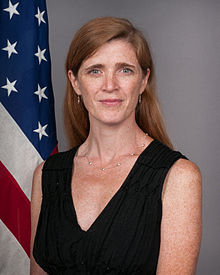
Her Time Magazine profile was written by Samantha Jane Power, a fellow human rights advocate with extreme views. She (again) used Duterte's Drug War, painted as an assault on human rights, to give credence to De Lima being included in the list. Samantha Jane Power, was a former UN Ambassador to UN, and was once a campaign adviser to Barrack Obama. She resigned after calling then candidate Hillary Clinton a "monster".
After winning the Time Magazine Readers' Poll on who should be included in their annual list of 100 Most Influential People in the World, beating out US President Donald Trump, UK Prime Minister Theresa May and Canada's PM Justin Trudeau, Philippine President Rodrigo Duterte is finally featured in the famous list.  Time Magazine editors however chose the opportunity to politicize the situation and hit the Philippine President over his controversial War on Drugs by choosing Former Colombian President César Gaviria to write the profile article of Duterte, and why he is included in the list. Gaviria has criticized Duterte before.  With Gaviria as its mouthpiece, Time Magazine focused on Duterte's War on Drugs, painting a grim picture that is not reflective of the actual situation in the Philippines. They instead chose to repeat accusations and false statistics that Duterte's critics have continued to spew via different media entities. Gaviria's words are quoted below: "Hitler massacred 3 million Jews. Now there are 3 million drug addicts. I'd be happy to slaughter them," Rodrigo Duterte, the Philippines' President, has said. His approach is as ill considered as his grasp of history (more than half of Hitler's 11 million victims were Jewish). Since Duterte's inauguration last year, some 7,000 people have been killed. His ironfisted strategy alarms governments, human-rights organizations and faith-based groups while winning high approval ratings at home.  When I was President of Colombia, I was also seduced into taking a tough stance on drugs. But after spending billions, I discovered that the war was unwinnable and the human costs were devastating. The cure was infinitely worse than the disease.  There are solutions that work. Duterte could start by treating drugs as a health, human rights and development issue. He could prosecute the most violent criminals and provide treatment for users rather than condemn them to prison, or worse. There will always be drugs in the Philippines, whether the President likes it or not. The tragedy is that many more people are likely going to die as he learns this lesson. Looking at the background of Cesar Gaviria, one would think it ironic that Time Magazine chooses the former leader of a country infamous for being the number one source of illegal drugs in America. In 2013, Colombia was the number one producer of Cocaine in the world. While that number is lower now, 60% of the world's cocaine come from Colombia.  Gaviria himself became controversial after it was discovered that his government had a secret agreement with Drug Kingpin Pablo Escobar. Escobar agreed to surrender to authorities and serve a maximum term of five years, and the Colombian government would not extradite him to the United States. In addition, the prison to house him, La Catedral, was built to Escobar's specifications. Escobar was also given the right to choose who would guard him, and it was believed he chose guards loyal only to him. Moreover, the prison was believed to have been designed more to keep out Escobar's enemies and protect him from assassination attempts, than to keep Escobar in. The finished prison was often called "Hotel Escobar" or "Club Medellín", because of its amenities. La Catedral featured a football pitch, giant doll house, bar, jacuzzi, and waterfall. It is also interesting to note that Gaviria is the head of the Liberal Party of Colombia. He became a replacement presidential candidate after the original candidate died (assasinated by drug cartels).  During his single, four-year term, he led a failed peace deal with Colombian FARC rebels. During his term, the Colombian Constitution was replaced. Part of the main change is the ban on extradition of Colombian citizens, likely influenced by Cartel bosses who are avoiding extradition to the US. His only "victory" in the Colombian Drug War was the killing of Pablo Escobar. Some believe that it was done to silence the drug kingpin forever.  Duterte's Real Accomplishment in the War on Drugs Never included in the article written about President Duterte were the massive accomplishments in the War on Drugs. There was no mention of the hundreds of thousands of drug users and pushers who surrendered and are now the the mega-rehab centers that the government built for them. De Lima is in the List too? Adding insult to the negative portrayal of President Duterte, Time Magazine included his most vocal critic, and accused drug lord protector, Senator Leila De Lima in the list. Placed under the "Icons" category, De Lima is being portrayed as the only voice brave enough to oppose the President's brutal carckdown. A former human rights lawyer, De Lima is in prison after being tagged by several drug lords for receiving drug money and turning a blind eye, and in fact encouraging their continued illegal operations, while providing them cozier prison houses called "kubols." Sounds a lot like that Colombian president's deal with Escobar. Her Time Magazine profile was written by Samantha Jane Power, a fellow human rights advocate with extreme views. She (again) used Duterte's Drug War, painted as an assault on human rights, to give credence to De Lima being included in the list. Samantha Jane Power, was a former UN Ambassador to UN, and was once a campaign adviser to Barrack Obama. She resigned after calling then candidate Hillary Clinton a "monster". She was criticized for wanting to deploy the United States armed forces to combat human rights abuses in other countries, contrary to the idea that the main purpose of the military is for national defense. Russian diplomats call her a stabilizer of countries not allied to the US.   Missing in the profile she wrote were the several cases that De Lima is facing, as well as the controversial private details of her amorous relationships with several of her bodyguards.   Netizens slammed the inclusion of De Lima in the list. No one really believes why she is considered an icon. Among the comment include these screenshots:

She was criticized for wanting to deploy the United States armed forces to combat human rights abuses in other countries, contrary to the idea that the main purpose of the military is for national defense. Russian diplomats call her a stabilizer of countries not allied to the US. 

Missing in the profile she wrote were the several cases that De Lima is facing, as well as the controversial private details of her amorous relationships with several of her bodyguards.


Netizens slammed the inclusion of De Lima in the list. No one really believes why she is considered an icon. Among the comment include these screenshots:
After winning the Time Magazine Readers' Poll on who should be included in their annual list of 100 Most Influential People in the World, beating out US President Donald Trump, UK Prime Minister Theresa May and Canada's PM Justin Trudeau, Philippine President Rodrigo Duterte is finally featured in the famous list.  Time Magazine editors however chose the opportunity to politicize the situation and hit the Philippine President over his controversial War on Drugs by choosing Former Colombian President César Gaviria to write the profile article of Duterte, and why he is included in the list. Gaviria has criticized Duterte before.  With Gaviria as its mouthpiece, Time Magazine focused on Duterte's War on Drugs, painting a grim picture that is not reflective of the actual situation in the Philippines. They instead chose to repeat accusations and false statistics that Duterte's critics have continued to spew via different media entities. Gaviria's words are quoted below: "Hitler massacred 3 million Jews. Now there are 3 million drug addicts. I'd be happy to slaughter them," Rodrigo Duterte, the Philippines' President, has said. His approach is as ill considered as his grasp of history (more than half of Hitler's 11 million victims were Jewish). Since Duterte's inauguration last year, some 7,000 people have been killed. His ironfisted strategy alarms governments, human-rights organizations and faith-based groups while winning high approval ratings at home.  When I was President of Colombia, I was also seduced into taking a tough stance on drugs. But after spending billions, I discovered that the war was unwinnable and the human costs were devastating. The cure was infinitely worse than the disease.  There are solutions that work. Duterte could start by treating drugs as a health, human rights and development issue. He could prosecute the most violent criminals and provide treatment for users rather than condemn them to prison, or worse. There will always be drugs in the Philippines, whether the President likes it or not. The tragedy is that many more people are likely going to die as he learns this lesson. Looking at the background of Cesar Gaviria, one would think it ironic that Time Magazine chooses the former leader of a country infamous for being the number one source of illegal drugs in America. In 2013, Colombia was the number one producer of Cocaine in the world. While that number is lower now, 60% of the world's cocaine come from Colombia.  Gaviria himself became controversial after it was discovered that his government had a secret agreement with Drug Kingpin Pablo Escobar. Escobar agreed to surrender to authorities and serve a maximum term of five years, and the Colombian government would not extradite him to the United States. In addition, the prison to house him, La Catedral, was built to Escobar's specifications. Escobar was also given the right to choose who would guard him, and it was believed he chose guards loyal only to him. Moreover, the prison was believed to have been designed more to keep out Escobar's enemies and protect him from assassination attempts, than to keep Escobar in. The finished prison was often called "Hotel Escobar" or "Club Medellín", because of its amenities. La Catedral featured a football pitch, giant doll house, bar, jacuzzi, and waterfall. It is also interesting to note that Gaviria is the head of the Liberal Party of Colombia. He became a replacement presidential candidate after the original candidate died (assasinated by drug cartels).  During his single, four-year term, he led a failed peace deal with Colombian FARC rebels. During his term, the Colombian Constitution was replaced. Part of the main change is the ban on extradition of Colombian citizens, likely influenced by Cartel bosses who are avoiding extradition to the US. His only "victory" in the Colombian Drug War was the killing of Pablo Escobar. Some believe that it was done to silence the drug kingpin forever.  Duterte's Real Accomplishment in the War on Drugs Never included in the article written about President Duterte were the massive accomplishments in the War on Drugs. There was no mention of the hundreds of thousands of drug users and pushers who surrendered and are now the the mega-rehab centers that the government built for them. De Lima is in the List too? Adding insult to the negative portrayal of President Duterte, Time Magazine included his most vocal critic, and accused drug lord protector, Senator Leila De Lima in the list. Placed under the "Icons" category, De Lima is being portrayed as the only voice brave enough to oppose the President's brutal carckdown. A former human rights lawyer, De Lima is in prison after being tagged by several drug lords for receiving drug money and turning a blind eye, and in fact encouraging their continued illegal operations, while providing them cozier prison houses called "kubols." Sounds a lot like that Colombian president's deal with Escobar. Her Time Magazine profile was written by Samantha Jane Power, a fellow human rights advocate with extreme views. She (again) used Duterte's Drug War, painted as an assault on human rights, to give credence to De Lima being included in the list. Samantha Jane Power, was a former UN Ambassador to UN, and was once a campaign adviser to Barrack Obama. She resigned after calling then candidate Hillary Clinton a "monster". She was criticized for wanting to deploy the United States armed forces to combat human rights abuses in other countries, contrary to the idea that the main purpose of the military is for national defense. Russian diplomats call her a stabilizer of countries not allied to the US.   Missing in the profile she wrote were the several cases that De Lima is facing, as well as the controversial private details of her amorous relationships with several of her bodyguards.   Netizens slammed the inclusion of De Lima in the list. No one really believes why she is considered an icon. Among the comment include these screenshots:

After winning the Time Magazine Readers' Poll on who should be included in their annual list of 100 Most Influential People in the World, beating out US President Donald Trump, UK Prime Minister Theresa May and Canada's PM Justin Trudeau, Philippine President Rodrigo Duterte is finally featured in the famous list.  Time Magazine editors however chose the opportunity to politicize the situation and hit the Philippine President over his controversial War on Drugs by choosing Former Colombian President César Gaviria to write the profile article of Duterte, and why he is included in the list. Gaviria has criticized Duterte before.  With Gaviria as its mouthpiece, Time Magazine focused on Duterte's War on Drugs, painting a grim picture that is not reflective of the actual situation in the Philippines. They instead chose to repeat accusations and false statistics that Duterte's critics have continued to spew via different media entities. Gaviria's words are quoted below: "Hitler massacred 3 million Jews. Now there are 3 million drug addicts. I'd be happy to slaughter them," Rodrigo Duterte, the Philippines' President, has said. His approach is as ill considered as his grasp of history (more than half of Hitler's 11 million victims were Jewish). Since Duterte's inauguration last year, some 7,000 people have been killed. His ironfisted strategy alarms governments, human-rights organizations and faith-based groups while winning high approval ratings at home.  When I was President of Colombia, I was also seduced into taking a tough stance on drugs. But after spending billions, I discovered that the war was unwinnable and the human costs were devastating. The cure was infinitely worse than the disease.  There are solutions that work. Duterte could start by treating drugs as a health, human rights and development issue. He could prosecute the most violent criminals and provide treatment for users rather than condemn them to prison, or worse. There will always be drugs in the Philippines, whether the President likes it or not. The tragedy is that many more people are likely going to die as he learns this lesson. Looking at the background of Cesar Gaviria, one would think it ironic that Time Magazine chooses the former leader of a country infamous for being the number one source of illegal drugs in America. In 2013, Colombia was the number one producer of Cocaine in the world. While that number is lower now, 60% of the world's cocaine come from Colombia.  Gaviria himself became controversial after it was discovered that his government had a secret agreement with Drug Kingpin Pablo Escobar. Escobar agreed to surrender to authorities and serve a maximum term of five years, and the Colombian government would not extradite him to the United States. In addition, the prison to house him, La Catedral, was built to Escobar's specifications. Escobar was also given the right to choose who would guard him, and it was believed he chose guards loyal only to him. Moreover, the prison was believed to have been designed more to keep out Escobar's enemies and protect him from assassination attempts, than to keep Escobar in. The finished prison was often called "Hotel Escobar" or "Club Medellín", because of its amenities. La Catedral featured a football pitch, giant doll house, bar, jacuzzi, and waterfall. It is also interesting to note that Gaviria is the head of the Liberal Party of Colombia. He became a replacement presidential candidate after the original candidate died (assasinated by drug cartels).  During his single, four-year term, he led a failed peace deal with Colombian FARC rebels. During his term, the Colombian Constitution was replaced. Part of the main change is the ban on extradition of Colombian citizens, likely influenced by Cartel bosses who are avoiding extradition to the US. His only "victory" in the Colombian Drug War was the killing of Pablo Escobar. Some believe that it was done to silence the drug kingpin forever.  Duterte's Real Accomplishment in the War on Drugs Never included in the article written about President Duterte were the massive accomplishments in the War on Drugs. There was no mention of the hundreds of thousands of drug users and pushers who surrendered and are now the the mega-rehab centers that the government built for them. De Lima is in the List too? Adding insult to the negative portrayal of President Duterte, Time Magazine included his most vocal critic, and accused drug lord protector, Senator Leila De Lima in the list. Placed under the "Icons" category, De Lima is being portrayed as the only voice brave enough to oppose the President's brutal carckdown. A former human rights lawyer, De Lima is in prison after being tagged by several drug lords for receiving drug money and turning a blind eye, and in fact encouraging their continued illegal operations, while providing them cozier prison houses called "kubols." Sounds a lot like that Colombian president's deal with Escobar. Her Time Magazine profile was written by Samantha Jane Power, a fellow human rights advocate with extreme views. She (again) used Duterte's Drug War, painted as an assault on human rights, to give credence to De Lima being included in the list. Samantha Jane Power, was a former UN Ambassador to UN, and was once a campaign adviser to Barrack Obama. She resigned after calling then candidate Hillary Clinton a "monster". She was criticized for wanting to deploy the United States armed forces to combat human rights abuses in other countries, contrary to the idea that the main purpose of the military is for national defense. Russian diplomats call her a stabilizer of countries not allied to the US.   Missing in the profile she wrote were the several cases that De Lima is facing, as well as the controversial private details of her amorous relationships with several of her bodyguards.   Netizens slammed the inclusion of De Lima in the list. No one really believes why she is considered an icon. Among the comment include these screenshots:


source: Time, Wikipedia


©2017 THOUGHTSKOTO

SEARCH JBSOLIS