Carousel

Sponsored Links

Looking for House and Lot Within Tagaytay Area? CONTACT US!

Name

Email *

Message *

Showing posts with label SIN TAX. Show all posts

Thursday, August 24, 2017

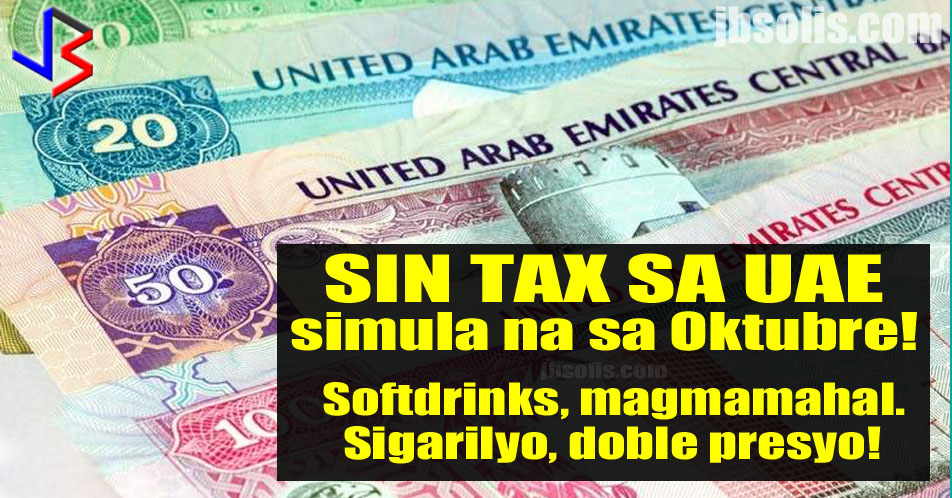
UAE to Implement Sin Taxes in October

The cost of living in the UAE is about to increase in a few weeks. Starting  October 1, the price of some selected items will increase by as much as 100 percent, or double.  The UAE’s tax authority announced that a 50 per cent tax would be imposed on carbonated drinks, while energy drinks and tobacco products would attract a 100 percent tax. Carbonated water is exempt from the carbonated drinks tax. The prices of excise goods at points of sale - groceries and stores - must include the Excise Tax.  Duty Free purchases at airports will also be exempt from the tax, as long as passengers are leaving the UAE. Passengers who purchase duty free items as they arrive in the UAE will be taxed.  UAE's Tax announcement comes just two months since Saudi Arabia imposed SIN TAXES on similar items with similar price increases in June.  President of the UAE Sheikh Khalifa bin Zayed Al Nahyan approved the Federal Decree-Law on Excise Tax last Monday, imposing excise taxes to products that are deemed unhealthy. The plan to tax products that are detrimental to health has been in place for some time now. The government hopes people will cut down on sugary products following this tax.  The UAE government also hopes the new excise taxes will help boost revenue and help offset the impact of lower oil prices. The gradual introduction of such taxes is part of a region-wide effort in the Gulf to diversify revenue streams away from oil.  The tax is expected to generate up to around Dh7 billion in annual revenues for the Federal Budget. They also believe, the move will reduce health costs for thousands of residents in the Emirates due to medical costs of obesity.  Additional products may be taxed in the future at rates of up to 200 per cent, but as of now it is just energy drinks, fizzy drinks, and tobacco.  Experts say the new taxes on tobacco products and carbonated drinks will have an impact on the industry. They predict that the impact on the sale of fizzy and energy drinks would be swift and severe. “Sales will plummet as a result of the tax, because people have a choice. If carbonated drinks are much more expensive, then people will just opt for water,” said one analyst.  This is just the beginning. Like other GCC states, UAE is also set to introduce VAT for the first time in its history. A 5% tax will be implemented starting January 2018. Of course, some basic goods are VAT exempt, but UAE, especially Dubai and Abu Dhabi, is known as a haven for luxury goods.  sources: Washington Post, GulfNews

"Advertisements"

The cost of living in the UAE is about to increase in a few weeks. Starting  October 1, the price of some selected items will increase by as much as 100 percent, or double.


The UAE’s tax authority announced that a 50 per cent tax would be imposed on carbonated drinks, while energy drinks and tobacco products would attract a 100 percent tax. Carbonated water is exempt from the carbonated drinks tax. The prices of excise goods at points of sale - groceries and stores - must include the Excise Tax.

Duty Free purchases at airports will also be exempt from the tax, as long as passengers are leaving the UAE. Passengers who purchase duty free items as they arrive in the UAE will be taxed.
The cost of living in the UAE is about to increase in a few weeks. Starting  October 1, the price of some selected items will increase by as much as 100 percent, or double.  The UAE’s tax authority announced that a 50 per cent tax would be imposed on carbonated drinks, while energy drinks and tobacco products would attract a 100 percent tax. Carbonated water is exempt from the carbonated drinks tax. The prices of excise goods at points of sale - groceries and stores - must include the Excise Tax.  Duty Free purchases at airports will also be exempt from the tax, as long as passengers are leaving the UAE. Passengers who purchase duty free items as they arrive in the UAE will be taxed.  UAE's Tax announcement comes just two months since Saudi Arabia imposed SIN TAXES on similar items with similar price increases in June.  President of the UAE Sheikh Khalifa bin Zayed Al Nahyan approved the Federal Decree-Law on Excise Tax last Monday, imposing excise taxes to products that are deemed unhealthy. The plan to tax products that are detrimental to health has been in place for some time now. The government hopes people will cut down on sugary products following this tax.  The UAE government also hopes the new excise taxes will help boost revenue and help offset the impact of lower oil prices. The gradual introduction of such taxes is part of a region-wide effort in the Gulf to diversify revenue streams away from oil.  The tax is expected to generate up to around Dh7 billion in annual revenues for the Federal Budget. They also believe, the move will reduce health costs for thousands of residents in the Emirates due to medical costs of obesity.  Additional products may be taxed in the future at rates of up to 200 per cent, but as of now it is just energy drinks, fizzy drinks, and tobacco.  Experts say the new taxes on tobacco products and carbonated drinks will have an impact on the industry. They predict that the impact on the sale of fizzy and energy drinks would be swift and severe. “Sales will plummet as a result of the tax, because people have a choice. If carbonated drinks are much more expensive, then people will just opt for water,” said one analyst.  This is just the beginning. Like other GCC states, UAE is also set to introduce VAT for the first time in its history. A 5% tax will be implemented starting January 2018. Of course, some basic goods are VAT exempt, but UAE, especially Dubai and Abu Dhabi, is known as a haven for luxury goods.  sources: Washington Post, GulfNews
graphics courtesy of Gulf News
"Advertisements"

UAE's Tax announcement comes just two months since Saudi Arabia imposed SIN TAXES on similar items with similar price increases in June.

SAUDI SIN TAX: Price of Soft Drinks Increase, Cigarette Doubles


President of the UAE Sheikh Khalifa bin Zayed Al Nahyan approved the Federal Decree-Law on Excise Tax last Monday, imposing excise taxes to products that are deemed unhealthy. The plan to tax products that are detrimental to health has been in place for some time now. The government hopes people will cut down on sugary products following this tax.


The UAE government also hopes the new excise taxes will help boost revenue and help offset the impact of lower oil prices. The gradual introduction of such taxes is part of a region-wide effort in the Gulf to diversify revenue streams away from oil.


"Sponsored Links"

The tax is expected to generate up to around Dh7 billion in annual revenues for the Federal Budget. They also believe, the move will reduce health costs for thousands of residents in the Emirates due to medical costs of obesity.
The cost of living in the UAE is about to increase in a few weeks. Starting  October 1, the price of some selected items will increase by as much as 100 percent, or double.  The UAE’s tax authority announced that a 50 per cent tax would be imposed on carbonated drinks, while energy drinks and tobacco products would attract a 100 percent tax. Carbonated water is exempt from the carbonated drinks tax. The prices of excise goods at points of sale - groceries and stores - must include the Excise Tax.  Duty Free purchases at airports will also be exempt from the tax, as long as passengers are leaving the UAE. Passengers who purchase duty free items as they arrive in the UAE will be taxed.  UAE's Tax announcement comes just two months since Saudi Arabia imposed SIN TAXES on similar items with similar price increases in June.  President of the UAE Sheikh Khalifa bin Zayed Al Nahyan approved the Federal Decree-Law on Excise Tax last Monday, imposing excise taxes to products that are deemed unhealthy. The plan to tax products that are detrimental to health has been in place for some time now. The government hopes people will cut down on sugary products following this tax.  The UAE government also hopes the new excise taxes will help boost revenue and help offset the impact of lower oil prices. The gradual introduction of such taxes is part of a region-wide effort in the Gulf to diversify revenue streams away from oil.  The tax is expected to generate up to around Dh7 billion in annual revenues for the Federal Budget. They also believe, the move will reduce health costs for thousands of residents in the Emirates due to medical costs of obesity.  Additional products may be taxed in the future at rates of up to 200 per cent, but as of now it is just energy drinks, fizzy drinks, and tobacco.  Experts say the new taxes on tobacco products and carbonated drinks will have an impact on the industry. They predict that the impact on the sale of fizzy and energy drinks would be swift and severe. “Sales will plummet as a result of the tax, because people have a choice. If carbonated drinks are much more expensive, then people will just opt for water,” said one analyst.  This is just the beginning. Like other GCC states, UAE is also set to introduce VAT for the first time in its history. A 5% tax will be implemented starting January 2018. Of course, some basic goods are VAT exempt, but UAE, especially Dubai and Abu Dhabi, is known as a haven for luxury goods.  sources: Washington Post, GulfNews
Obesity rates in the UAE is higher than world average

Additional products may be taxed in the future at rates of up to 200 per cent, but as of now it is just energy drinks, fizzy drinks, and tobacco.


Experts say the new taxes on tobacco products and carbonated drinks will have an impact on the industry. They predict that the impact on the sale of fizzy and energy drinks would be swift and severe. “Sales will plummet as a result of the tax, because people have a choice. If carbonated drinks are much more expensive, then people will just opt for water,” said one analyst.

This is just the beginning. Like other GCC states, UAE is also set to introduce VAT for the first time in its history. A 5% tax will be implemented starting January 2018. Of course, some basic goods are VAT exempt, but UAE, especially Dubai and Abu Dhabi, is known as a haven for luxury goods.

sources: Washington Post, GulfNews


©2017 THOUGHTSKOTO

SEARCH JBSOLIS, TYPE KEYWORDS and TITLE OF ARTICLE at the box below

Tuesday, June 13, 2017

SAUDI SIN TAX: Price of Soft Drinks Increase, Cigarette Doubles

Prices of cigarettes and energy drinks have doubled with the implementation of an excise tax that became effective midnight Saturday in a measure unprecedented in the Kingdom.  The excise tax, commonly known as a “sin tax,” is imposed on “unhealthy products” that are likely to cause health problems and eventually increase medical expenses paid by individuals or the government, according to the General Authority of Zakat and Tax (GAZT) official website.  Items that are now taxed include: cigarettes and cigar products, energy drinks and softdrinks. It is unclear if other sugary beverages are included since some shops still sell these at normal prices.  A few days prior to the implementation, some smokers struggled to find boxes of their usual cigarettes. Consumers attempted to stock up on cigarettes at their pre-tax price, while suppliers were trying to keep the products off the shelves until the prices rose.  At one of the main supermarkets in Jeddah, a shelf stacker said “There was nothing here yesterday,” pointing at the shelf. “Yesterday, the price was normal. But today, a soft drink can is SR2.25 ($0.60).”  Some supermarkets had also kept the newly taxed drinks away from customers so they are sold 50 percent higher in price in the case of soft drinks, and double the price for energy drinks.  Consumers will now pay SR12 at one supermarket for a 250ml can of a popular taurine drink, which is priced at SR11.90 at another supermarket. Aside from tags of doubled priced energy drinks, a new sign has been posted on market shelves stating: “Energy drinks harmful to health.” The full warning matches the text on beverage cans. This is part of the new move to curb consumption of sugary and energy drinks in the kingdom.  The tax authority urged producers and suppliers of taxable goods to register for the excise tax, the GAZT official website stated. The taxing body expects to lower consumption by people with limited income of the taxed products after the price hike.  Officials of Saudi General Authority of Zakat and Tax, the entity responsible for collecting VAT and excise tax, have told local media that they expect excise tax revenues of $1.87 billion (SR7bn) in just six months.  A regular smoker and energy-drinks lover from Jeddah said the move would not make her quit. “It’s an extra strain on the pocket, but it’s a habit that I can’t just quit or cut down on,” she said.  She bought her last pack of the cigarettes she smokes for SR12 one day before the tax into effect. Now it is SR24. Gulf Cooperation Council (GCC) countries are also set to implement a value-added tax (VAT) of 5 percent on certain goods beginning in 2018.  This is just the beginning of taxation imposed on goods in the Kingdom. Starting 2018, a 5%VAT will be implemented on goods throughout the GCC - Saudi Arabia, Bahrain, Kuwait, Oman, Qatar and UAE.


Prices of cigarettes and energy drinks have doubled with the implementation of an excise tax that became effective midnight Saturday in a measure unprecedented in the Kingdom.

The excise tax, commonly known as a “sin tax,” is imposed on “unhealthy products” that are likely to cause health problems and eventually increase medical expenses paid by individuals or the government, according to the General Authority of Zakat and Tax (GAZT) official website.

Items that are now taxed include: cigarettes and cigar products, energy drinks and softdrinks. It is unclear if other sugary beverages are included since some shops still sell these at normal prices.


A few days prior to the implementation, some smokers struggled to find boxes of their usual cigarettes. Consumers attempted to stock up on cigarettes at their pre-tax price, while suppliers were trying to keep the products off the shelves until the prices rose.

At one of the main supermarkets in Jeddah, a shelf stacker said “There was nothing here yesterday,” pointing at the shelf. “Yesterday, the price was normal. But today, a soft drink can is SR2.25 ($0.60).”

Some supermarkets had also kept the newly taxed drinks away from customers so they are sold 50 percent higher in price in the case of soft drinks, and double the price for energy drinks.


Consumers will now pay SR12 at one supermarket for a 250ml can of a popular taurine drink, which is priced at SR11.90 at another supermarket. Aside from tags of doubled priced energy drinks, a new sign has been posted on market shelves stating: “Energy drinks harmful to health.” The full warning matches the text on beverage cans. This is part of the new move to curb consumption of sugary and energy drinks in the kingdom.
Prices of cigarettes and energy drinks have doubled with the implementation of an excise tax that became effective midnight Saturday in a measure unprecedented in the Kingdom.  The excise tax, commonly known as a “sin tax,” is imposed on “unhealthy products” that are likely to cause health problems and eventually increase medical expenses paid by individuals or the government, according to the General Authority of Zakat and Tax (GAZT) official website.  Items that are now taxed include: cigarettes and cigar products, energy drinks and softdrinks. It is unclear if other sugary beverages are included since some shops still sell these at normal prices.  A few days prior to the implementation, some smokers struggled to find boxes of their usual cigarettes. Consumers attempted to stock up on cigarettes at their pre-tax price, while suppliers were trying to keep the products off the shelves until the prices rose.  At one of the main supermarkets in Jeddah, a shelf stacker said “There was nothing here yesterday,” pointing at the shelf. “Yesterday, the price was normal. But today, a soft drink can is SR2.25 ($0.60).”  Some supermarkets had also kept the newly taxed drinks away from customers so they are sold 50 percent higher in price in the case of soft drinks, and double the price for energy drinks.  Consumers will now pay SR12 at one supermarket for a 250ml can of a popular taurine drink, which is priced at SR11.90 at another supermarket. Aside from tags of doubled priced energy drinks, a new sign has been posted on market shelves stating: “Energy drinks harmful to health.” The full warning matches the text on beverage cans. This is part of the new move to curb consumption of sugary and energy drinks in the kingdom.  The tax authority urged producers and suppliers of taxable goods to register for the excise tax, the GAZT official website stated. The taxing body expects to lower consumption by people with limited income of the taxed products after the price hike.  Officials of Saudi General Authority of Zakat and Tax, the entity responsible for collecting VAT and excise tax, have told local media that they expect excise tax revenues of $1.87 billion (SR7bn) in just six months.  A regular smoker and energy-drinks lover from Jeddah said the move would not make her quit. “It’s an extra strain on the pocket, but it’s a habit that I can’t just quit or cut down on,” she said.  She bought her last pack of the cigarettes she smokes for SR12 one day before the tax into effect. Now it is SR24. Gulf Cooperation Council (GCC) countries are also set to implement a value-added tax (VAT) of 5 percent on certain goods beginning in 2018.  This is just the beginning of taxation imposed on goods in the Kingdom. Starting 2018, a 5%VAT will be implemented on goods throughout the GCC - Saudi Arabia, Bahrain, Kuwait, Oman, Qatar and UAE.

The tax authority urged producers and suppliers of taxable goods to register for the excise tax, the GAZT official website stated. The taxing body expects to lower consumption by people with limited income of the taxed products after the price hike.


Officials of Saudi General Authority of Zakat and Tax, the entity responsible for collecting VAT and excise tax, have told local media that they expect excise tax revenues of $1.87 billion (SR7bn) in just six months.


A regular smoker and energy-drinks lover from Jeddah said the move would not make her quit.
“It’s an extra strain on the pocket, but it’s a habit that I can’t just quit or cut down on,” she said.

She bought her last pack of the cigarettes she smokes for SR12 one day before the tax into effect. Now it is SR24.
Gulf Cooperation Council (GCC) countries are also set to implement a value-added tax (VAT) of 5 percent on certain goods beginning in 2018.

This is just the beginning of taxation imposed on goods in the Kingdom. Starting 2018, a 5%VAT will be implemented on goods throughout the GCC - Saudi Arabia, Bahrain, Kuwait, Oman, Qatar and UAE.


©2017 THOUGHTSKOTO
SEARCH JBSOLIS, TYPE KEYWORDS and TITLE OF ARTICLE at the box below