Carousel

Sponsored Links

Looking for House and Lot Within Tagaytay Area? CONTACT US!

Name

Email *

Message *

Showing posts with label NEDA. Show all posts

Monday, May 27, 2019

President Duterte Signed Magna Carta For The Poor

Under the law, “the government shall establish a system of progressive realization or implementation to provide the requirements, conditions, and opportunities for the full enjoyment or realization of the following rights of the poor, which are essential requirements towards poverty alleviation.”

Under the law, “the government shall establish a system of progressive realization or implementation to provide the requirements, conditions, and opportunities for the full enjoyment or realization of the following rights of the poor, which are essential requirements towards poverty alleviation.”      Ads  As a vow to the Filipino people to fight poverty and lessen the number of those living below the poverty threshold set by the National Economic Development Authority or NEDA, Republic Act 11291 or ‘Magna Carta for the Poor’ was signed by President Rodrigo Duterte.   Under the law, concerned government agencies should ensure that Filipinos’ rights are protected and that they are getting the adequate government services they need.  The law mandates the Department of Social Welfare and Development (DSWD) and Department of Agriculture must work hand in hand to minimize or mitigate hunger.  The Labor Department must ensure that there will be equal opportunities for jobseekers. National and public works projects must fill the 30% of their manpower from the poor sector.  The Health Department is mandated to provide quality and universal healthcare services.  The government should continue socialized housing programs and relocating those who are living in danger zones.  Access to free tertiary education and expand programs for technical and vocational courses.  The beneficiaries will be determined by NEDA and DSWD and the National Anti-Poverty Commission (NAPC). Ads      Sponsored Links     It also states that there will be a non-diminution of the rights of the poor or that “all other rights of the poor provided under existing laws shall remain in full force and effect.”  Within six months from the effectivity of this act, the National Anti-Poverty Commission (NAPC) shall, in coordination with the government departments and agencies, with the participation of the local government units and the basic sectors, promulgate rules and regulations to carry out the provisions of this Act.  This Act was passed by the Senate of the Philippines as Senate Bill 2121 on January 29, 2019 and adopted by the House of Representatives as an amendment to House Bill 5811 on January 30, 2019.  It shall take effect 15 days after its publication in the Official Gazette or in a newspaper of general circulation.  On April 17, Duterte also signed into law an act institutionalizing the Pantawid Pamilyang Pilipino Program (4Ps).  The 4Ps is the national poverty reduction strategy and human capital investment program that provides conditional ca  Under the law, “the government shall establish a system of progressive realization or implementation to provide the requirements, conditions, and opportunities for the full enjoyment or realization of the following rights of the poor, which are essential requirements towards poverty alleviation.”

Ads

As a vow to the Filipino people to fight poverty and lessen the number of those living below the poverty threshold set by the National Economic Development Authority or NEDA, Republic Act 11291 or ‘Magna Carta for the Poor’ was signed by President Rodrigo Duterte. 

Under the law, concerned government agencies should ensure that Filipinos’ rights are protected and that they are getting the adequate government services they need.

The law mandates the Department of Social Welfare and Development (DSWD) and Department of Agriculture must work hand in hand to minimize or mitigate hunger.

The Labor Department must ensure that there will be equal opportunities for jobseekers. National and public works projects must fill the 30% of their manpower from the poor sector.

The Health Department is mandated to provide quality and universal healthcare services.

The government should continue socialized housing programs and relocating those who are living in danger zones.

Access to free tertiary education and expand programs for technical and vocational courses.

The beneficiaries will be determined by NEDA and DSWD and the National Anti-Poverty Commission (NAPC).
Ads


Sponsored Links

Under the law, “the government shall establish a system of progressive realization or implementation to provide the requirements, conditions, and opportunities for the full enjoyment or realization of the following rights of the poor, which are essential requirements towards poverty alleviation.”      Ads  As a vow to the Filipino people to fight poverty and lessen the number of those living below the poverty threshold set by the National Economic Development Authority or NEDA, Republic Act 11291 or ‘Magna Carta for the Poor’ was signed by President Rodrigo Duterte.   Under the law, concerned government agencies should ensure that Filipinos’ rights are protected and that they are getting the adequate government services they need.  The law mandates the Department of Social Welfare and Development (DSWD) and Department of Agriculture must work hand in hand to minimize or mitigate hunger.  The Labor Department must ensure that there will be equal opportunities for jobseekers. National and public works projects must fill the 30% of their manpower from the poor sector.  The Health Department is mandated to provide quality and universal healthcare services.  The government should continue socialized housing programs and relocating those who are living in danger zones.  Access to free tertiary education and expand programs for technical and vocational courses.  The beneficiaries will be determined by NEDA and DSWD and the National Anti-Poverty Commission (NAPC). Ads      Sponsored Links     It also states that there will be a non-diminution of the rights of the poor or that “all other rights of the poor provided under existing laws shall remain in full force and effect.”  Within six months from the effectivity of this act, the National Anti-Poverty Commission (NAPC) shall, in coordination with the government departments and agencies, with the participation of the local government units and the basic sectors, promulgate rules and regulations to carry out the provisions of this Act.  This Act was passed by the Senate of the Philippines as Senate Bill 2121 on January 29, 2019 and adopted by the House of Representatives as an amendment to House Bill 5811 on January 30, 2019.  It shall take effect 15 days after its publication in the Official Gazette or in a newspaper of general circulation.  On April 17, Duterte also signed into law an act institutionalizing the Pantawid Pamilyang Pilipino Program (4Ps).  The 4Ps is the national poverty reduction strategy and human capital investment program that provides conditional ca  Under the law, “the government shall establish a system of progressive realization or implementation to provide the requirements, conditions, and opportunities for the full enjoyment or realization of the following rights of the poor, which are essential requirements towards poverty alleviation.”

It also states that there will be a non-diminution of the rights of the poor or that “all other rights of the poor provided under existing laws shall remain in full force and effect.”

Within six months from the effectivity of this act, the National Anti-Poverty Commission (NAPC) shall, in coordination with the government departments and agencies, with the participation of the local government units and the basic sectors, promulgate rules and regulations to carry out the provisions of this Act.

This Act was passed by the Senate of the Philippines as Senate Bill 2121 on January 29, 2019 and adopted by the House of Representatives as an amendment to House Bill 5811 on January 30, 2019.

The full implementation of the law shall take effect 15 days after its publication in the Official Gazette or in a newspaper of general circulation.

On April 17, Duterte also signed into law an act institutionalizing the Pantawid Pamilyang Pilipino Program (4Ps).

Under the law, “the government shall establish a system of progressive realization or implementation to provide the requirements, conditions, and opportunities for the full enjoyment or realization of the following rights of the poor, which are essential requirements towards poverty alleviation.”

The said magna carta was proposed six years ago during the term of the former administration but later vetoed due to insufficient fundings.
©2019 THOUGHTSKOTO

Wednesday, June 06, 2018

Can A Filipino Family Of Five Survive With P10K Monthly Budget?


Most Filipino workers usually earn more or less P10-15K monthly, some earn even less. It is where they get their budget for every need of their family— their daily expenses, payment for rent, mortgages, bills and everything. That is the reason why many Filipinos try their luck in applying for jobs abroad in search of greener pasture. With salary much bigger than they could get compared to local jobs, overseas Filipino workers (OFW) were forced to leave their family behind and work abroad.

But according to a statement from National Economic Development Authority (NEDA), P10,000 is enough for a family of five to live a decent life.

Advertisement


Most Filipino workers usually earn more or less P10-15K monthly, some earn even less. It is where they get their budget for every need of their family— their daily expenses, payment for rent, mortgages, bills and everything. That is the reason why many Filipinos try their luck in applying for jobs abroad in search of greener pasture. With salary much bigger than they could get compared to local jobs, overseas Filipino workers (OFW) were forced to leave their family behind and work abroad.  But according to a statement from National Economic Development Authority (NEDA), P10,000 is enough for a family of five to live a decent life. Advertisement        Sponsored Links       In a sample household budget cited by NEDA, P3,834 is enough to feed the same family of five for 30 days.   NEDA figure said that P127 per day could be enough to feed the entire five persons for a month.  However, labor groups do not agree with the statement released by NEDA deeming it as inaccurate and flawed.   Edillon already issued a clarification and said that her statement was taken out of context.  The number was simply a “hypothetical figure” to show how a family of five can apportion the money to certain commodities, she said in a separate interview on “Dobol B sa News TV”.  The P127 a day for food expenses for a family of five is a very low government standard, Tanjusay said.  The government must set the standard at a modest and acceptable level after reflecting the realities on the ground, Tanjusay noted.  The living standard for a Filipino family of five should be P1,200 a day and P400-P600 a day of the amount should go to food expenses alone, the group said.  READ MORE: Do You Want College Scholarship? Check This Out Now!    What Is SSS PESO Fund And How You Can Invest In It  No HSWs Has Been Sent To Kuwait Yet After Lifting Of Ban    In Demand College Courses Which Only A Few Take Up    OFWs Must Save, Get Insurance And Have An Investment

Sponsored Links


In a sample household budget cited by NEDA, P3,834 is enough to feed the same family of five for 30 days.
Most Filipino workers usually earn more or less P10-15K monthly, some earn even less. It is where they get their budget for every need of their family— their daily expenses, payment for rent, mortgages, bills and everything. That is the reason why many Filipinos try their luck in applying for jobs abroad in search of greener pasture. With salary much bigger than they could get compared to local jobs, overseas Filipino workers (OFW) were forced to leave their family behind and work abroad.  But according to a statement from National Economic Development Authority (NEDA), P10,000 is enough for a family of five to live a decent life. Advertisement        Sponsored Links       In a sample household budget cited by NEDA, P3,834 is enough to feed the same family of five for 30 days.   NEDA figure said that P127 per day could be enough to feed the entire five persons for a month.  However, labor groups do not agree with the statement released by NEDA deeming it as inaccurate and flawed.   Edillon already issued a clarification and said that her statement was taken out of context.  The number was simply a “hypothetical figure” to show how a family of five can apportion the money to certain commodities, she said in a separate interview on “Dobol B sa News TV”.  The P127 a day for food expenses for a family of five is a very low government standard, Tanjusay said.  The government must set the standard at a modest and acceptable level after reflecting the realities on the ground, Tanjusay noted.  The living standard for a Filipino family of five should be P1,200 a day and P400-P600 a day of the amount should go to food expenses alone, the group said.  READ MORE: Do You Want College Scholarship? Check This Out Now!    What Is SSS PESO Fund And How You Can Invest In It  No HSWs Has Been Sent To Kuwait Yet After Lifting Of Ban    In Demand College Courses Which Only A Few Take Up    OFWs Must Save, Get Insurance And Have An Investment
NEDA figure said that P127 per day could be enough to feed the entire five persons for a month.
However, labor groups do not agree with the statement released by NEDA deeming it as inaccurate and flawed.
Most Filipino workers usually earn more or less P10-15K monthly, some earn even less. It is where they get their budget for every need of their family— their daily expenses, payment for rent, mortgages, bills and everything. That is the reason why many Filipinos try their luck in applying for jobs abroad in search of greener pasture. With salary much bigger than they could get compared to local jobs, overseas Filipino workers (OFW) were forced to leave their family behind and work abroad.  But according to a statement from National Economic Development Authority (NEDA), P10,000 is enough for a family of five to live a decent life. Advertisement        Sponsored Links       In a sample household budget cited by NEDA, P3,834 is enough to feed the same family of five for 30 days.   NEDA figure said that P127 per day could be enough to feed the entire five persons for a month.  However, labor groups do not agree with the statement released by NEDA deeming it as inaccurate and flawed.   Edillon already issued a clarification and said that her statement was taken out of context.  The number was simply a “hypothetical figure” to show how a family of five can apportion the money to certain commodities, she said in a separate interview on “Dobol B sa News TV”.  The P127 a day for food expenses for a family of five is a very low government standard, Tanjusay said.  The government must set the standard at a modest and acceptable level after reflecting the realities on the ground, Tanjusay noted.  The living standard for a Filipino family of five should be P1,200 a day and P400-P600 a day of the amount should go to food expenses alone, the group said.  READ MORE: Do You Want College Scholarship? Check This Out Now!    What Is SSS PESO Fund And How You Can Invest In It  No HSWs Has Been Sent To Kuwait Yet After Lifting Of Ban    In Demand College Courses Which Only A Few Take Up    OFWs Must Save, Get Insurance And Have An Investment
Edillon already issued a clarification and said that her statement was taken out of context.

The number was simply a “hypothetical figure” to show how a family of five can apportion the money to certain commodities, she said in a separate interview on “Dobol B sa News TV”.

The P127 a day for food expenses for a family of five is a very low government standard, Tanjusay said.
Most Filipino workers usually earn more or less P10-15K monthly, some earn even less. It is where they get their budget for every need of their family— their daily expenses, payment for rent, mortgages, bills and everything. That is the reason why many Filipinos try their luck in applying for jobs abroad in search of greener pasture. With salary much bigger than they could get compared to local jobs, overseas Filipino workers (OFW) were forced to leave their family behind and work abroad.  But according to a statement from National Economic Development Authority (NEDA), P10,000 is enough for a family of five to live a decent life. Advertisement        Sponsored Links       In a sample household budget cited by NEDA, P3,834 is enough to feed the same family of five for 30 days.   NEDA figure said that P127 per day could be enough to feed the entire five persons for a month.  However, labor groups do not agree with the statement released by NEDA deeming it as inaccurate and flawed.   Edillon already issued a clarification and said that her statement was taken out of context.  The number was simply a “hypothetical figure” to show how a family of five can apportion the money to certain commodities, she said in a separate interview on “Dobol B sa News TV”.  The P127 a day for food expenses for a family of five is a very low government standard, Tanjusay said.  The government must set the standard at a modest and acceptable level after reflecting the realities on the ground, Tanjusay noted.  The living standard for a Filipino family of five should be P1,200 a day and P400-P600 a day of the amount should go to food expenses alone, the group said.  READ MORE: Do You Want College Scholarship? Check This Out Now!    What Is SSS PESO Fund And How You Can Invest In It  No HSWs Has Been Sent To Kuwait Yet After Lifting Of Ban    In Demand College Courses Which Only A Few Take Up    OFWs Must Save, Get Insurance And Have An Investment
The government must set the standard at a modest and acceptable level after reflecting the realities on the ground, Tanjusay noted.

The living standard for a Filipino family of five should be P1,200 a day and P400-P600 a day of the amount should go to food expenses alone, the group said
.


©2018 THOUGHTSKOTO

Friday, September 22, 2017

New Opportunities For OFWs Under President Rodrigo Duterte


Labor Undersecretary Bernard Olalia, POEA Officer-in-Charge talked about new opportunities for the Overseas Filipino Workers in China and Japan. He also discussed about the agreements made between countries that will open new opportunities the OFWs. "Presently, we have this government-to-government framework with respect to deployment of our Filipino  Overseas Workers in the Japanese government. we have this framework called JPEPA or the Philippine-Japanese Economic Partnership Agreement. Under this framework, Filipino caregivers and nurses are deployed to Japan after they passed the licensure and nursing examinations, but this framework is very, very much restrictive. So, apart from this government-to-government framework, we have a new framework that has only been passed last November 2016 in Japan and they ammended their recruitment laws. It will be effective this November of 2017," Olalia said. According to him, under this new framework, they have Technical Internship Training Program (TITP) which will allow hiring of Filipino assistant caregivers, skilled, semi-skilled and low skilled workers. Olalia also said that Japan realized that they need more health workers in their country due to growing population of aging citizens. From 2009 to date, the Philippines has sent only 1,909 care workers, nurses and caregivers, out of many applicants that went to Japan, only 282 of them passed to their very restrictive examination. This brought them to the realization and came up with the new framework which is TITP. Under the previous JPEPA framework, the careworkers need to udergo six months of intensive training in the Philippines afterwich they also need to complete another six months of training in Japan. Under TITP, there will be no need to undergo trainings in the Philippines and the examinations are made easier so that everyone can easily pass. In terms of recruitment, the private recruitment agencies are excluded from sending OFWs  to Japan, however, under TITP, all licensed private recruitment agencies will be allowed to participate. once the workers are selected, they will undergo internship program in Japan, no trainings will be needed in the Philippines. While they are doing the internship, they will be allowed to look for jobs with commensurate salary. So they can already earn while undergoing internship.  Sponsored Links Olalia clarified that the new framework is now still being in the process of being studied. The exact requirements and framework could be determine during the signing of memorandum of understanding. Olalia said that it will surely be less restrictive compared to the existing JPEPA framework. In China, there are also job opportunities for semi-skilled, skilled and health workers. For household service workers, there are parties who inquired for this opportunity but at the moment, there are no doors for our HSWs to work there yet. Olalia also mentioned other opportunities for the deployment of OFWs in our neighboring ASEAN countries, Middle East, European and even available opportunities in the U.S.  About the policy on direct hiring, Olalia said that the Philippine government wants to protect every Filipino that are leaving the country for work overseas.   Olalia reiterated the risks of direct hires or being deployed without a private recruitment agencies( PRA). He said that it will be difficult for the government to track the OFWs and ensure their welfare and safety without PRAs.  About the OFW ID or the iDOLE, Olalia said that they had been meeting with the stake holders and hopefully they will be releasing the guidelines. The big issue about the iDOLE is that who shall bear the cost and they are trying to come up with a resolution the soonest time possible.   Meanwhile as our economy continues to grow positively, NEDA has released a project to make the common citizen understand how our economy fared well during the administration of President Rodrigo Duterte. They called it "Tunog ng Progresso" which  is a part of making the common Filipinos informed on how our economy performs. a group of expert musicians, composers and musical arrangers worked together in this project. The most amazing thing is that they used the graphs as their base line to come up with a melody and rhythm that made up this song. As opportunities for our OFWs continue to widen, it will greatly help our economy as it always does. Progress will soar and hit the high notes as we continue to dream bigger. Advertisement Read More:           ©2017 THOUGHTSKOTO
Advertisements


Labor Undersecretary Bernard Olalia, POEA Officer-in-Charge talked about new opportunities for the Overseas Filipino Workers in China and Japan. He also discussed about the agreements made between countries that will open new opportunities the OFWs during a video interview with Rappler.
"Presently, we have this government-to-government framework with respect to deployment of our Filipino  Overseas Workers in the Japanese government. we have this framework called JPEPA or the Philippine-Japanese Economic Partnership Agreement. Under this framework, Filipino caregivers and nurses are deployed to Japan after they passed the licensure and nursing examinations, but this framework is very, very much restrictive. So, apart from this government-to-government framework, we have a new framework that has only been passed last November 2016 in Japan and they ammended their recruitment laws. It will be effective this November of 2017," Olalia said.
According to him, under this new framework, they have Technical Internship Training Program (TITP) which will allow hiring of Filipino assistant caregivers, skilled, semi-skilled and low skilled workers.
Olalia also said that Japan realized that they need more health workers in their country due to growing population of aging citizens. From 2009 to date, the Philippines has sent only 1,909 care workers, nurses and caregivers, out of many applicants that went to Japan, only 282 of them passed to their very restrictive examination. This brought them to the realization and came up with the new framework which is TITP.
Under the previous JPEPA framework, the careworkers need to udergo six months of intensive training in the Philippines afterwich they also need to complete another six months of training in Japan. Under TITP, there will be no need to undergo trainings in the Philippines and the examinations are made easier so that everyone can easily pass. In terms of recruitment, the private recruitment agencies are excluded from sending OFWs  to Japan, however, under TITP, all licensed private recruitment agencies will be allowed to participate. once the workers are selected, they will undergo internship program in Japan, no trainings will be needed in the Philippines. While they are doing the internship, they will be allowed to look for jobs with commensurate salary. So they can already earn while undergoing internship.

Sponsored Links

Olalia clarified that the new framework is now still being in the process of being studied. The exact requirements and framework could be determine during the signing of memorandum of understanding. Olalia said that it will surely be less restrictive compared to the existing JPEPA framework.
In China, there are also job opportunities for semi-skilled, skilled and health workers. For household service workers, there are parties who inquired for this opportunity but at the moment, there are no doors for our HSWs to work there yet.
Olalia also mentioned other opportunities for the deployment of OFWs in our neighboring ASEAN countries, Middle East, European and even available opportunities in the U.S.

About the policy on direct hiring, Olalia said that the Philippine government wants to protect every Filipino that are leaving the country for work overseas. 
Labor Undersecretary Bernard Olalia, POEA Officer-in-Charge talked about new opportunities for the Overseas Filipino Workers in China and Japan. He also discussed about the agreements made between countries that will open new opportunities the OFWs. "Presently, we have this government-to-government framework with respect to deployment of our Filipino  Overseas Workers in the Japanese government. we have this framework called JPEPA or the Philippine-Japanese Economic Partnership Agreement. Under this framework, Filipino caregivers and nurses are deployed to Japan after they passed the licensure and nursing examinations, but this framework is very, very much restrictive. So, apart from this government-to-government framework, we have a new framework that has only been passed last November 2016 in Japan and they ammended their recruitment laws. It will be effective this November of 2017," Olalia said. According to him, under this new framework, they have Technical Internship Training Program (TITP) which will allow hiring of Filipino assistant caregivers, skilled, semi-skilled and low skilled workers. Olalia also said that Japan realized that they need more health workers in their country due to growing population of aging citizens. From 2009 to date, the Philippines has sent only 1,909 care workers, nurses and caregivers, out of many applicants that went to Japan, only 282 of them passed to their very restrictive examination. This brought them to the realization and came up with the new framework which is TITP. Under the previous JPEPA framework, the careworkers need to udergo six months of intensive training in the Philippines afterwich they also need to complete another six months of training in Japan. Under TITP, there will be no need to undergo trainings in the Philippines and the examinations are made easier so that everyone can easily pass. In terms of recruitment, the private recruitment agencies are excluded from sending OFWs  to Japan, however, under TITP, all licensed private recruitment agencies will be allowed to participate. once the workers are selected, they will undergo internship program in Japan, no trainings will be needed in the Philippines. While they are doing the internship, they will be allowed to look for jobs with commensurate salary. So they can already earn while undergoing internship.  Sponsored Links Olalia clarified that the new framework is now still being in the process of being studied. The exact requirements and framework could be determine during the signing of memorandum of understanding. Olalia said that it will surely be less restrictive compared to the existing JPEPA framework. In China, there are also job opportunities for semi-skilled, skilled and health workers. For household service workers, there are parties who inquired for this opportunity but at the moment, there are no doors for our HSWs to work there yet. Olalia also mentioned other opportunities for the deployment of OFWs in our neighboring ASEAN countries, Middle East, European and even available opportunities in the U.S.  About the policy on direct hiring, Olalia said that the Philippine government wants to protect every Filipino that are leaving the country for work overseas.   Olalia reiterated the risks of direct hires or being deployed without a private recruitment agencies( PRA). He said that it will be difficult for the government to track the OFWs and ensure their welfare and safety without PRAs.  About the OFW ID or the iDOLE, Olalia said that they had been meeting with the stake holders and hopefully they will be releasing the guidelines. The big issue about the iDOLE is that who shall bear the cost and they are trying to come up with a resolution the soonest time possible.   Meanwhile as our economy continues to grow positively, NEDA has released a project to make the common citizen understand how our economy fared well during the administration of President Rodrigo Duterte. They called it "Tunog ng Progresso" which  is a part of making the common Filipinos informed on how our economy performs. a group of expert musicians, composers and musical arrangers worked together in this project. The most amazing thing is that they used the graphs as their base line to come up with a melody and rhythm that made up this song. As opportunities for our OFWs continue to widen, it will greatly help our economy as it always does. Progress will soar and hit the high notes as we continue to dream bigger. Advertisement Read More:           ©2017 THOUGHTSKOTO
Olalia reiterated the risks of direct hires or being deployed without a private recruitment agencies( PRA). He said that it will be difficult for the government to track the OFWs and ensure their welfare and safety without PRAs.

About the OFW ID or the iDOLE, Olalia said that they had been meeting with the stake holders and hopefully they will be releasing the guidelines. The big issue about the iDOLE is that who shall bear the cost and they are trying to come up with a resolution the soonest time possible.


Meanwhile as our economy continues to grow positively, NEDA has released a project to make the common citizen understand how our economy fared well during the administration of President Rodrigo Duterte. They called it "Tunog ng Progresso" which  is a part of making the common Filipinos informed on how our economy performs. a group of expert musicians, composers and musical arrangers worked together in this project. The most amazing thing is that they used the graphs as their base line to come up with a melody and rhythm that made up this song.
As opportunities for our OFWs continue to widen, it will greatly help our economy as it always does. Progress will soar and hit the high notes as we continue to dream bigger.
Advertisement

Read More:


©2017 THOUGHTSKOTO
SEARCH JBSOLIS, TYPE KEYWORDS and TITLE OF ARTICLE at the box below

Sunday, July 10, 2016

NEDA: YOU NEED P120,000 INCOME MONTHLY IN ORDER TO LIVE COMFORTABLY


WHAT IS THE IDEAL GROSS INCOME FOR A TYPICAL FILIPINO FAMILY WITH 4 MEMBERS?

According to the  survey conducted by the National Economic and Development Authority (NEDA),a typical Filipino family with four members has to earn Php120,000 gross monthly income  to live a "simple and comfortable" life.The said amount will allow the family to live in a medium-sized house, own a car, travel occasionally and send two children to college.
79.2% of the survey participants which can be regarded as majority,say that they aspire for a simple and comfortable life and the  16.9% Filipinos say they want  an affluent life,and the rest say they aspire fr the life of the rich,NEDA Director-General Emmanuel Esguerra said.
advertisement


To reach Php120,000 target,both parents should earn Php60,000/month.


The International Labor Organization calculated the average monthly wage in the Philippines at only Php11,700.Thus,the "simple ,comfortable life" that every Filipino aspires is just a wish far to be fulfilled.


advertisement

Esguerra clarifies that the study is meant to be more of a "vision" for the Philippines by 2040.The study does not ,in any way, meant for showing what our country is lacking, according to Esguerra. 
“This is not meant to be prescriptive. This is just saying where Filipinos want to go, and the trade-offs. This is a vision”,He said.


According to NEDA Deputy Director-General Rosemarie Edillon, it will be easier for Filipinos to achieve this vision  as long as the economy continues to grow.
Edillon said:"If we grow like we did in the past, we will achieve this. But if not, majority of the Filipinos will not be able to achieve this," .
The Php120,000 gross 4-member family income is translated to USD11,000 per capita income and can eliminate poverty in the country if achieved.
Guillermo Luz, private sector co-chairman of National Competitiveness Council, echoed his remarks saying "the wish of the private sector can turn into a reality should the public and private sectors collaborate."

"For sure, we are going to need constant research over 25 years. This requires a great deal of patience and perseverance. We all need to fully understand the value of implementation – its nuts and bolts," Luz added.
However,this vision can help the Filipinos set their goals,be it a 25-year span or even longer.We need to do our part and we must start the change within ourselves.
Read More:


China's plans to hire Filipino household workers to their five major cities including Beijing and Shanghai, was reported at a local newspaper Philippine Star. it could be a big break for the household workers who are trying their luck in finding greener pastures by working overseas  China is offering up to P100,000  a month, or about HK$15,000. The existing minimum allowable wage for a foreign domestic helper in Hong Kong is  around HK$4,310 per month.  Dominador Say, undersecretary of the Department of Labor and Employment (DOLE), said that talks are underway with Chinese embassy officials on this possibility. China’s five major cities, including Beijing, Shanghai and Xiamen will soon be the haven for Filipino domestic workers who are seeking higher income.  DOLE is expected to have further negotiations on the launch date with a delegation from China in September.   according to Usec Say, Chinese employers favor Filipino domestic workers for their English proficiency, which allows them to teach their employers’ children.    Chinese embassy officials also mentioned that improving ties with the leadership of President Rodrigo Duterte has paved the way for the new policy to materialize.  There is presently a strict work visa system for foreign workers who want to enter mainland China. But according Usec. Say, China is serious about the proposal.   Philippine Labor Secretary Silvestre Bello said an estimated 200,000 Filipino domestic helpers are  presently working illegally in China. With a great demand for skilled domestic workers, Filipino OFWs would have an option to apply using legal processes on their desired higher salary for their sector. Source: ejinsight.com, PhilStar Read More:  The effectivity of the Nationwide Smoking Ban or  E.O. 26 (Providing for the Establishment of Smoke-free Environment in Public and Enclosed Places) started today, July 23, but only a few seems to be aware of it.  President Rodrigo Duterte signed the Executive Order 26 with the citizens health in mind. Presidential Spokesperson Ernesto Abella said the executive order is a milestone where the government prioritize public health protection.    The smoking ban includes smoking in places such as  schools, universities and colleges, playgrounds, restaurants and food preparation areas, basketball courts, stairwells, health centers, clinics, public and private hospitals, hotels, malls, elevators, taxis, buses, public utility jeepneys, ships, tricycles, trains, airplanes, and  gas stations which are prone to combustion. The Department of Health  urges all the establishments to post "no smoking" signs in compliance with the new executive order. They also appeal to the public to report any violation against the nationwide ban on smoking in public places.   Read More:          ©2017 THOUGHTSKOTO www.jbsolis.com SEARCH JBSOLIS, TYPE KEYWORDS and TITLE OF ARTICLE at the box below Smoking is only allowed in designated smoking areas to be provided by the owner of the establishment. Smoking in private vehicles parked in public areas is also prohibited. What Do You Need To know About The Nationwide Smoking Ban Violators will be fined P500 to P10,000, depending on their number of offenses, while owners of establishments caught violating the EO will face a fine of P5,000 or imprisonment of not more than 30 days. The Department of Health  urges all the establishments to post "no smoking" signs in compliance with the new executive order. They also appeal to the public to report any violation against the nationwide ban on smoking in public places.          ©2017 THOUGHTSKOTO


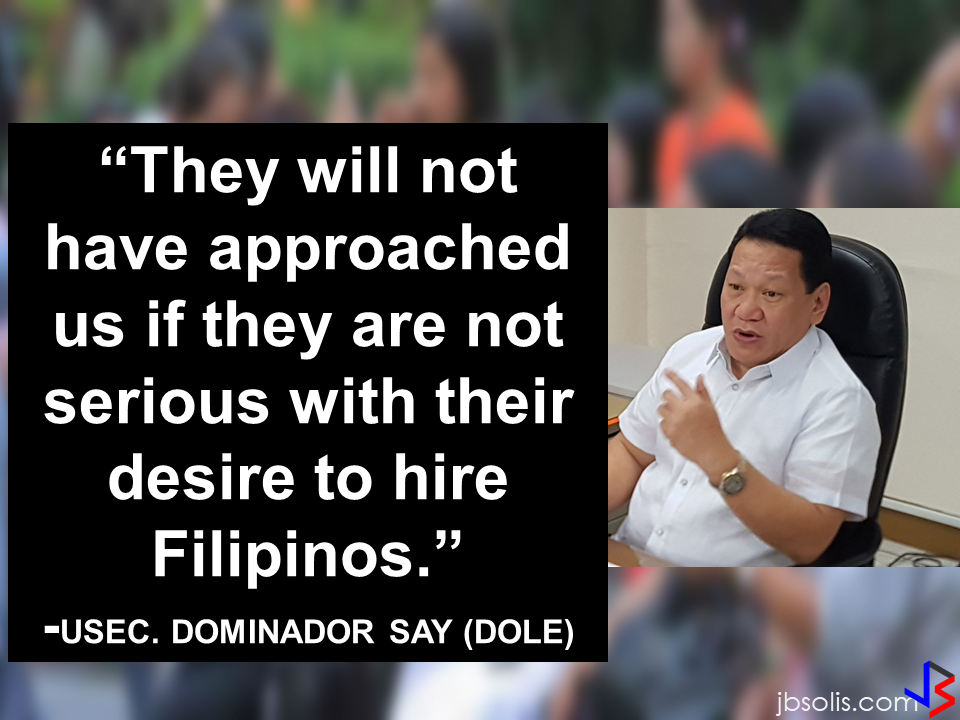
Dominador Say, undersecretary of the Department of Labor and Employment (DOLE), said that talks are underway with Chinese embassy officials on this possibility. China’s five major cities, including Beijing, Shanghai and Xiamen will soon be the destination for Filipino domestic workers who are seeking higher income.
©2016 THOUGHTSKOTO